


Evergreen Marine Returns to the Red Sea
Source:
2026-11-10
Evergreen Marine has returned to the Red Sea route for the first time in three years, signaling growing confidence in the shipping industry toward the volatile security situation off the coast of war-torn Yemen.210
According to the Suez Canal Authority (SCA), the container vessel Ever Eon transited the Suez Canal on Saturday, November 7, becoming the first Evergreen ship to pass through the canal in years. The vessel was en route from the Netherlands to Singapore. SCA Chairman Ossama Rabiee greeted the ship en route and arranged for a senior SCA pilot to present a commemorative gift to the master.23
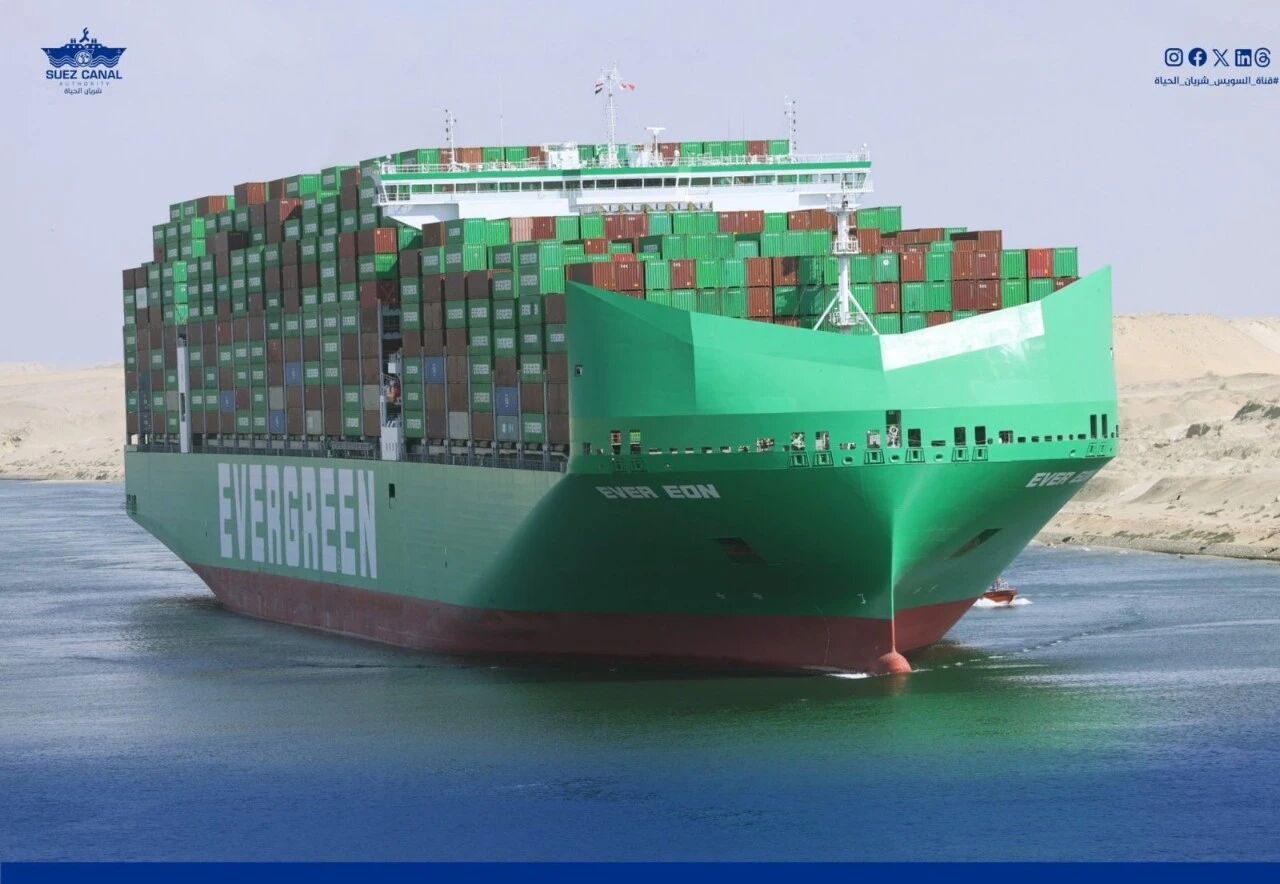
The Ever Eon is a 16,500-TEU ultra-large container ship built last year and deployed on the Ocean Alliance’s NEU7 service, a liner route on the core Asia–Northern Europe trade lane. While this marks Evergreen’s first Red Sea voyage in years, it will not be the last. Rabiee said Evergreen plans to increase sailings and restore services via the Suez Canal.23
Evergreen’s return further expands the group of global container operators resuming Red Sea services. CMA CGM maintained Red Sea services for much of the crisis, while Maersk, MSC, Hapag-Lloyd and COSCO Shipping have also returned. Compared with routing via the Cape of Good Hope, this reduces tonne-miles, fuel consumption and transit times for Asia–Europe freight.210
However, the route remains risky for vessels with certain profiles. The Houthis have declared a “blockade” on Saudi ports and are engaged in cross-border hostilities with Saudi forces. In recent months, ships linked to Saudi Arabia have been attacked in the southern Red Sea, and similar incidents could recur.29
The Houthis may also intensify attacks on vessels linked to Israel. ZIM has continued to avoid the Red Sea, and most cargo for Israel’s Red Sea port of Eilat has been rerouted to Israeli Mediterranean ports. In 2024, Eilat handled only 16 vessels for the entire year, averaging just over one ship per month. The sharp drop in throughput has led the port operator to describe Eilat as unprofitable, and its outlook remains uncertain after three years of disruption.
Hot News