


Container lashing becomes focus of port state control
Source:
2026-11-11
A special inspection campaign on proper cargo securing and stowage is now underway, involving almost all parties in the maritime sector.
The Paris MOU and Tokyo MOU are carrying out a three-month Concentrated Inspection Campaign, or CIC, from September 1 to November 30, focusing on compliance with relevant requirements under the International Convention for the Safety of Life at Sea, or SOLAS. As a result, container ship operators are facing stricter scrutiny over cargo securing and stowage.
The CIC focuses on the securing of cargo units and cargo transport units. Its published inspection checklist sets out several deficiencies that could lead to detention by port state control, including failure to carry an approved Cargo Securing Manual, incomplete lashing instructions, and crew unfamiliarity with the manual. Inspectors will also verify whether ships carry sufficient approved portable cargo securing equipment, and whether such equipment is maintained in accordance with the Cargo Securing Manual.
The problem of containers lost at sea
The World Shipping Council’s latest Containers Lost at Sea Report shows that 1,478 containers fell from ships last year out of more than 280 million containers transported. Each incident poses risks to the environment, seafarers, cargo owners and vessels.
The need to strengthen cargo lashing and securing has become more urgent, particularly amid the current geopolitical situation. To avoid attacks by Yemen’s Houthi forces, vessels have rerouted from the Red Sea via the Cape of Good Hope, exposing them to more extreme weather in waters off southern Africa. The insurance mutual TT Club noted in 2024 that weather is the single most significant factor in container losses at sea, and while the shipping industry cannot control sailing conditions, there is still much that can be done to prevent containers from falling overboard.
TT Club’s analysis shows that wave length and wave period — the time it takes for two successive wave crests to pass the same fixed point — are actually more important than wave height. When the wave period matches a vessel’s natural rolling period, it can trigger parametric rolling and synchronous rolling, which may lead to container stack collapse and cargo loss.
The insurer said it is studying methods to predict parametric rolling and new lashing arrangements to reduce container movement. But this underscores the need to strengthen existing lashing requirements, especially because non-compliance with established rules may itself indicate weaknesses in overall safety management.
Fundamental considerations
Joanne Waters of DAC Beachcroft said that although the CIC applies to different types of cargo ships, it has once again drawn attention to one of the more complex aspects of container ship operations.
Verifying gross mass is a fundamental consideration, including preventing heavier containers from being stowed on top of lighter ones. Operators must also consider cumulative stack weight, hatch cover limits, tier height, and bridge visibility requirements.
Dangerous goods add another layer of complexity. Containers carrying cargoes regulated under the International Maritime Dangerous Goods Code, or IMDG Code, must be stowed in accordance with requirements relating to incompatible substances, exposure to heat sources and other factors.
Lashing and securing fittings must comply with the ship’s Cargo Securing Manual and be capable of withstanding the forces expected during the voyage. Reefer containers require power connections, and stowage plans must also take into account ship stability, weight distribution, and the number of restows needed during the voyage.
As a result, container stowage is usually planned using dedicated software, including lashing and stowage programs and stability calculation tools.
For newer vessels, such requirements are becoming more formalized. Ships whose construction contracts are signed after July 1, 2025 and classed with IACS member societies must comply with IACS Unified Requirements UR C6 and UR C7, covering lashing software and certification of container securing systems.
Allocation of responsibility under charterparties
As the inspection campaign unfolds, the allocation of stowage responsibility remains a potential source of dispute between shipowners and charterers.
Under common law, responsibility for cargo stowage rests with the shipowner. However, a charterparty can transfer that responsibility to the charterer, provided the wording is sufficiently clear. For example, the widely used NYPE time charter form requires charterers to perform stowage carefully. Charterers may appoint stevedores to carry out the work, but they remain responsible for the operation itself and for selecting competent stevedores.
The master retains supervisory authority, but that right alone does not shift responsibility back to the shipowner. Previous court decisions have confirmed that while the master retains the right to intervene, this does not relieve charterers of their primary responsibility for safe stowage.
However, when stowage deficiencies affect a vessel’s stability or seaworthiness, the allocation of responsibility becomes less straightforward. There have been cases where cargo stowed by charterers or their representatives affected vessel stability. In such situations, how responsibility is allocated often depends on what each party knew, the specific wording of the charterparty, and what actions the master and crew took.
Stack collapse risks
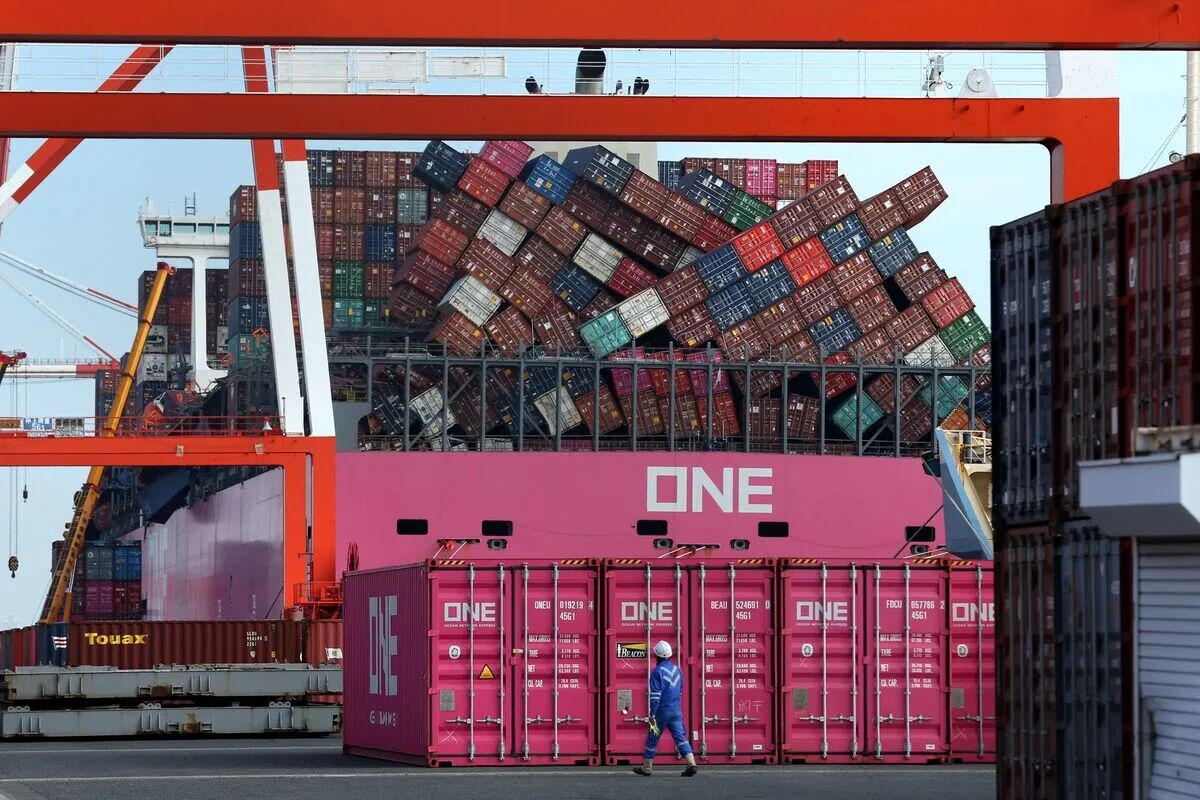
Container stack collapses remain frequent and troublesome, but liability is not easy to determine, as it depends on the terms of the relevant charterparty and the specific cause of the loss. Identifying the cause of a collapse can be difficult. Evidence may point to initial stowage operations, vessel stability, securing equipment, maintenance, routing decisions or severe weather, or to different combinations of these factors.
Joanne Waters added: “In our experience, factual and expert evidence on the actual cause of stack collapses is often contradictory.” But establishing the truth remains essential. A container stack collapse can cause significant losses, including crew injuries, cargo claims and vessel damage, and, particularly in coastal waters, may also generate costs for locating and recovering containers that have fallen overboard.
SOLAS requirements have become stricter since the beginning of this year: masters must report lost cargo containers to nearby ships, the nearest coastal state and the flag state as soon as possible, and similar reporting obligations apply when drifting containers are sighted at sea.
Hot News