


MSC takes client to court over $230,000 claim
Source:
2026-08-05
Maritime news outlet CNSS has learned that Mediterranean Shipping Company (MSC), the world’s largest container shipping line, recently filed a lawsuit in the U.S. Federal Court in New York against its former client CargoLoop, seeking approximately US$230,000 in compensation, plus attorney’s fees, interest, and pre‑litigation mitigation costs, with the total amount expected to exceed US$270,000. The case stems from a fire accident aboard a container vessel sailing off the coast of Mexico in August 2023, once again thrusting the safety risks of shipping used electric vehicles by sea into the industry spotlight.
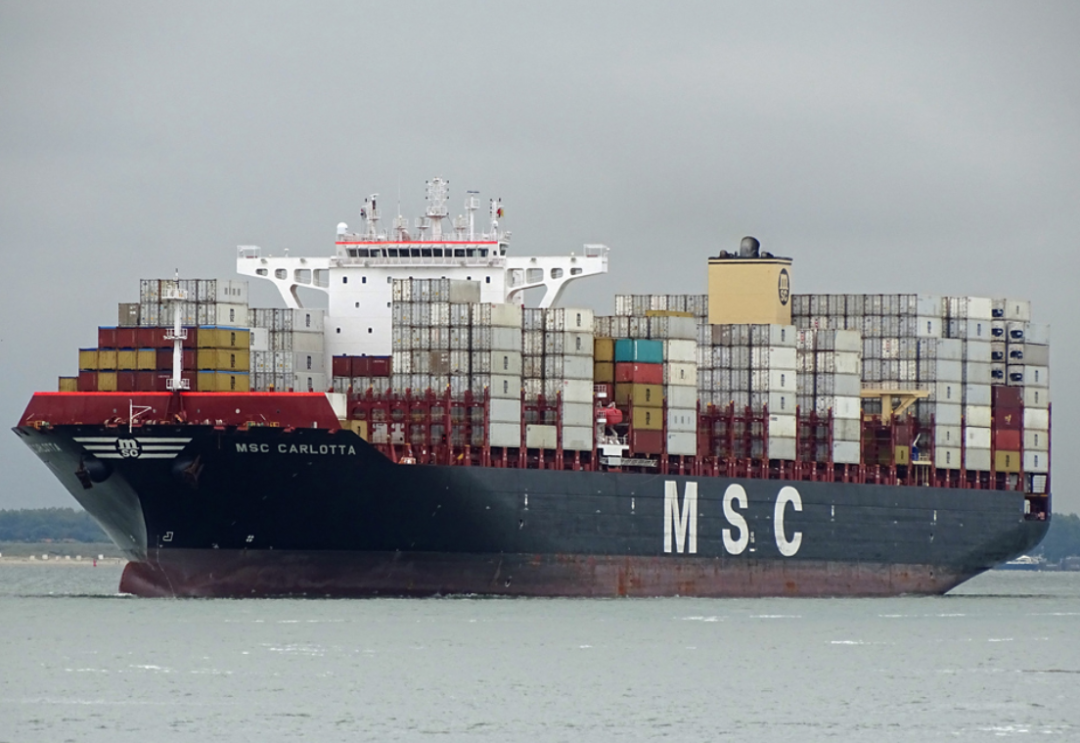
In August 2023, CargoLoop, a specialized auto auction and transport company, entrusted MSC with the carriage of a 40‑foot high‑cube container loaded with “used, previously damaged battery‑powered vehicles” from California, U.S., to Lithuania. The bill of lading noted the age of the vehicles and the corresponding International Maritime Dangerous Goods (IMDG) Code, and MSC accepted the shipment.
However, in the early morning hours of September 2 of that year, the “MSC Carlotta” experienced a sudden explosion and fire while sailing off the coast of Baja California, Mexico. MSC alleged that the explosion originated from the container supplied by CargoLoop, and that the flames subsequently ignited another adjacent container, also shipped by CargoLoop and carrying electric vehicles, while several other containers were damaged by fire and by water ingress from firefighting efforts.
After the crew extinguished the blaze, the vessel made an emergency call at a Mexican port, where the two damaged containers were discharged for inspection and restowage, and a professional fire investigation agency was engaged. According to MSC, investigators determined that the fire source was located between a 2018 Tesla Model S and a 2012 Ford Focus, with the latter placed beneath the former.
MSC pointed out that CargoLoop had used wooden racking systems to secure the vehicles, and that at least one vehicle was positioned above another to maximize loading capacity. The investigation speculated that the wooden racks may have broken during the voyage, causing the Tesla to collapse onto the Ford, damaging its battery and triggering the fire. Similar signs of rack failure were also found in another CargoLoop container on the same voyage.
In addition, MSC raised two other possible causes: that the battery pack may have been damaged during loading and unloading by forklift, or that CargoLoop failed to disconnect the vehicle batteries as required. According to reports, evidence was found in a surviving vehicle in another container that the battery remained connected.
MSC’s claim against CargoLoop includes specific items such as: US$60,000 for fire investigation fees, US$60,000 for settlements with other cargo claimants, US$86,000 for additional handling and disposal costs, and US$25,000 for container loss and damage, totaling approximately US$230,000, plus US$43,000 in pre‑litigation mitigation costs, attorney’s fees, and interest.
It is worth noting that some shipping companies (such as ACL and Matson) have explicitly refused to carry used electric vehicles of any condition due to fire risks. MSC’s high‑profile lawsuit is seen as a stern warning to shippers and freight forwarders: **shippers** must bear substantive responsibility for the packaging, securing, and battery safety condition of their goods, or else face substantial claims.
Industry analysts believe that as global trade in electric vehicles rises, used EVs—due to unclear battery conditions and inadequate pre‑shipping treatment—have become one of the primary fire risk sources on container vessels. This incident may prompt shipping lines to further tighten carriage standards and strengthen scrutiny of cargo declarations and packaging.
Hot News