


Buying Ships Takes Priority! Leading Liner Companies Collectively Move Away from Chartering
Source:
2026-09-28
According to the latest analysis by Alphaliner, the world's largest liner companies are gradually reducing their reliance on chartered-in vessels. Since the pandemic-era freight boom, most major liner companies have significantly reduced the share of chartered-in capacity. As record profits have driven investment in newbuildings and secondhand ships, these carriers' fleet structures are shifting from being primarily chartered-in to primarily owned.
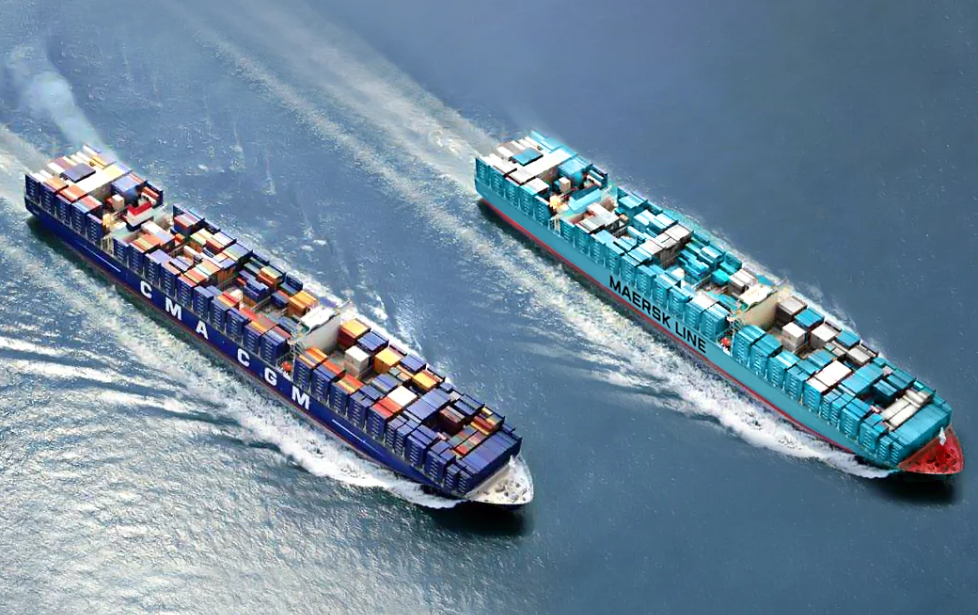
Alphaliner data shows that a decade ago, chartered-in capacity typically accounted for 40%-70% of the fleets operated by the top ten carriers, but that share has now fallen to 18%-50%. Among the top five carriers, chartered-in capacity accounts for only 30%-40% of deployed capacity.
From a carrier-specific perspective, South Korea's HMM recorded the largest decline. Its chartered-in fleet share fell from 56% in 2016 to less than 20% currently. This stems from South Korean government support for HMM's expansion as a flagship carrier, including 59 newbuildings it has secured to date.
CMA CGM had the second-largest decline, with its chartered-in capacity share falling from 67% in 2016 to about 34%. This change occurred mainly after the pandemic, when strong profits prompted it to invest heavily in owned capacity; it has purchased 160 secondhand container ships and taken delivery of 100 newbuildings. However, CMA CGM remains a major user of Non-Operating Owner (NOO) capacity and continues to be active in the charter market.
MSC's chartered-in capacity share fell from 61% in 2016 to 36% currently. Compared with the pandemic period, when about 75% of its fleet was chartered in, its chartered-in capacity share has effectively halved over the past five years. Since the end of 2020, MSC has decisively shifted toward ship ownership, ordering 252 newbuildings and buying about 500 secondhand ships. Its chartering activity has since shrunk sharply, with only about 40 charter fixtures concluded this year, roughly one-quarter to one-third of previous levels.
Taiwan's Evergreen Marine saw its chartered-in ratio fall from 42% in 2016 to 28% currently, with its investment plans including 125 newbuildings ordered since 2021. Yang Ming Marine Transport's chartered-in capacity share fell from 63% in 2016 to 50%.
However, Alphaliner noted that Maersk, Ocean Network Express (ONE), COSCO Shipping and Hapag-Lloyd recorded relatively small declines. About 38% of Maersk's operated fleet is currently chartered in, only 7 percentage points lower than in 2016. In addition, Maersk remains a major NOO customer and has concluded at least 130 charter fixtures this year. ONE and COSCO Shipping each saw their chartered-in ratios fall by 12 to 13 percentage points, to about 53% and 40%, respectively. Hapag-Lloyd's ratio fell 15 percentage points over the past decade to about 39%.
Notably, ZIM remains a clear exception, continuing its asset-light, heavily charter-dependent model. Over the past decade, chartered-in ships have accounted for 85% to 98% of its deployed capacity, and all 23 ships in its orderbook are chartered-in capacity. However, if Hapag-Lloyd's proposed acquisition succeeds, this pattern may change.
Overall, this round of "de-chartering" does not mean liner companies will completely abandon chartering; rather, against the backdrop of abundant post-pandemic cash flow and volatile asset prices and charter rates, they are rebalancing owned and chartered-in capacity. Owned capacity helps strengthen control over core fleets and costs, while chartered-in capacity continues to play a flexible role in supplementing capacity and responding to peak seasons and route adjustments.
Hot News