


China's first cross-border sea-rail-road 'one-document' block train has been successfully inaugurated.
Source:港口圈
2026-07-23
A container train loaded with Korean commercial vehicles and auto parts departed from Shandong Port Yantai Port on July 21, heading for Kyrgyzstan. This marked the successful launch of the country's first cross-border "one-document" sea-rail-road block train, achieving for the first time seamless intermodal transport from East Asia to Central Asia via "maritime + railway + highway."
This is another "national first" new business model to be established at Shandong Port, following the launch of the country's first "one-document" cross-border rail-sea intermodal train at Yantai Port on May 14, 2025.
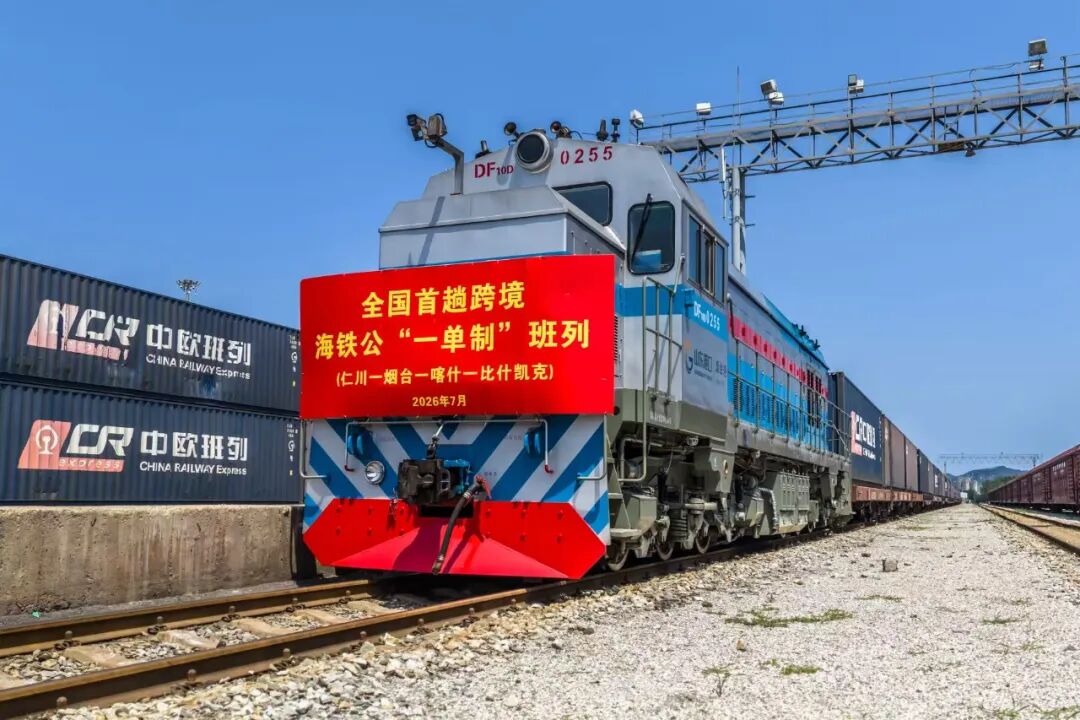
The multimodal "one-document" system refers to a logistics model in which cargo transport is handled through a single waybill, featuring one-stop entrustment, one document for the entire journey, one container for the whole trip, and one-time settlement. As the first application of the "international sea-rail-road one-document" new business model, the train's cargo was shipped from Incheon, South Korea, to Yantai Port by sea, then transferred to rail directly to Kashgar, followed by customs-supervised trucks for border crossing, and finally transported by road to Bishkek, Kyrgyzstan. The entire journey took only 12 days — five days shorter than traditional transport routes — ushering in a new combined transport model that deeply integrates maritime, rail, and road transportation.
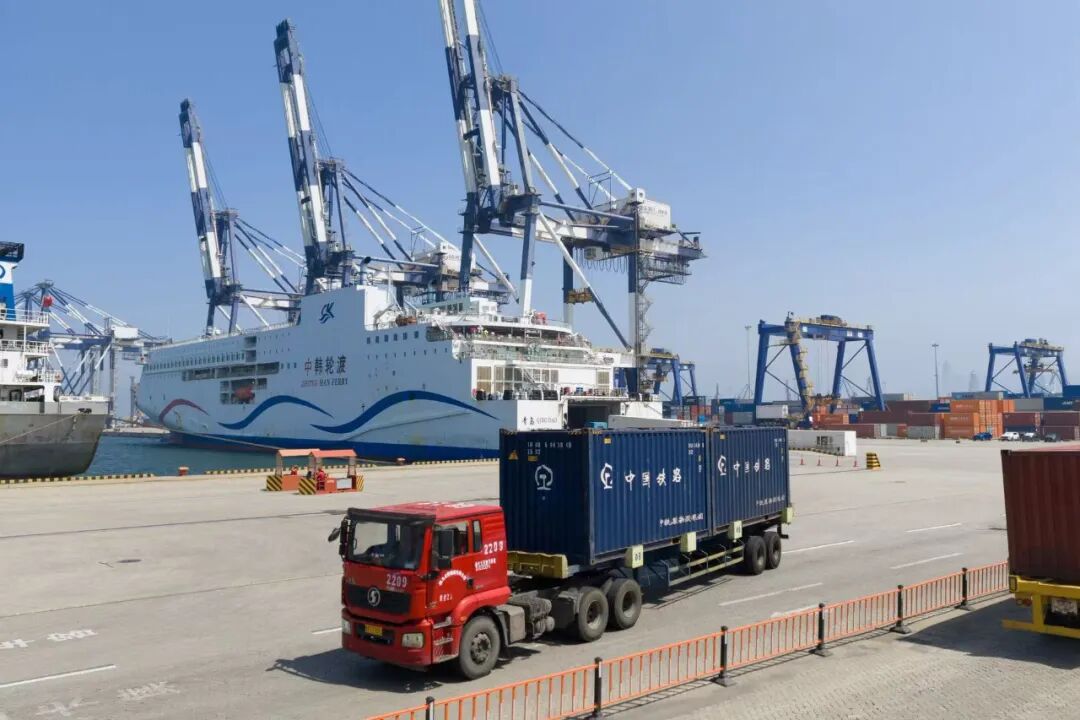
In recent years, Yantai Port has leveraged its geographical advantages and worked in close coordination with national railways, customs, maritime authorities, border inspection, pilotage, and other entities to create a first-class port business environment. All parties have jointly built an efficient and stable supply chain service network, ensuring the successful inaugural launch and regular operation of both the national first cross-border sea-rail-road "one-document" train and the national first "one-document" cross-border rail-sea intermodal train at Yantai Port, effectively providing import and export enterprises with a convenient and smooth new logistics corridor.
During port operations, Yantai Port continuously strengthened information sharing with customs, railways, and shipping companies, scientifically adjusted loading yards, opened "green channels" for dedicated vessels and trains, minimized container shuttle distances, increased train marshalling capacity from 18 to 50 cars, and boosted freight volume by nearly three times compared to the initial operation stage. The multimodal "one-document" business has shown a trend of high frequency, high traffic, and high growth, contributing to accelerating the construction of the "dual circulation" development pattern and deeply promoting the integrated cross-border logistics corridor development.
Hot News