


From global No. 13 to No. 80, the former liner upstart now has only four ships left.
Source:
2026-07-24
According to foreign media reports, the U.S. Department of the Treasury's Office of Foreign Assets Control (OFAC) announced a new round of sanctions last week, blacklisting the main operating entities of Sea Lead Shipping based in Singapore, Dubai, and the Marshall Islands, along with its Indian agent company.
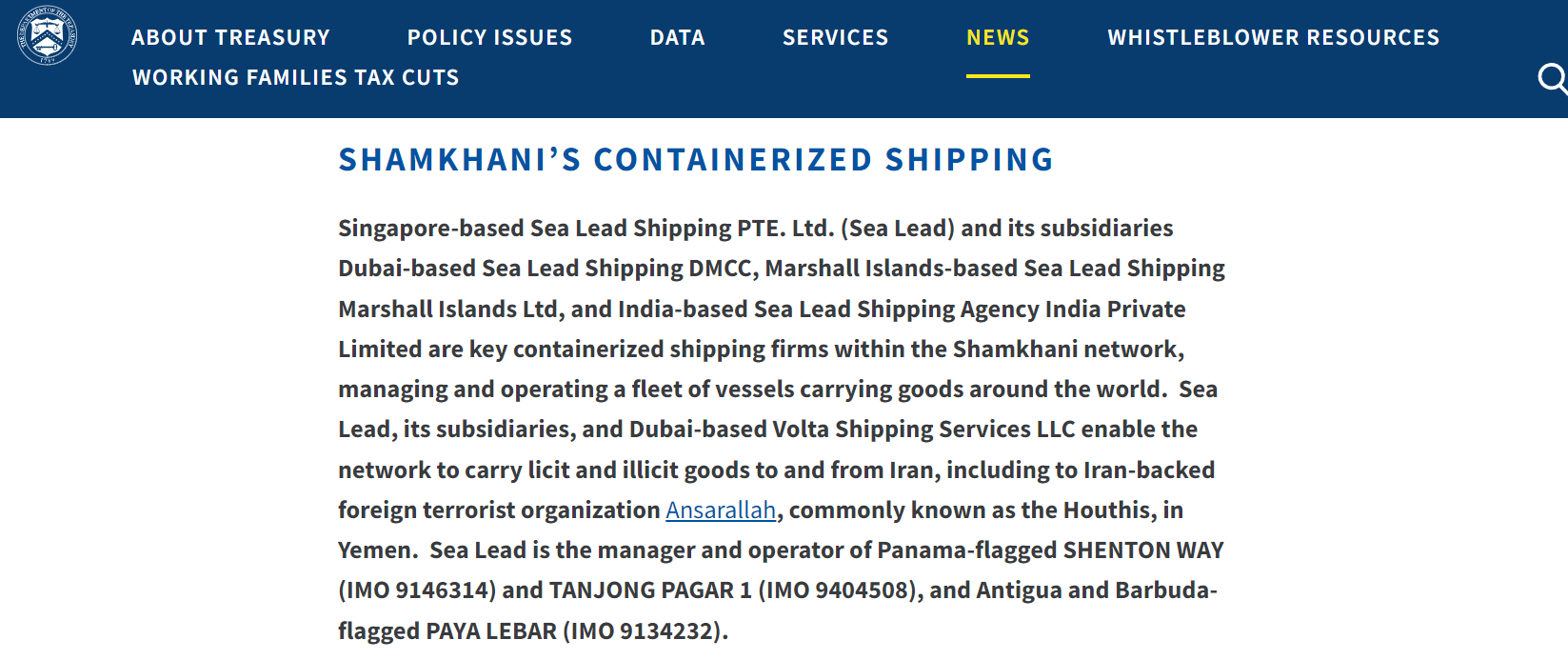
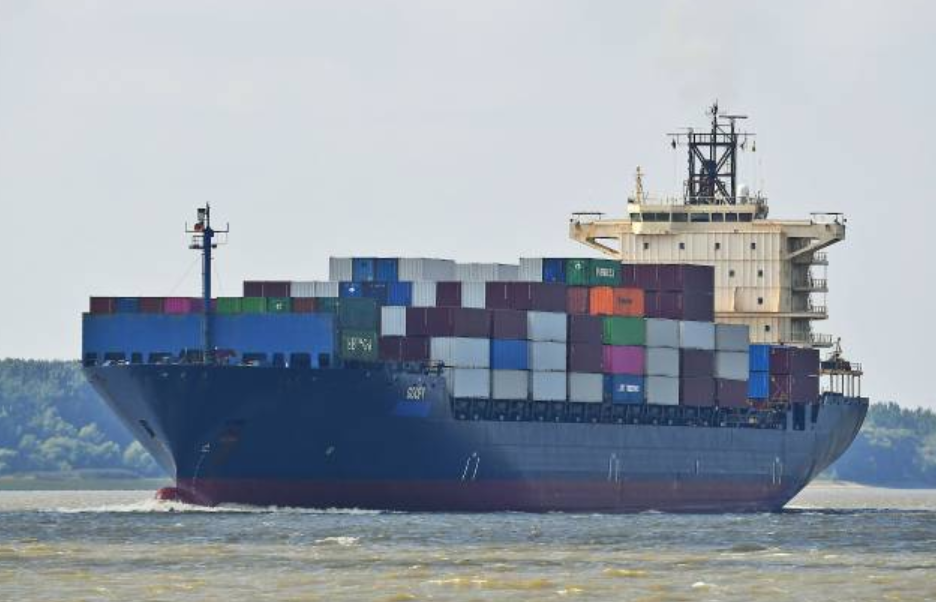
At the same time, three container vessels owned by the company—the Antigua and Barbuda-flagged "Paya Lebar" (IMO: 9134232, 4,211 TEU), the Panama-flagged "Shenton Way" (IMO: 9146314, 2,008 TEU), and the Panama-flagged "Tanjong Pagar 1" (IMO: 9404508, 920 TEU)—were also designated as sanctioned assets.
The sanctions deal a further blow to Sea Lead Shipping. The company, which had risen as an industry newcomer in mid-2025 with a fleet of 53 vessels and the 13th largest capacity globally, has seen its fleet shrink sharply in just one year, now operating only four vessels and dropping to 80th place in the Alphaliner ranking. Three of its active vessels are now targeted by OFAC, bringing the company's operations to a near standstill.
Notably, the sanctioned "Paya Lebar" was one of the very few container vessels that continued to transit the Strait of Hormuz during the ongoing U.S.-Iran conflict. The vessel made four crossings through the waterway between the outbreak of the Iran conflict on February 28 and the signing of the U.S.-Iran memorandum of understanding on June 17, shuttling between India and Arabian Gulf ports. Its persistent "risky" voyages apparently drew close attention from U.S. authorities.
Sea Lead Shipping's entanglement with Iran sanctions issues dates back some time.
In July 2025, OFAC, in coordination with the U.S. State Department, sanctioned a total of 62 vessels linked to Sea Lead Shipping's ties with Iran, including 22 container ships and 40 tankers, 16 of which were container vessels operated by Sea Lead Shipping. The company swiftly terminated the relevant charters.
This year, the U.S. has again moved against Sea Lead Shipping. On March 6, the U.S. Department of Justice filed a lawsuit against the company, alleging that it served as a legitimate front for the "dark fleet" network of key Iranian figure Hossein Shamkhani.
In court filings, the Justice Department alleged that the connection between Sea Lead Shipping and Shamkhani's Admiral Shipping went beyond the time-charter relationship claimed by the company. "This branding separation," the Justice Department's lawyers wrote in a civil forfeiture complaint, "was designed to evade sanctions."
As Sea Lead Shipping's services in the Middle East and Asia have been disrupted, the company has closed offices and laid off staff, while many of its previously chartered vessels have been taken over by major shipping lines. Among them, China United Lines and MSC have moved quickly to "split" the capacity. Industry observers generally believe that after multiple rounds of blows, the former industry dark horse is unlikely to recover, and its subsequent fate will become another focal point of attention in the container shipping market.
Hot News