


Lloyd’s Register: 200,000 cbm LNG Carriers to Become a Key Option for Fleet Renewal
Source:
2026-09-28
Against the backdrop of an accelerating ageing of the global LNG carrier fleet, 200,000-cubic-metre-class large LNG carriers are increasingly seen by the industry as a pragmatic choice for fleet renewal. A newly released study by Lloyd's Register (LR) shows that 200,000 cbm LNG carriers can significantly increase cargo capacity per voyage and reduce transport costs while maintaining broad access to major global LNG terminals, delivering considerable economic returns for shipowners and charterers.
The research team conducted a comprehensive assessment of a representative 200,000 cbm LNG carrier design, carried out a compatibility analysis with existing global LNG infrastructure, and ran commercial operating simulations on major trade routes in the Atlantic and Pacific.
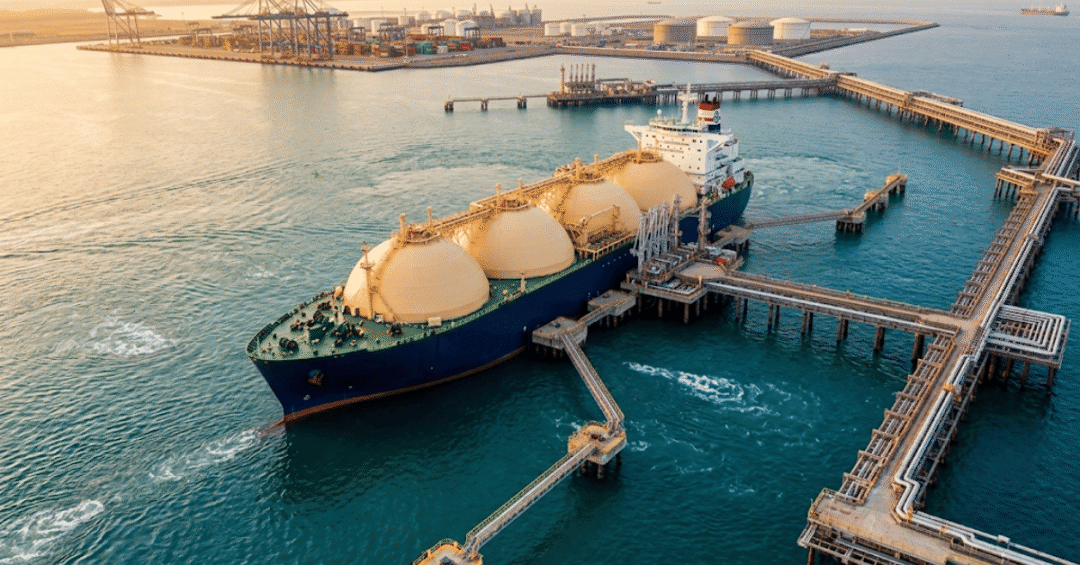
The assessment results show that 88 LNG terminals worldwide are compatible with 200,000 cbm LNG carriers, while conventional 174,000 cbm vessels can access 97 terminals. This means that the larger vessel type reduces accessible terminals by only nine, a decrease in accessibility of less than 10%. More importantly, the accessible terminal network still covers numerous major LNG trading hubs in Asia-Pacific, Europe, North America and the Middle East.
LR's commercial assessment notes that although terminal accessibility is slightly reduced, the larger vessel type brings substantial economic advantages by increasing cargo capacity per voyage and improving transport efficiency. The analysis shows that a single vessel can generate potential gains of approximately US$85.5 million for shipowners over a 30-year operating life, while achieving considerable transport cost savings on representative routes.
The study further notes that as the trend for LNG carriers to operate at lower average speeds becomes more pronounced, the importance of the larger vessel concept will become even more prominent. Shipowners need to strike a balance among transport efficiency, fleet renewal and long-term operational flexibility, and the 200,000 cbm class offers exactly this balance point.
The LR report is released against the backdrop of increasingly urgent pressure on the global LNG carrier fleet from ageing and renewal. According to Clarksons Research data, as of July 1, 2026, 908 LNG carriers were in operation worldwide, with total capacity of approximately 139.7 million cubic metres. However, this huge fleet is ageing at an accelerating rate. Data shows that more than 260 LNG carriers—about 35% of the existing fleet—are more than 15 years old, and by 2035 more than 300 vessels will be more than 20 years old.
The accelerating pace of scrapping is particularly noteworthy. Shipbroking data show that the average age of LNG carriers sold for demolition has plunged from about 38 years in the past to about 25 years. In 2025, a record 15 LNG carriers were sent for scrapping, the youngest of which was only 20 years old. In 2026, the scrapping pace has accelerated further; by mid-year, the number of LNG carriers confirmed scrapped globally continued to rise, and the full-year scrapping volume is expected to reach 18 to 20 vessels.
Market analysts point out that with the EU Emissions Trading System phased in from 2021, combined with the entry into force of the IMO's Energy Efficiency Existing Ship Index (EEXI) and Carbon Intensity Indicator (CII) rules, old and inefficient LNG carriers are being retired at an accelerating pace. The global LNG carrier fleet still contains about 60 older vessels of 120,000 to 140,000 cbm, only two of which are under 20 years old, making structural renewal increasingly necessary.
Market demand for newbuild large LNG carriers has been corroborated by the data. In the first quarter of 2026, global newbuilding orders for LNG carriers reached 33 vessels, already exceeding the total of 32 vessels ordered in all of 2025. Among them, the 200,000 cbm class stood out as a highlight.
In January 2026, HD Korea Shipbuilding & Offshore Engineering signed a contract with a shipowner in the Americas for four 200,000 cbm LNG carriers, at about US$260 million per vessel, scheduled for delivery on a staggered basis by the first half of 2029. In September of the same year, Samsung Heavy Industries received a package order from a shipowner in Oceania for four 200,000 cbm LNG carriers and two crude oil tankers, with a total value of about US$1.2 billion.
From a broader industry perspective, the global LNG carrier orderbook has approached 40% of the size of the existing fleet. As of July 2026, 338 LNG carriers were under construction or on order, with total capacity of 54.3 million cubic metres, equivalent in capacity terms to 38.9% of the existing fleet's capacity. GTT expects that between 2026 and 2035, cumulative newbuilding order demand for about 550 LNG carriers will be generated to support continued growth in global LNG trade.
LR's study provides strong technical support for this market trend. Against the backdrop of profound adjustments in the global LNG trade landscape and increasingly stringent environmental regulations, the 200,000 cbm class LNG carrier is gradually shifting from an "option" to a "preferred solution." As the LR report reveals, the limited compromise this vessel type makes in terminal accessibility can be fully offset by the increased cargo capacity and lower transport costs it brings, providing shipowners with a pragmatic path that balances efficiency and flexibility in fleet renewal decisions.
Hot News