


Shipping is at historic highs, but downside risks are closing in! How much longer can the supercycle last?
Source:
2026-09-28
The shipping industry has had a bumpy ride through the 2020s, tumbling from one earnings peak to another. Successive crises have repeatedly rescued markets that, by traditional supply-and-demand analysis, should have weakened. Two new charts reveal how this supercycle took shape, and which segments may be approaching a downward inflection point.
Braemar's decade-long earnings chart reads more and more like a geopolitical timeline. The pandemic pushed container freight rates to astonishing highs; the Russia-Ukraine conflict reshaped energy trade flows; the Israel-Palestine conflict and the Red Sea crisis lengthened voyage distances across multiple segments; and now, the US-Iran conflict has sent tanker and LPG markets surging almost vertically, setting new all-time records.
The breadth of this rally is truly rare. Clarksons' cross-segment ClarkSea Index climbed to $64,569 per day last week, 27% above the previous peak in 2007. According to the brokerage, very large gas carriers, bulkers, container ships, and car carriers are all either "exceptionally strong" or "strong." Very large crude carriers (VLCCs) are even more extreme, with average daily earnings reaching $643,000.
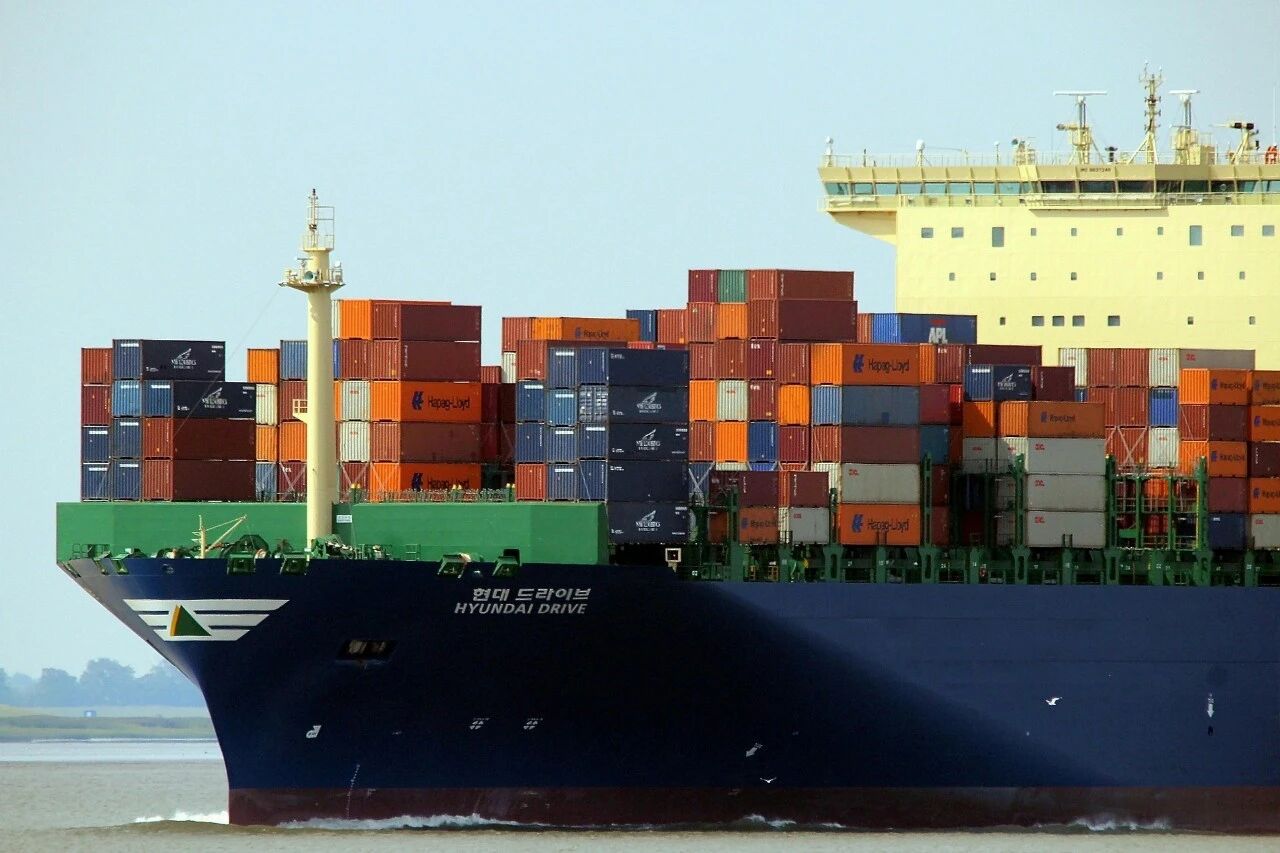
Ultimately, much of the current boom is being generated by a market that "can't move": ships are being rerouted, sanctions are biting, ports are congested, shipping lanes are closed, voyages are getting longer, waiting times at anchor are growing, ship-to-ship transfers are increasing, and available capacity is being sliced ever thinner.
In its latest report, Braemar offers a judgment: geopolitics has made freight rates less "price-sensitive," especially for tankers. Exporters need ships to move their oil, importers' inventories are running dry, and they increasingly have no choice but to pay. The brokerage believes that the three major conflicts affecting tanker freight rates will not end in the short term, and warns that if new conflicts erupt, market inefficiencies will compound further.
The tanker market is the most extreme microcosm of this new shipping economy. Lower volumes can actually require more ships—as long as voyages are lengthened, vessels queue for days in the Strait of Hormuz, or cargoes are transshipped outside conflict zones. But this boom is also sowing the seeds of its own demise. Breakwave Advisors noted this week that a surge in shipbuilding orders has pushed tanker newbuilding capacity above normal levels, and it expects a clearly negative long-term balance, leading to a potential downcycle.
This tension between today's astonishing earnings and tomorrow's rapidly expanding capacity runs through virtually every shipping segment.
Container ships are the most obvious example. Despite massive fleet expansion, freight rates and the charter market remain far stronger than expected, because carriers have aggressively blanked sailings, Red Sea diversions have absorbed capacity, and port congestion has tied up more. But the container ship orderbook now stands at 40% to 45% of the existing fleet. Sea-Intelligence warns that leading carriers are preparing for a commercial war, fighting for market share to absorb these new ships, making capacity discipline increasingly difficult to maintain.
Meanwhile, the Suez Canal is slowly resuming transits. Sea-Intelligence estimates that 27% of services had returned to the Red Sea by September. Every service that returns from the Cape of Good Hope route releases effective capacity ahead of new ship deliveries.
The Baltic and International Maritime Council (BIMCO) currently puts the container ship orderbook at more than 14 million TEU, equivalent to 42% of the existing fleet, with 3.2 million TEU scheduled for delivery in 2027 alone. Under both of its Strait of Hormuz scenario assumptions, BIMCO expects fleet capacity growth to outpace demand growth next year.
In its latest report, BIMCO forecasts that freight rates, chartering, and the secondhand ship market will all soften in 2027. Compared with continued Cape of Good Hope diversions, a full normalization of Suez Canal routes could reduce container ship demand by about 10%.
By contrast, the dry bulk market currently looks healthier. A cycle chart published by Maritime Strategies International (MSI) shows bulkers in an upward channel, and Braemar also says earnings remain well supported, especially for larger vessels.
If one asks what the market might face once new ships truly exceed demand, LNG carriers have already provided the answer. In MSI's cycle chart, this ship type is placed at the very bottom, while most shipping segments remain in the upper half.
Braemar notes that LNG freight rates initially benefited enormously from geopolitical turmoil, first after the Russia-Ukraine conflict and later when ships were stranded around the Strait of Hormuz. But high gas prices have weakened Asian demand, shorter US-Europe routes have reduced tonne-miles, and idle Qatari vessels have returned to the charter market.
Drewry pointed out the fundamental problem before the latest round of disruption this year: more than 100 LNG carriers are scheduled for delivery in 2026, and fleet expansion is already outpacing new liquefaction capacity.
This may also be a warning the entire shipping industry will eventually face. Braemar calculates that the tanker ordering boom has pushed the segment's orderbook from just 4% of the existing fleet in 2023 to 27% today, with VLCCs at 37%. Dry bulk has risen to 17%, containers to about 40%, and LPG to 43%.
But the shipping industry has, of course, made enough money over these years to pay for it. Renowned British shipping economist Martin Stopford recently estimated that the industry has generated about $3.1 trillion in cash since 2021, with roughly a quarter already flowing back into new ships. And this cycle may not necessarily end in another 2008-style financial crash. Shipowners' balance sheets are stronger, leverage is lower, and cash holdings are far more ample.
The 2020s are less a single shipping supercycle than multiple cycles stacking on top of one another and arriving in quick succession. That also means that when the tide goes out, segments may well move independently, with some warm and others cold.
Hot News