


26-year-old PCTC changes hands at $42 million
Source:
2026-07-24
According to sources, the 4,310-CEU pure car and truck carrier (PCTC) Chang Shenghong (IMO: 9177040) was sold at auction on Tuesday, July 21, for approximately $42 million. For a 26-year-old PCTC, this price is exceptionally high.
The Shanghai United Assets and Equity Exchange had previously set a minimum reserve price of RMB 95 million (about $14 million) for the vessel, and the final winning bid was roughly three times that floor price.
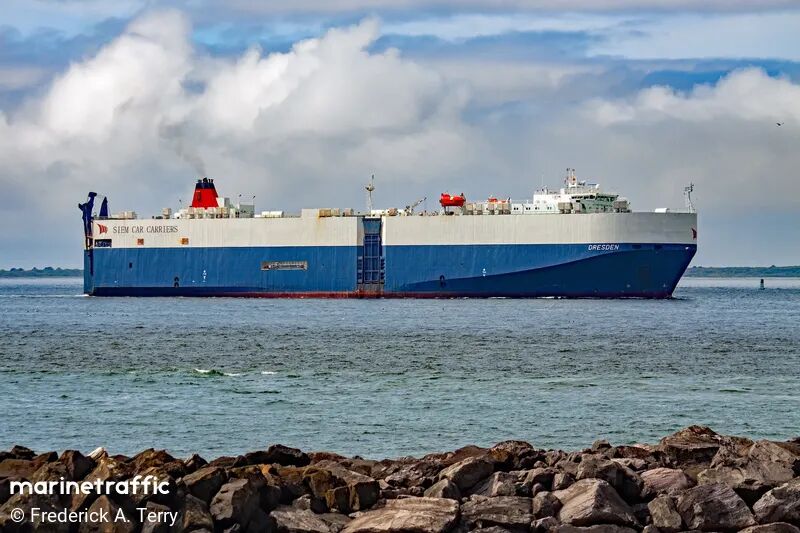
Built in 2000 at Croatia’s Uljanik Shipyard and formerly named Dresden, the vessel was sold by Wilhelmsen Ship Management in May 2002 for $35.4 million to an undisclosed buyer, when the ship was only two years old. In July 2017, it was transferred to China Merchants Shipping’s Shenzhen Ro-Ro division, renamed Chang Shenghong, and has since been engaged in domestic and international automobile transport services for China.
The high-price transaction reflects the persistently tight supply-demand balance in the current car-carrier market. In the first half of 2026, global fleet capacity grew by 3.3%, roughly in line with global car-mile demand growth, maintaining a tight equilibrium, with charter rates rising accordingly. VesselsValue’s one-year time-charter index for a 6,500-CEU vessel has risen about 45% since the beginning of the year, reaching $67,000 per day.
Against the backdrop of a severe shortage of conventional PCTC tonnage, Chinese automakers are actively exploring alternative transport solutions to ensure timely delivery of vehicles to overseas markets. Industry forecasts suggest that the number of vehicles transported globally via non-specialised car-carrier vessels will exceed 2 million units this year, hitting a record high.
The mismatch between cargo export demand and dedicated vessel supply is increasingly forcing exporters to rely on container liner services for automobile shipments.
Maritime data analytics firm Veson Nautical noted that, as the market struggles to keep pace with the surging growth of Chinese exports, using container ships to carry light vehicles has evolved from a temporary measure into “a structural feature of this trade route.”
The fundamental driver of this shift is China’s rapid rise as the world’s largest car exporter. In just five years, China’s annual light-vehicle exports (by all modes of transport) have grown from 1.6 million units in 2021 to an estimated 10 million units in 2026. Semi-annual data released by the China Association of Automobile Manufacturers show that in the first half of the year, vehicle production and sales reached 14.993 million and 15.017 million units, respectively, down 4% and 4.1% year-on-year, with the decline narrowing further compared with the first five months.
However, the global PCTC fleet is expected to grow at only about 7.6% annually in the same period, and most new capacity will be delivered progressively throughout the year, making it difficult to ease the supply-demand imbalance in the short term. As a result, exporters’ reliance on container liner services is set to deepen further.
Hot News