


Traditional Greek Shipowners Shift Lanes En Masse, Containerships Become the New Favourite
Source:CNSS
2026-07-15
Greek shipowner Silk Searoad Maritime has recently completed a pivotal acquisition, officially entering the containership sector.
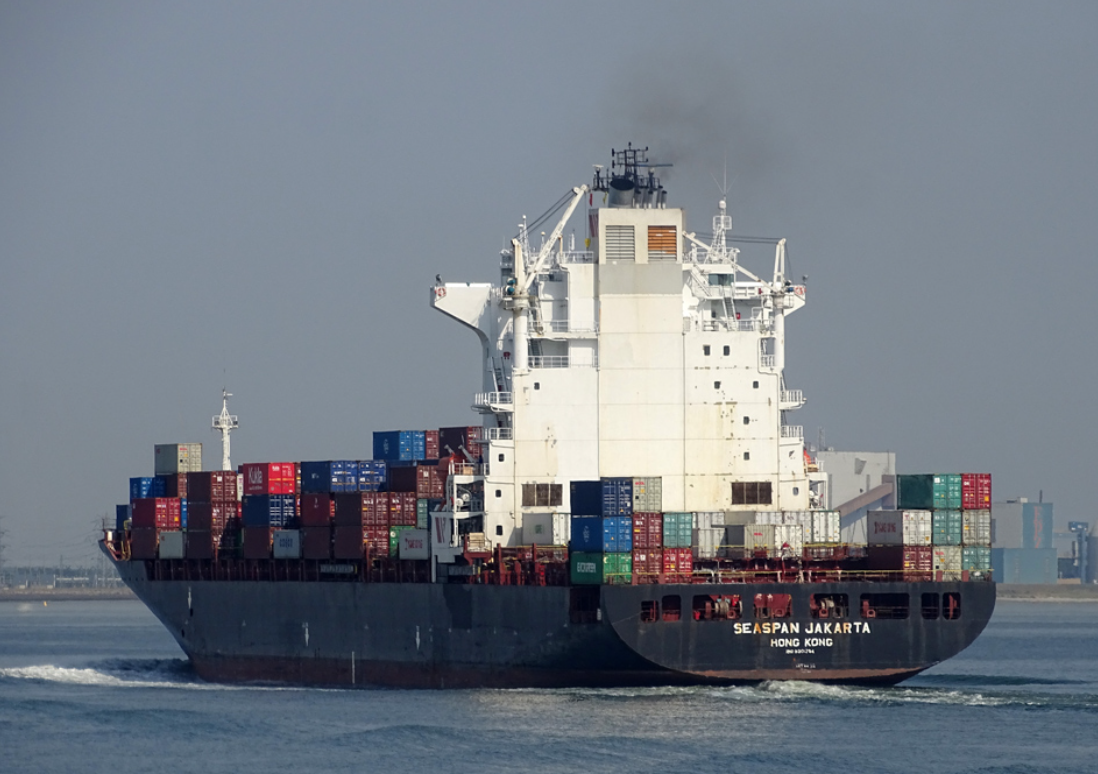
The company, helmed by Andreas Zissimatos, has purchased the 4,253 TEU Seaspan Jakarta from the world's largest independent containership owner, Seaspan. The vessel has been renamed Silk Jakarta. It is currently deployed on a five-year time charter to German liner giant Hapag-Lloyd, with the charter running until 2031.
Seaspan sold the vessel to an undisclosed Greek buyer for approximately US$17 million in February this year. According to TradeWinds, that transaction price was markedly below the vessel's market valuation in the absence of a charter, drawing widespread industry attention to the deal's pricing.
This acquisition marks Silk Searoad's first foray into the containership segment. While the company has yet to clarify whether it will further expand its investments in this area, this decisive move indicates that management remains highly attuned to transactions with profit potential and possesses the capability for swift decision-making and execution.
Founded in 2020 and headquartered in Voula, Athens, Silk Searoad Maritime was established at a time of downturn in the product tanker market. It acquired three product tankers at historically low prices and subsequently sold all of them for a profit once the market rebounded. The company then progressively acquired six bulk carriers as the dry bulk market recovered. It currently operates a fleet of nine vessels.
Andreas Zissimatos, Managing Director of Silk Searoad Maritime, has emphasised that the company's strategy is "disciplined and forward-looking fleet development based on long-term partnerships." This February, Silk Searoad handed the technical management of all eight of its bulk carriers and tankers at the time to V.Group, with V.Ships Greece—the country's first and largest third-party ship management company, with over 30 years of industry experience—undertaking the role.
Silk Searoad's acquisition is merely a microcosm of a broader industry wave. Since 2025, the global shipping industry has witnessed a trend of traditional dry bulk and tanker owners collectively moving into the small and medium-sized containership segment, with Greek owners being particularly active:
Alpha Bulkers broke a two-year order drought in December 2025, signing orders for a total of eleven containerships across three Chinese shipyards in one go: three 1,900 TEU vessels at Yangzijiang Shipbuilding, four 3,100 TEU at COSCO Shipping Heavy Industry (Guangdong), and four 4,500 TEU at Yantai CIMC Raffles.
Oceanbulk signed a contract with Zhoushan Changhong International in October 2025 for two 3,100 TEU containerships, with a unit cost of approximately US$47 million and deliveries expected from late 2027 to early 2028. If confirmed, this order would mark Oceanbulk's first return to the containership segment since divesting its container assets seven years ago.
Conbulk ordered its first containerships in November 2025, signing with Yangzhou Guoyu Shipbuilding for two 5,000 TEU vessels, subsequently declaring optional vessels to expand the total to six, with a combined value of US$330 million. The 5,000 TEU class is increasingly favoured by non-operating owners for its flexibility and fuel efficiency.
Furthermore, a host of other Greek owners—including Danaos Corp, Capital Group, Minerva Dry, Chartworld, Latsco Shipping, Euroseas, and Alberta Shipmanagement—also ordered small and medium-sized containership newbuildings during 2025. Industry statistics show that Greek shipowners ordered 64 containership newbuildings in full-year 2025, the highest proportion among all vessel types.
From Silk Searoad Maritime's purchase of second-hand tonnage to multiple owners committing funds to newbuilding orders, the penetration of traditional dry bulk owners into the containership market is evolving into a long-term structural trend warranting sustained attention within the global shipping industry.
Hot News