


Investment Exceeds RMB 10 Billion as Ningbo Ocean Shipping Long-Term Leases 8 New Ships!
Source:
2026-11-02
On the evening of October 29, Ningbo Ocean Shipping Co., Ltd. (hereinafter referred to as “Ningbo Ocean Shipping”) announced that it plans to lease in eight vessels by way of long-term leases. This is the second time in one month that Ningbo Ocean Shipping has announced an increase in capacity through vessel leasing, following its announcement earlier this month that it planned to long-term lease two 7,000-CEU LNG dual-fuel ro-ro ships, with total rental not exceeding USD 480 million.
According to the announcement, Ningbo Ocean Shipping plans to lease in eight vessels from non-related financial leasing companies by way of long-term leases, specifically four 7,000-TEU container ships, two 14,000-TEU container ships and two 7,000-CEU ro-ro ships, with total rental amounts not exceeding RMB 3.9 billion, RMB 4.0 billion and RMB 2.4 billion respectively. The lease terms will all be no more than 20 years, and the total rental amount will not exceed RMB 10.3 billion in aggregate.
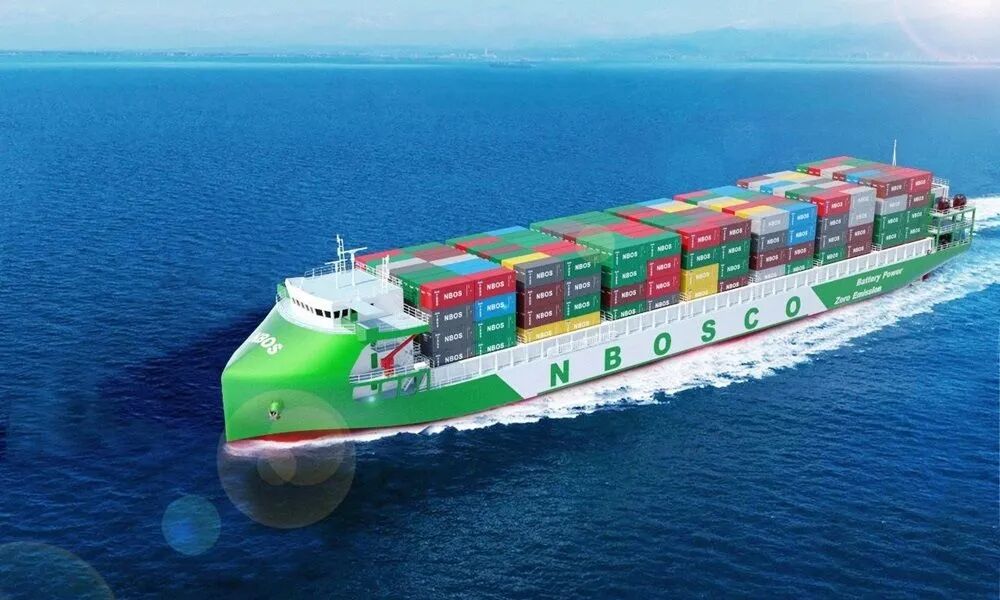
Ningbo Ocean Shipping stated that the leased vessels are all newly built ships, and the counterparty will be responsible for purchasing and holding ownership. After all are delivered, the company will fill the gap in medium- and large-sized vessel types in the container transportation field and build up scaled capacity of four 7,000-CEU vessels in the ro-ro transportation field.
The implementation of Ningbo Ocean Shipping’s long-term leasing this time is a capacity allocation arrangement made based on its own strategic development needs and actual business demand, aiming to seize opportunities in China’s economic development, grasp shipping industry development trends, further optimize its fleet capacity structure and consolidate its core competitiveness.
From a strategic perspective, Zhejiang and the hinterland around Ningbo Zhoushan Port have a solid foundation for foreign trade development. The scale of goods imports and exports accounts for a relatively large share of the national total, market demand is strong and growth expectations are good, and there is sustained demand for regional shipping networks and international transport corridors to emerging markets. The company is expanding its business segments and cultivating its operating capabilities in ocean-going container and ro-ro routes by long-term control of capacity, so as to build a diversified transport service system of “containers + bulk and breakbulk cargo + ro-ro.” Leasing vessels to expand capacity this time will help the company seize regional foreign trade development opportunities, improve its level of support for economic exchanges between Zhejiang and emerging markets, create new profit growth poles, and accelerate the implementation of its strategic vision of upgrading from “a leading regional logistics service provider in Asia” to “a comprehensive shipping service provider leading in Asia and connecting the globe,” thereby serving the high-quality development of China’s foreign trade.
In terms of capacity structure, the company’s own foreign-trade fleet is limited in size, with a relatively high proportion of small and medium-sized vessels and insufficient supply of large ocean-going capacity, making it difficult to meet the needs of expanding into emerging ocean-going markets. Through this leasing, the company will further expand its fleet size, optimize its fleet structure and enhance its core competitiveness in ocean-going transportation. Among them, the 7,000-TEU container ships are suitable for regions with concentrated cargo flows on near-sea and transoceanic routes and for medium-haul transportation business, and can effectively increase per-voyage carrying capacity and enhance regional trunk capacity reserves and vessel deployment flexibility; the 14,000-TEU container ships can serve large-capacity trunk routes and slot cooperation business, broadening the business space for the company to participate in large-scale trunk transportation; and the 7,000-CEU ro-ro ships are suitable for the transportation needs of China’s automobile exports to mainstream international markets.
In terms of capital expenditure, in recent years the company has comprehensively used multiple models such as self-building, leasing and cooperative operation to continuously optimize its vessel capacity structure. Obtaining vessel capacity through the long-term leasing model this time will help reduce large capital investment in the ship construction stage.
On the same day, Ningbo Ocean Shipping released its 2026 third-quarter report. In the first three quarters of this year, the company achieved operating revenue of RMB 5.177 billion, up 14.81% year on year; net profit attributable to the parent company was RMB 482 million, down 9.64% year on year; and as of the end of the third quarter, the company’s total assets were RMB 11.867 billion, up 34.96% from the end of the previous year.
Hot News