


Containership orders are surging, closing in on 16 million TEU!
Source:
2026-11-02
The containership sector’s newbuilding boom shows no sign of slowing, with the global orderbook now exceeding 15m TEU, and another wave of ultra-large containership contracts is expected to push the total orderbook to 16m TEU by the end of the year.
The latest Alphaliner data show that about 40 more large containerships are expected to be added to newbuilding projects, involving Maersk, Yang Ming, CMA CGM and MSC. Orders from the first two are expected to be finalised soon, while contracts involving CMA CGM and MSC are believed to have already been signed but have not yet been confirmed by Alphaliner.
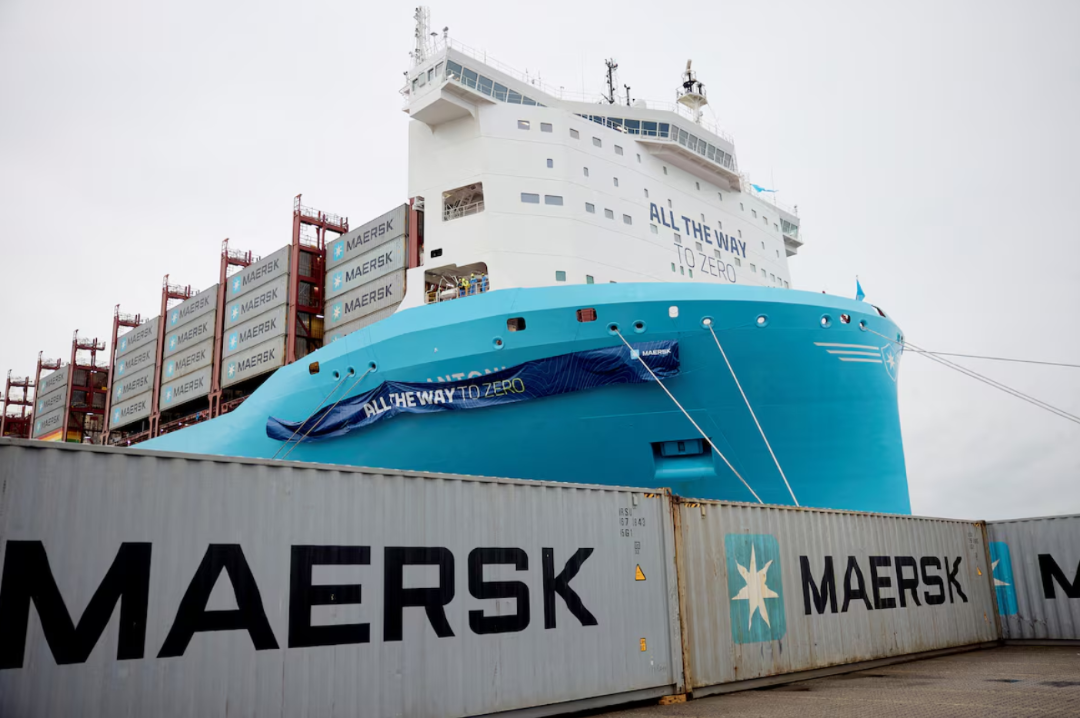
One of the most notable potential deals is Maersk’s return to the largest containership segment. Alphaliner reports that the company is in exclusive talks with Chinese shipyards to order a series of 12 24,000-TEU LNG dual-fuel vessels, potentially with options for another 12. At an estimated $240m per ship, the initial project is worth about $2.88bn, rising to $5.76bn if all options are exercised.
These vessels would mark Maersk’s first entry into the 24,000-TEU ship type, surpassing its iconic twin-engine Triple-E design launched more than a decade ago. Chinese shipyards are favoured because of cost and available building slots.
The expansion of the orderbook is particularly striking relative to the size of the existing fleet. Alphaliner’s October monthly monitor showed contracted capacity at 15.12m TEU, equivalent to 43.9% of the operating fleet. Its forecast shows fleet capacity growing 9.2% in 2027 and another 14.4% in 2028. This supply wave is arriving as the industry’s operating geography undergoes another fundamental shift.
Sea-Intelligence reported this week that about 60% of capacity currently deployed on the Asia-Europe route is operating or planned to operate via the Suez Canal rather than around the Cape of Good Hope. The consultancy expects further normalisation in the first quarter of 2027, provided security conditions allow. The return of shorter voyages will release effective vessel capacity into a market already facing accelerated delivery of physical capacity.
Broker Braemar warned in its latest container briefing that the return of Suez Canal services combined with the expansion of the orderbook “is not an ideal combination for charter rates”.
Investment bank Jefferies also expressed similar caution on 2027, warning that newbuilding deliveries could push fleet growth beyond cargo demand. However, the current charter market remains remarkably resilient.
Alphaliner reported that in its latest survey only 0.8% of the global containership fleet was commercially idle, while charter rates have climbed to four-year highs. Available ships remain exceptionally scarce, and daily rates for some large vessels are reported to have reached six figures.
Meanwhile, the ordering boom is also reshaping propulsion choices. LNG dual-fuel ships now account for 56% of contracted capacity, while methanol dual-fuel ships account for 12%. Conventional propulsion accounts for slightly less than 32%. Alphaliner recorded 2.3m TEU of new LNG dual-fuel orders in 2026, and the expected ultra-large containership contracts could add another 1m TEU. By contrast, methanol-powered ordering has almost stalled.
At present, geopolitical disruption and tight prompt vessel supply continue to support exceptionally high charter earnings. But Alphaliner warns that the coming delivery deluge “will eventually hit the market”.
Hot News