


Labor Shortage and U.S. Pressure Cast Doubt on 'Made in Japan' Strategy
Source:Beyond Shipping
2026-08-07
For those familiar with the history of Japan's industrial policy, the current wave of developments in the shipbuilding industry feels strikingly familiar—yet simply applying historical analogies can be highly misleading.
In 2025, Japan's shipbuilding industry was suddenly thrust into the vortex of intense political maneuvering. It all began in March 2025, when then-U.S. President Donald Trump delivered a speech to Congress explicitly calling for the revitalization of America's domestic shipbuilding industry. The following April, Trump signed an executive order, Restoring U.S. Maritime Dominance, with the core policy goal of reviving the entire U.S. maritime industrial chain and reducing the nation's dependence on China's industrial supply chains, thereby strengthening economic security and reshaping the domestic industrial base.
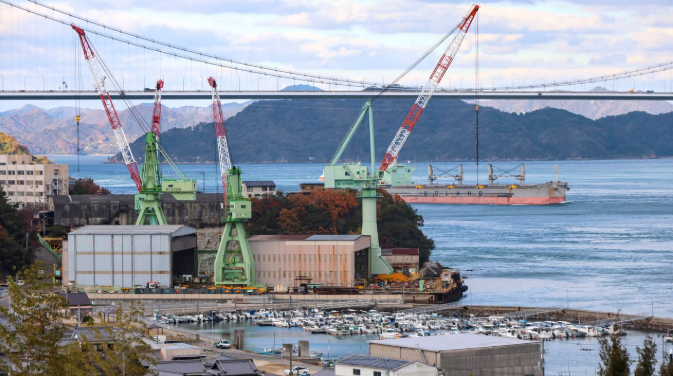
On the surface, this U.S. policy seemed unrelated to Japan. However, given the current severe shortages in U.S. shipbuilding capacity and industrial manpower, implementing this plan would inevitably require collaboration with allies that possess substantial shipbuilding capacity and a significant global market share—making Japan and South Korea the preferred partners. At that time, Japan was eager to negotiate with the United States to secure tariff reductions on Japanese automobile imports, and it promptly used shipbuilding as an important bargaining chip.
Before long, the Japanese government swiftly introduced support policies for the shipbuilding industry. In June 2025, the Japanese Cabinet issued the *Basic Policy on Economic and Fiscal Management and Reform*, which explicitly called for revitalizing the domestic shipbuilding industry, building a maritime industrial cluster centered on shipping and shipbuilding, and enhancing industrial chain resilience. This annual policy document significantly expanded the section on shipbuilding and, for the first time, included provisions on Japan-U.S. industrial cooperation—clearly revealing the Japanese government's calculus: to use commitments to Japan-U.S. shipbuilding cooperation as leverage to gain an advantage in bilateral tariff negotiations.
Japan's Liberal Democratic Party (LDP) quickly followed suit. The LDP's Special Committee on Maritime Transport and Shipbuilding, together with its Economic Security Promotion Headquarters, jointly drafted the *Emergency Proposal for Revitalizing Japan's Shipbuilding Industry*, submitted to then-Prime Minister Shigeru Ishiba in June 2025. The proposal called on the government to establish a national-level support fund, formulate an industry revitalization roadmap, and increase fiscal support. Under the framework of "deepening partnerships with like-minded countries," it emphasized advancing Japan-U.S. shipbuilding cooperation and listed multiple specific areas for collaboration. With both the Cabinet and the ruling party advocating large-scale fiscal investment in shipbuilding, what had been a purely industrial sector became entangled in Japan-U.S. geopolitical dynamics, sparking widespread discussion and controversy in Japanese society.
In July 2025, Japan-U.S. tariff negotiations reached an agreement. As part of the deal, Japan committed to investing a cumulative total of $550 billion in the United States, with shipbuilding designated as a priority investment area. In October of the same year, the two countries signed a memorandum of cooperation, agreeing to establish a bilateral shipbuilding working group to discuss specific cooperation details, including capacity expansion.
In December 2025, the Japanese government officially released the *Shipbuilding Industry Revitalization Roadmap*, setting quantifiable targets: using 2024's annual production of approximately 9 million gross tons as a baseline, the goal is to double annual shipbuilding output to 18 million gross tons by 2035. In line with the LDP's proposal, the roadmap also called for the establishment of a 350-billion-yen national-level special fund, to be disbursed to the industry over ten years.
Japanese shipbuilding companies have also seized this window of policy opportunity. In October 2025, 17 Japanese shipbuilders jointly announced plans to raise 350 billion yen of their own capital for capacity expansion, while calling on the government to provide additional supporting funds. Although both the government and the industry share the broad goal of "revitalizing shipbuilding," their core objectives and implementation paths differ significantly.
Even as they continue to seek policy subsidies, Japanese shipbuilders have long been implementing reforms to enhance their global competitiveness.
In June 2025, Imabari Shipbuilding, Japan's largest shipbuilder by market share, announced the acquisition of a majority stake in its biggest domestic rival, Japan Marine United (JMU). In December of the same year, Japan's three major shipping giants—Nippon Yusen Kabushiki Kaisha (NYK), Mitsui O.S.K. Lines (MOL), and Kawasaki Kisen Kaisha ("K" Line)—decided to take stakes in the MILES platform. Jointly established by Mitsubishi Heavy Industries and Imabari Shipbuilding, MILES is a cross-industry core project aimed at unifying next-generation ship design standards. Both moves share the same underlying logic: promoting industry-wide resource integration to create a "Japan-wide consortium" that can compete collectively in the global shipbuilding market.
The government's revitalization plan is likewise founded on a unified national model. The aforementioned roadmap calls for promoting vertical and horizontal integration across the maritime industrial chain. For economic security reasons, the government also set a hard target of creating a complete closed-loop system of "Japanese ships built by Japan and owned by Japan." The LDP's emergency proposal similarly stressed that, from a national security perspective, it is essential to ensure that "Japanese vessels are built in Japan and owned by Japanese companies."
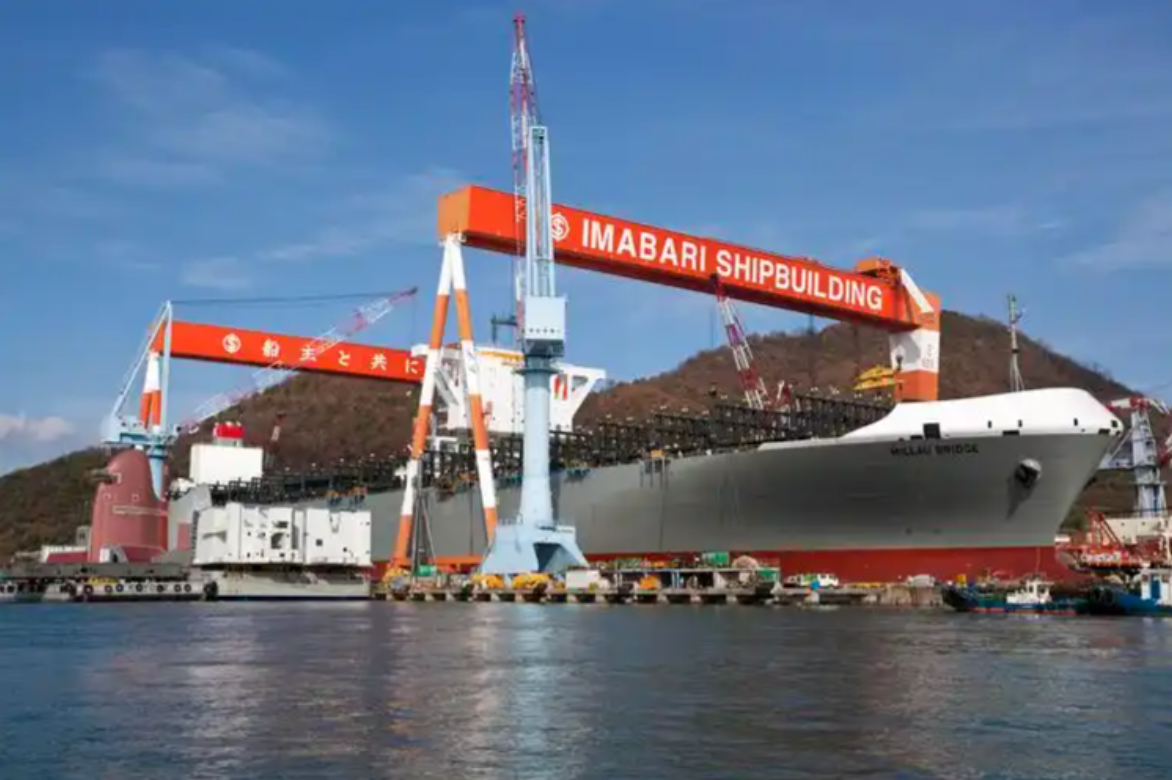
Herein lies the divergence: the government's vision of a unified national shipping system focuses on expanding domestic self-sufficiency capacity and securing supply chains, whereas the shipbuilders' integration efforts are primarily aimed at reducing costs and enhancing global profitability—objectives that are not entirely compatible. The disconnect between the government's top-level planning and the companies' market-oriented strategies has created hidden risks for policy implementation. The roadmap sets a target of consolidating Japan's shipbuilding industry into one to three major groups by no later than 2028, but many companies resist administratively mandated restructuring, making implementation highly challenging. The drafters, sensing industry resistance, deliberately left the integration details vague, merely mentioning that "grouping is the direction, accommodating various integration and collaboration models," leaving room for negotiation and compromise.
While the government is calling for expanding domestic capacity, one major Japanese shipbuilder, Tsuneishi Shipbuilding, has taken a distinctly different expansion route: building overseas plants to tap into abundant overseas engineering human resources to solve labor shortages, with its latest site chosen in Timor-Leste. Looking back at Japanese industrial history, it is not uncommon for business strategies in the shipping and shipbuilding sectors to diverge from administrative plans—the case of Sanko Steamship in the 1960s is a classic example, and the current situation seems to be history repeating itself.
In the late 1940s, the Japanese government implemented a "planned shipbuilding" policy to revive shipping and shipbuilding: administrative authorities set annual total shipbuilding volumes, allocated construction quotas to each shipyard, and provided fiscal subsidies. The policy aimed to balance the priority access of large shipping companies with the survival interests of smaller shipbuilders, while also reserving sufficient dock capacity to take on overseas orders during shipping upcycles.
In the 1960s, the government relied on planned shipbuilding to push for industry restructuring, but several shipping companies, including Sanko Steamship, refused to join, insisting on independent operational strategies. Even though these companies agreed with the broad direction of industrial revitalization, their own commercial interests ultimately clashed with administrative objectives, directly undermining the effectiveness of the industrial policies of that era.
Shipbuilding capacity fundamentally depends on the supply of key production factors such as labor and steel. Japan's chronic labor shortage was the primary reason Tsuneishi chose to build overseas plants. Shipbuilding is also highly dependent on steel, and amid rising steel prices, the industry must deepen its collaboration with the steel sector. In March 2026, Japan's shipping, shipbuilding, steel, and marine equipment industries held their first high-level joint meeting, initiating a framework for ongoing cross-sector collaboration. As economic security continues to gain weight, the scope of integration under Japan's national shipbuilding system may extend from shipping and shipbuilding to all upstream and downstream supporting industries.
The degree of fiscal support that Japan's shipbuilding subsidy policies can sustain in the future will largely depend on progress in Japan-U.S. shipbuilding industrial cooperation. The bilateral shipbuilding working group established by the two sides held its first meeting in the United States in February 2026, but to date, no detailed implementation measures have been finalized. Japan must simultaneously respond to U.S. demands on shipbuilding while adhering to its own "Made in Japan" industrial policy—balancing the two will be a major challenge, requiring ongoing consultations and adjustments between Japanese shipyards and competent authorities.
Relying solely on closed-door discussions among a handful of public officials and industry experts will hardly dispel the concerns of ordinary citizens or secure public recognition for the necessity of directing hundreds of billions of yen in fiscal funds toward the shipbuilding industry. If the Japanese government is determined to implement this industrial support plan, it must actively open up channels for public discourse, broadly incorporate public opinion, and ultimately build a society-wide consensus for development.
Hot News