


6‑vessel, $720M mega order, but Indian shipyards get preference.
Source:
2026-08-06
The maritime service network CNSS has learned that the Shipping Corporation of India (SCI) is steadily advancing its fleet expansion plan in line with the Indian government's national strategy to reduce reliance on foreign-flagged vessels and enhance domestic shipbuilding capabilities.
Following the release of a tender for feeder container vessels in April this year, SCI issued a new tender on July 31 for the construction of up to six 8,000 TEU LNG dual-fuel container vessels. This project not only represents the largest container ship order in the company's history but also marks a critical step for India's shipping industry toward large-scale, green development.
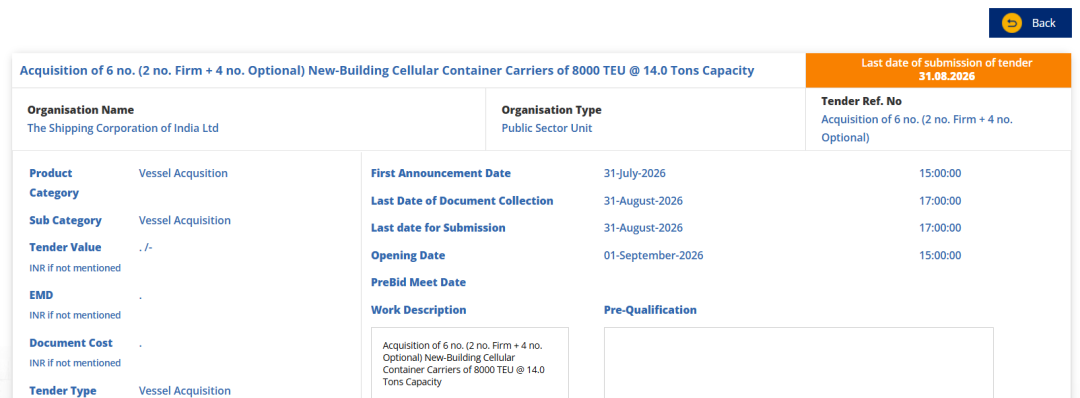
The tender is open to both domestic and international shipyards, seeking to procure up to six 8,000 TEU container vessels. The vessels are designed with an overall length of approximately 330 meters, a service speed of 17 knots, a range of 20,000 nautical miles, and will be equipped with 1,000 reefer plugs. Their air draft is designed to meet the entry requirements of U.S. container ports. The bid submission deadline is August 31. The contract follows a fixed-price model, comprising two firm orders and four optional vessels, with a total estimated value of approximately $720 million. Shipyards are not permitted to subcontract construction work; however, Indian domestic shipyards without prior container vessel construction experience are allowed to establish technical cooperation or form consortia with internationally renowned shipbuilding companies to obtain the necessary construction qualifications.
In line with the Indian government's vision to build world-class shipbuilding bases, the tender documents include a special competitive mechanism for Indian shipyards. During the price evaluation phase, the lowest-quoted qualified Indian shipyard will be granted a right of first refusal over the lowest foreign bid. Should that Indian shipyard be unable to match the lowest foreign price, this right will be sequentially passed to other Indian bidding shipyards in ascending order of their quoted prices. This arrangement aims to enhance the chances of domestic shipyards winning the bid while maintaining transparency in international competition.
The new tender is part of the Indian government's 2026 shipping investment plan. For the full year, India is expected to fulfill investment commitments for 62 new vessels, with a total investment of $5.3 billion.
Looking further ahead, India plans to build or acquire approximately 437 vessels by 2042, of which over 200 will be used for oil and gas transportation. SCI will undertake 58 of these, while the newly established joint-venture container shipping company Bharat plans to add 51 vessels. Prior to this, SCI had already issued a tender worth $360 million in April this year for up to six 1,700 TEU methanol dual-fuel feeder container vessels, which also offered preferential policies to Indian shipyards. Additionally, India's first domestically built Aframax tanker project has been initiated, and SCI has issued a request for proposals for four vessels.
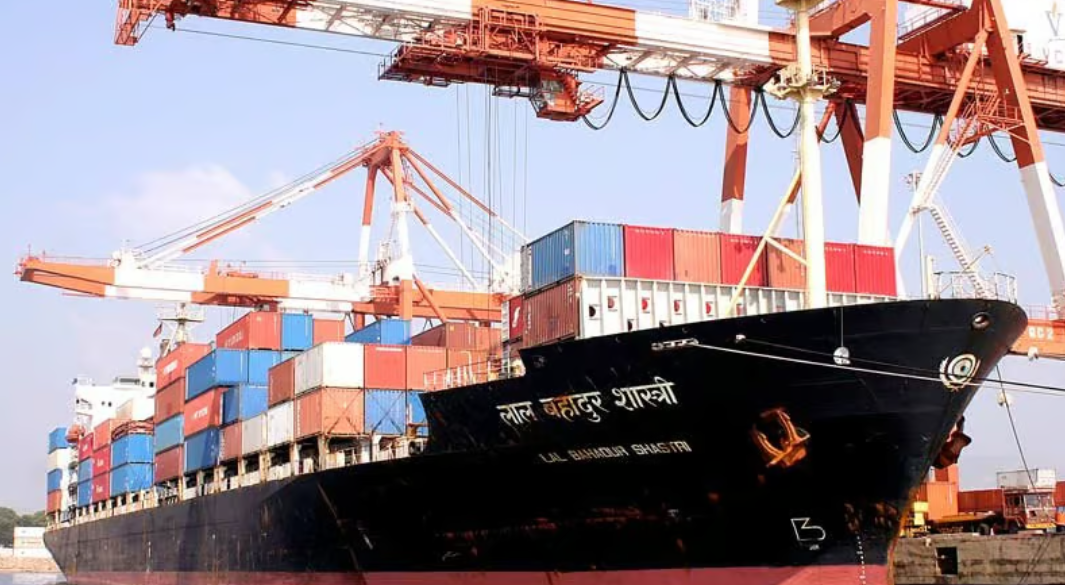
To support these plans, the Indian government has introduced a series of shipbuilding financing schemes and is providing fiscal incentive measures to shipowners for newbuilding orders, aimed at reducing financial pressures on domestic shipyards and increasing owners' willingness to place orders locally.
Currently, major Indian shipyards are actively gearing up:
Cochin Shipyard has already secured an order for liquefied natural gas (LNG)-powered container vessels from CMA CGM and is regarded as a strong contender;
Swan Defence and Heavy Industries (formerly the Reliance Industries shipyard assets) and L&T Shipbuilding are also formidable players;
Garden Research Shipbuilders is in the process of forming a consortium to participate in the bidding.
Meanwhile, major South Korean shipbuilders have also shown strong interest in collaboration. HD Hyundai Heavy Industries has announced the signing of a relevant agreement, expressing its willingness to provide technical support for the development of India's shipbuilding industry. Other South Korean shipbuilders are expected to follow suit, participating in the Indian government's shipbuilding plan through technical cooperation or joint ventures.
With the sequential rollout of SCI's two container vessel tenders, as well as the gradual progress of tanker and feeder vessel projects, India's shipping industry is entering a phase of rapid development driven by government leadership, domestic priority, and international collaboration. Whether India can secure a more significant position in the global shipbuilding market over the next decade will depend on the implementation outcomes of this tender and the sustained effectiveness of subsequent industrial policies.
Hot News