


BYD Battery Comes Aboard Ammonia-Fueled Car Carrier
Source:
2026-11-11
On November 9, Höegh Autoliners announced it has signed an agreement with BYD to install a marine battery system on its upcoming car carrier Aurora No. 12. The vessel will combine battery energy storage, solar panels, a shaft generator and ammonia-fuel propulsion.
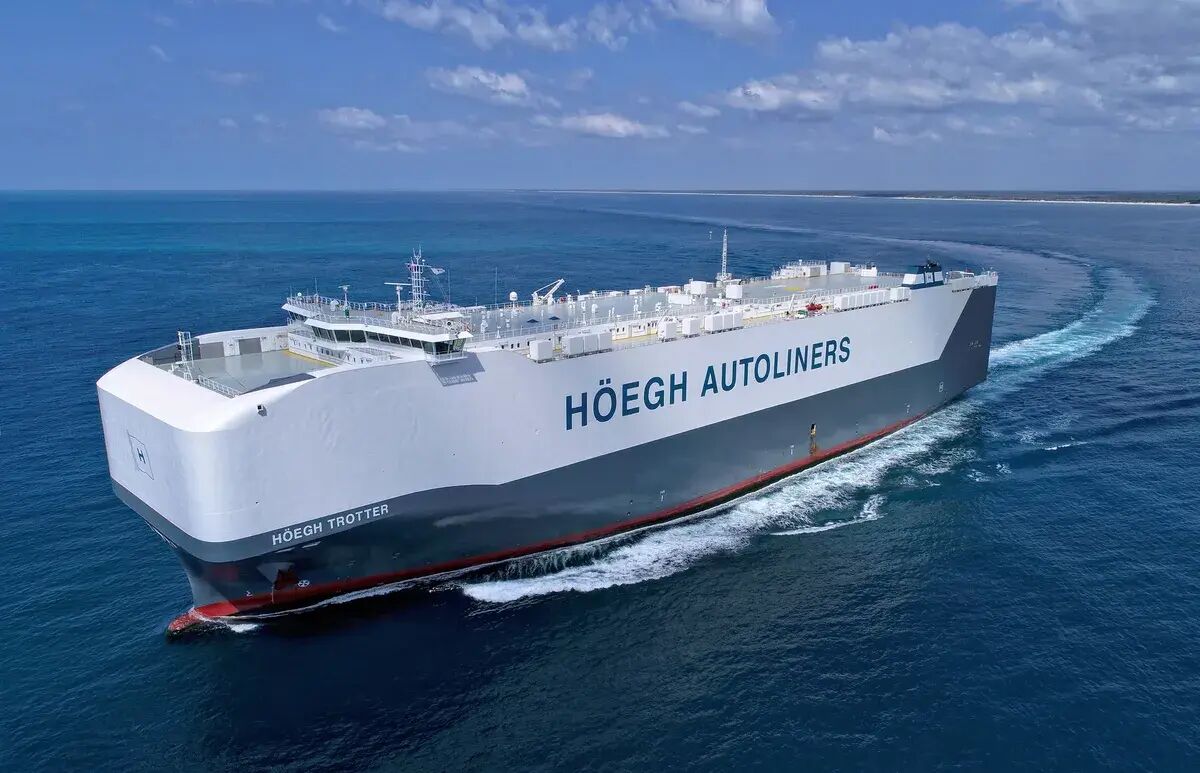
Under the agreement, the ship will be equipped with an integrated energy system designed to reduce fuel consumption and emissions. Aurora No. 12 is scheduled for delivery in May 2028 and will be capable of ammonia-fuel operation from the day it leaves the shipyard.
Höegh Autoliners said this will be the first ocean-going pure car and truck carrier, or PCTC, to integrate all four technologies, and is expected to become the most fuel-efficient PCTC ever built.
Andreas Enger, CEO of Höegh Autoliners, said: “This demonstrates that the shipping industry can play a leading role in the green transition. We are integrating all available green technologies into a vessel that can operate on ammonia from its very first day in service. No ocean-going car carrier has achieved this before.”
The battery system, supplied by BYD, will operate together with the vessel’s shaft generator and solar panels to optimize onboard energy management. Höegh estimates the combination will cut greenhouse gas emissions by about 1,000 tonnes of CO₂ equivalent per year, while also lowering fuel costs.
The technology could also help address one of the key challenges facing ammonia-powered shipping: green ammonia remains relatively expensive compared with conventional marine fuels. Although ammonia produces no CO₂ when burned, its overall environmental impact depends heavily on how it is produced.
Sebjørn Dahl, COO of Höegh Autoliners, said: “We want to push ourselves forward technically and understand how green technologies can perform when combined in the most effective way.”
BYD said the partnership will demonstrate the potential of its containerized battery technology in ocean-going shipping.
Aurora No. 12 is part of Höegh Autoliners’ expanding Aurora-class newbuilding program at China Merchants Heavy Industry. Each vessel can carry up to 9,100 cars, and the company says carbon emissions per transported vehicle can be reduced by up to 58 percent compared with conventional car carriers.
The latest development follows Höegh’s additional order of six Aurora-class vessels in August this year, bringing the total number of ships in the program to 18. With options and reserved building slots, the fleet could ultimately expand to 26 vessels.
Aurora-class vessels are equipped with engines from Everllence and bridge systems from Kongsberg Maritime, and have obtained DNV class notation for ammonia- and methanol-fuel readiness. The addition of the BYD battery system marks another step in Höegh’s effort to transition its ocean-going fleet toward low-carbon and zero-carbon operations.
Hot News