


Europe's "Frenzied Rush" for Chinese Air Conditioners: What Does It Mean for Container Shipping?
Source:
2026-07-22
During the summer of 2026, a combination of El Niño and global warming has brought extreme temperatures exceeding 40°C to multiple European cities, driving increasingly urgent demand for cooling equipment across the continent. With domestic air-conditioner manufacturing capacity limited in Europe, China has emerged as the primary source of supply to meet this need.
As a result, container liner services from China's coastal ports to destination ports across Europe are playing a critical role in the large-scale transport of complete air-conditioning units and their components, with the global maritime logistics network demonstrating strong deployment capabilities and responsiveness.
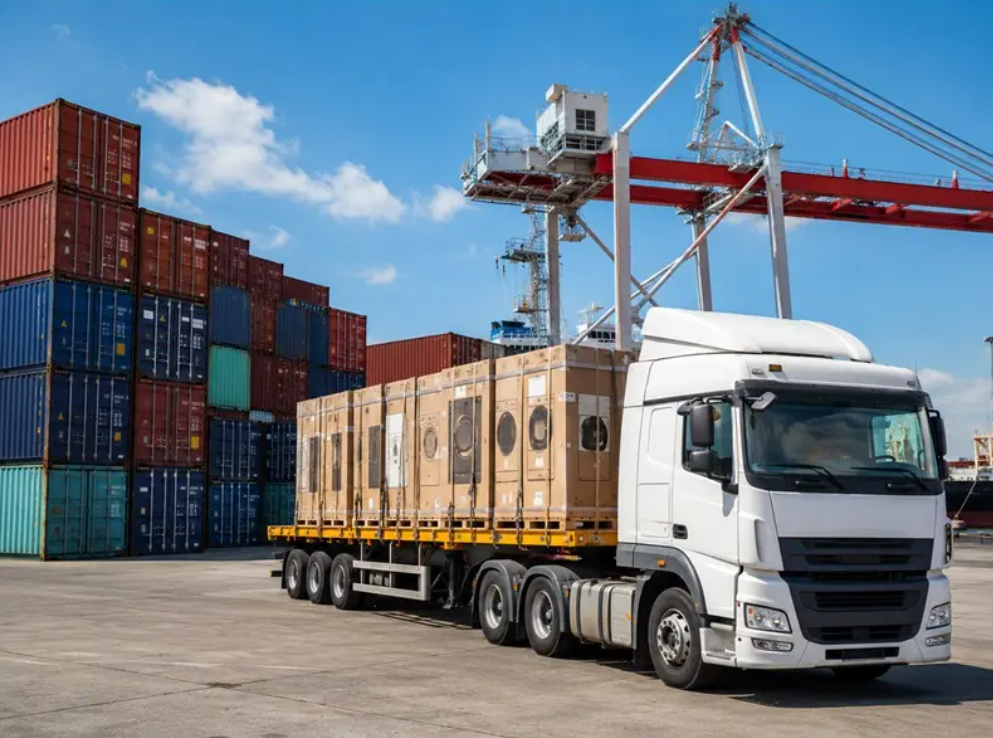
Data from the General Administration of Customs shows that in the first half of 2026, China's air-conditioner exports to the European Union reached US$3.76 billion , a year-on-year increase of 43.2% , hitting a record high for the same period. A variety of portable split air-conditioning units specifically designed for European building characteristics have proved especially popular. In the face of this sudden surge in orders, China's principal manufacturing bases, such as the Pearl River Delta and Yangtze River Delta regions, have increased production and capacity, and optimised container loading schemes, to ensure cargo arrives promptly at ports of departure.
At the same time, major liner operators have responded swiftly, increasing service frequency and optimising capacity allocation on China–North Europe and China–Mediterranean routes. Mediterranean Shipping Company launched its premium Asia-Europe "JADE" service in June 2026, deploying sixteen 24,000 TEU ultra-large containerships calling at Qingdao, Ningbo, Shanghai, Xiamen, Nansha, Yantian, and Singapore, with direct connections to key southern European markets including Valencia, Barcelona, and Fos. The Ocean Alliance released its DAY 10 product in January 2026, deploying eleven service loops across its Far East–North Europe and Mediterranean network with a combined capacity of nearly 5.3 million TEU. Maersk, meanwhile, has undertaken a major restructuring of its Asia–Europe network from April 2026, with its AE3 service adding calls at Yantian, Aarhus, Gothenburg, and Southampton, and its AE5 service incorporating Ningbo and Algeciras.
Once cargo arrives in Europe, major gateway ports such as Rotterdam, Antwerp, and Hamburg have effectively handled the concentrated inbound container flows by extending operating hours, deploying additional manpower, and utilising automated equipment. Concurrently, some importers are supplementing deliveries with China-Europe Railway Express services, shifting part of their cargo from sea to rail in a seamless sea-rail intermodal connection. This multimodal transport model not only relieves some of the periodic pressure on maritime shipping but also offers faster distribution options to inland areas of Europe, ensuring that air-conditioning equipment reaches end users in a timely manner during peak heatwaves.
Beyond exports of complete units, China's supply of components such as air-conditioner compressors and control panels to Europe has also continued to grow, supporting the stable operation of local installation and after-sales maintenance networks and building long-term service capacity. Chinese manufacturers, European importers, and logistics service providers have established close information-sharing mechanisms, smoothing out seasonal freight fluctuations through advance demand forecasting and dynamic adjustments to transport plans. Continued dialogue between the two sides on trade facilitation and the alignment of standards is also creating favourable conditions for broader commercial exchanges in the future.
Hot News