


German Flag Relaxes Manning Rules: Non-EU Nationals Can Now Serve as Masters and Senior Officers!
Source:
2026-09-16
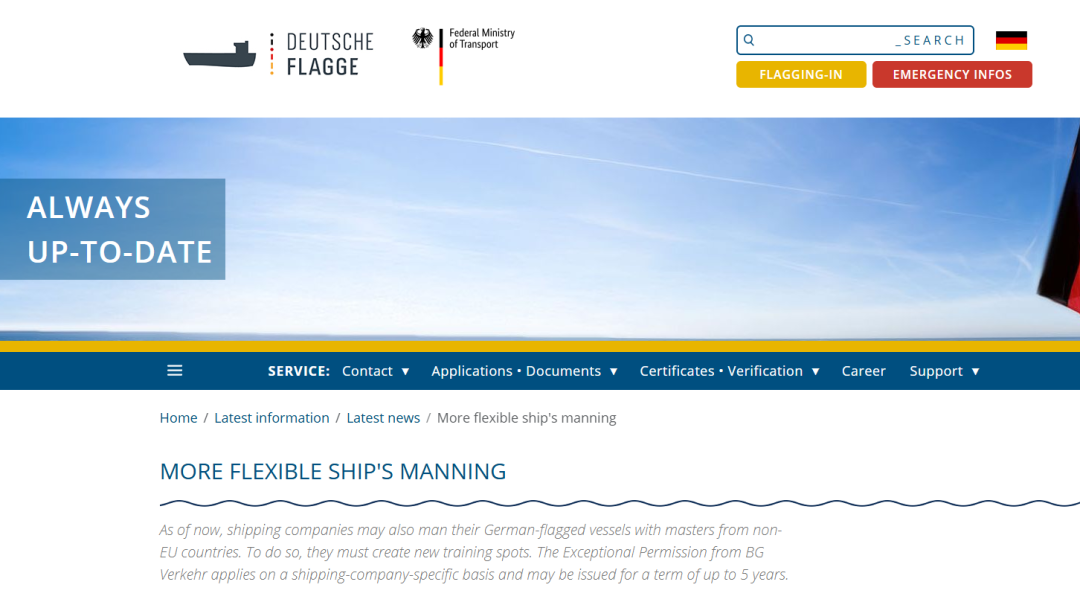
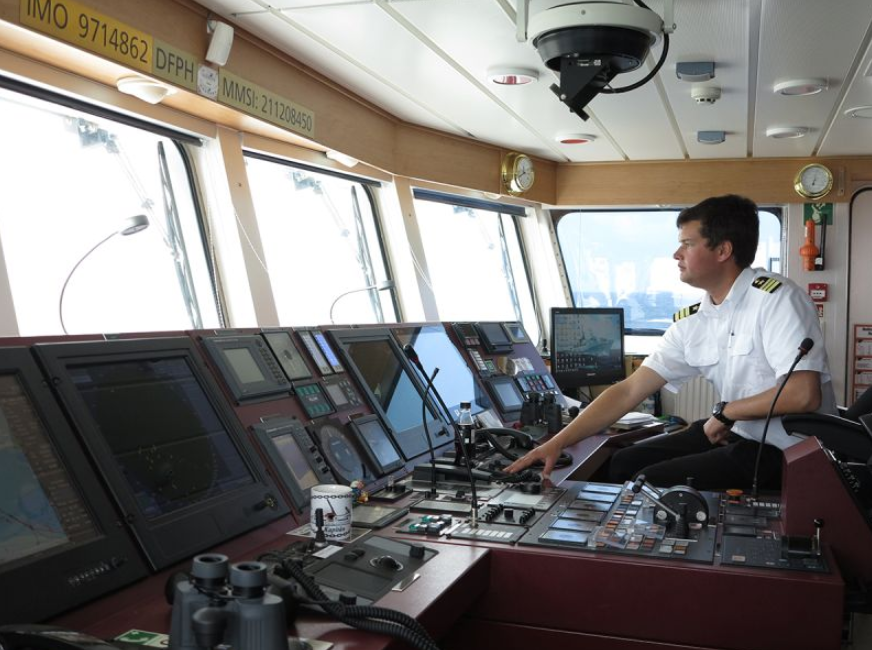
According to the official website of "Deutsche Flagge" (German Flag), starting from September 11, ships flying the German flag may for the first time be staffed with non-EU masters and senior officers. Previously, under EU regulations, the master and senior officers on larger vessels (over 8,000 gt) had to be EU nationals.
Sources emphasized that this basic principle will not change for the time being, "but shipowners now have more choices."
If a master or senior officer from a non-EU country (third country) holds a certificate of competence issued by an EU member state, they only need to obtain an endorsement issued by Germany and complete a course on "German Maritime Law."
If they hold a certificate of competence issued by a non-EU country, the shipowner may also apply to the Ship Safety Division (Dienststelle Schiffssicherheit) under the German Social Accident Insurance Institution for the Transport Industry (BG Verkehr) for an exceptional permission.
The application of the new rules must meet three conditions:
There are no available EU masters or EU senior officers on the labor market;
The shipowner must undertake that no EU senior officer can currently be promoted to master;
For every third-country master or senior officer hired, the shipowner must create two additional training positions. For shipping companies whose vessels are all below 500 gross tonnage, it is sufficient to create one additional training position.
According to the relevant explanation, personnel who can be counted toward the above training positions include: ship mechanic trainees, deck/engine/electrical officer assistants (NOA, TOA, ETOA), and ordinary crew members who obtained their maritime academy graduation certificate no more than 5 years ago.
In addition, special note should be taken that this regulation is not "one approval per ship." The relevant permission is granted to the shipping company as a unit, with an initial validity period of 6 months. If the company concerned has implemented the corresponding training positions, the permission period can be extended by 54 months.
The German Federal Ministry of Transport stated in a declaration: "Relaxing crewing restrictions has a dual benefit: on the one hand, it enhances the competitiveness of the German flag, and on the other hand, it provides incentives for strengthening maritime training."
Hot News