


United States Eyes State-Owned Shipping Line to Redraw Its Maritime Footprint
Source:
2026-08-03
In the global container shipping industry, U.S. companies are virtually insignificant. However, a state-owned shipping company proposed by a think tank could change that—but at a prohibitively high cost.
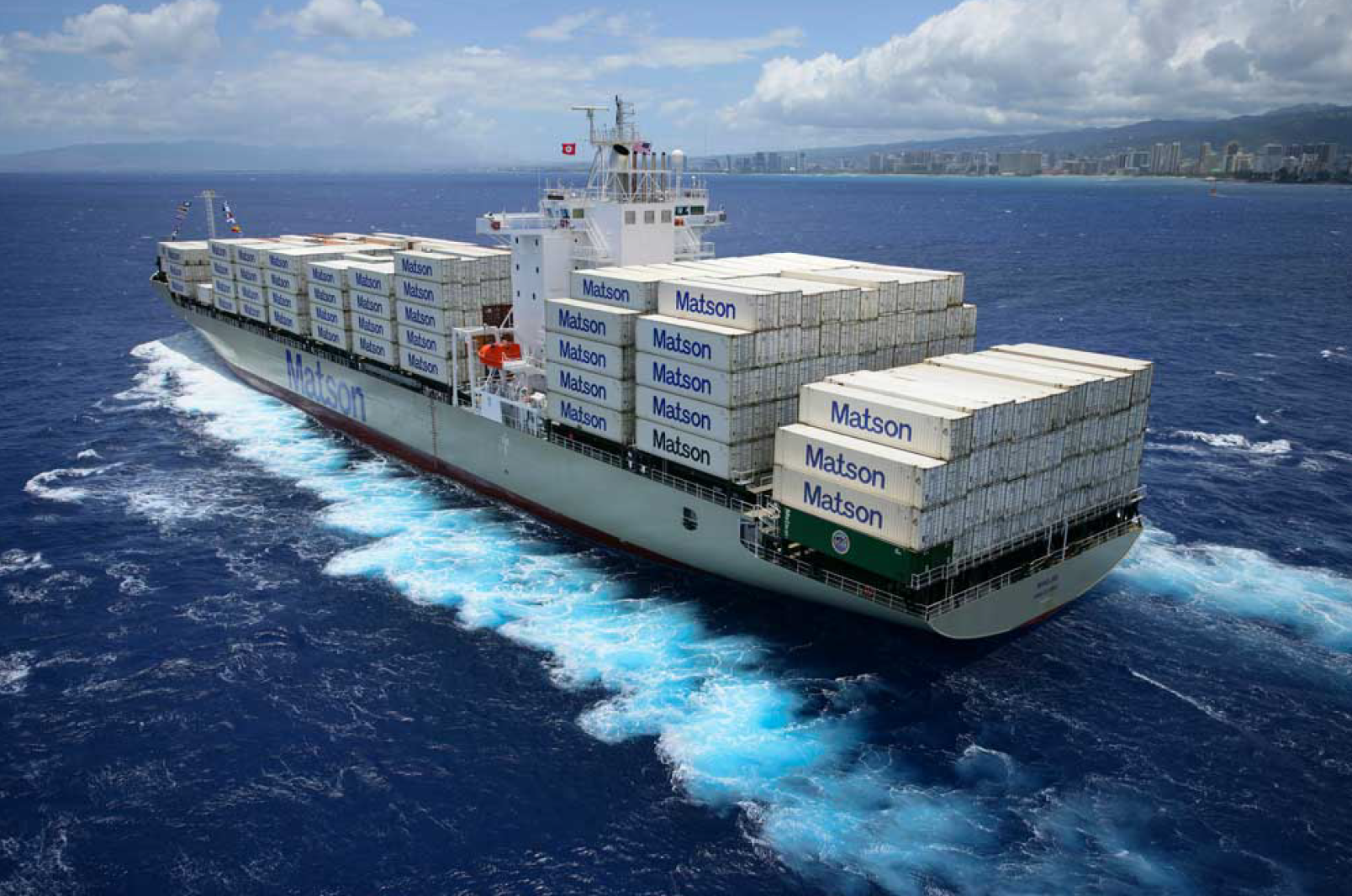
In the last century, the United States once dominated global shipping. After World War II, a vast number of merchant ships sailed under the U.S. flag, with leading players including American President Lines and Sea-Land Corporation, one of the pioneers of container shipping. Today, however, that market position has all but vanished: not a single U.S. company appears among the world's top 20 liner carriers. U.S. carrier Matson ranks only 30th, with a capacity of less than 70,000 TEUs and a global market share of a mere 0.2%.
One reason for the decline of U.S. shipping is the prohibitively high cost of operating U.S.-flagged vessels. Crew wages, insurance premiums, and taxes are all higher than international levels. As shipping globalization advanced, trends toward larger vessels, fleet scaling, and international service and logistics networking emerged—yet U.S. companies not only failed to expand but gradually withdrew from these markets. Moreover, shipbuilding capacity has shifted overseas to an extent even greater than in Europe. In the mid-20th century, U.S. domestic shipyards could still build large numbers of vessels; today, the world's largest shipbuilding capacity is concentrated in China, followed by South Korea and Japan.
A recent report by the American think tank Open Markets Institute (OMI), titled *Creating a Publicly Accountable Ocean Supply Chain,points out that this situation could pose a threat to the U.S. economy in times of crisis. Currently, almost all major shipping routes are operated by foreign companies. In addition, U.S.-flagged container ships account for less than 1% of the global total, with just 58 vessels in service.
The OMI analysis argues that foreign-controlled shipping companies increase the risk that U.S. shippers could be easily cut off from global markets. The report also warns that the lack of domestic transport capacity poses a threat to U.S. national security.
Although some foreign shipping companies have U.S.-based subsidiaries, these remain under the full control of their overseas parent companies. The think tank warns that this reliance on foreign carriers limits U.S. responsiveness in emergencies and could even jeopardize U.S. military supply lines. The case of Israel illustrates the importance of this issue: Hapag-Lloyd's $4.2 billion acquisition of ZIM still requires approval from the Israeli government, which holds a "golden share" in ZIM, and ZIM is deeply involved in transporting supplies for Israel's military supply chain.
The most significant recommendation in the OMI report is the creation of a state-owned container shipping company. The OMI proposes that the U.S. government direct the Maritime Administration (MARAD), the federal shipping authority, to purchase ships from U.S. domestic shipyards, crew them with American sailors, and operate liner routes.
Other recommendations include subjecting global shipping alliances such as the Gemini Cooperation and the Ocean Alliance to "stricter oversight," and providing policy support for vessels that are U.S.-flagged and crewed by U.S. seafarers—i.e., fleets compliant with the Jones Act.
"For much of the twentieth century, we understood that shipping was too important to be left to the whims of the market," said Arnav Rao, author of the report. "It is time to relearn that lesson."
These recommendations are likely to find a receptive ear in U.S. President Donald Trump, who has made "revitalizing" U.S. shipping a stated goal of his administration. Tying that to a state-backed, stable customer with a steady order book would certainly accelerate the process.
That said, the concern that foreign shipping companies would "cut off" U.S. supply chains in a crisis is not entirely realistic—the United States holds too central a position in global trade to be easily excluded. Moreover, the cost of such a proposal is staggering: a state-owned shipping company would need dozens to hundreds of vessels and millions of containers, would have to reach agreements with terminals worldwide—and might even need to invest in building its own ports—not to mention the associated logistics network. It also remains uncertain whether such a carrier could operate competitively.
In the end, building and operating ships in the United States comes down to one word: expensive.
Hot News