


U.S.-Iran Maritime Standoff Escalates as 6 Million Barrels of Crude Oil Face Seizure
Source:
2026-09-28
As tracking data shows that three oil tankers intercepted by the United States as part of its economic blockade campaign against Iran have been found to be heading toward the United States, market speculation is intensifying. The United States has a precedent of filing forfeiture lawsuits, and the Trump administration has also hinted that this move is a step in continuing to punish Iran.
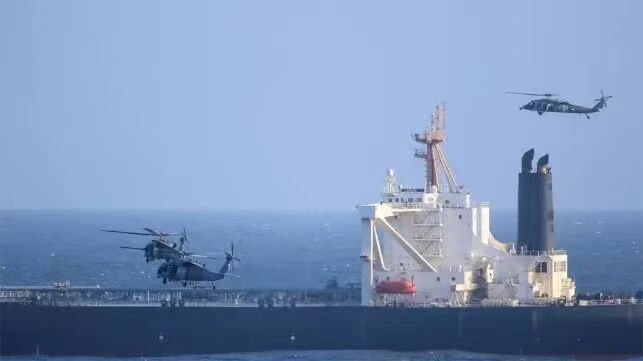
Using data from Kpler and other institutions, the identities of the three ships have been confirmed. Two of them are very large crude carriers (VLCCs): the Tifani (IMO 9273337), a 300,000-tonne tanker falsely registered in Botswana, which was intercepted in the Indian Ocean in April; and the Majestic X (IMO 9198317), a 281,500-tonne tanker falsely registered in Guyana, which was also stopped in the Indian Ocean two days after the first tanker was intercepted. Both ships have been detected sailing north along the coast of Brazil.
The Pentagon claimed that these vessels were intercepted under the "right of visit," and that the targets of the inspection were sanctioned stateless vessels. The U.S. Department of Homeland Security subsequently inspected the ships, and reports say the United States will seek seizure orders.
The third tanker has been identified as the Davina (300,976 tonnes). The ship was falsely registered in Curaçao and had previously falsely claimed to fly the flag of Palau. It was intercepted near Sri Lanka in June. Kpler data shows that the ship has rounded the Cape of Good Hope in Africa and recently entered the Atlantic Ocean.
Together, the three ships are carrying about 6 million barrels of Iranian crude oil. At current market prices, that is worth about $600 million. According to Kpler data, only the Majestic X briefly showed the United States as its destination at the end of July. But analysts are certain that these ships are heading to the United States, most likely Texas, where the United States will carry out forfeiture proceedings.
The Trump administration has commented on the possibility of seizure. In addition, it was reported that at the end of August the U.S. government began restoring the so-called "prize court"—a special court dedicated to ruling on the legality of the seizure and forfeiture of merchant ships of enemy states.
In the past, this procedure has taken a long time because it requires court litigation. After seizing a tanker near Venezuela last year, government lawyers complained to the court about the cost of maintaining the tanker "Skipper," saying it was reducing the value of the cargo.
The United States has previously carried out successful seizures, such as the case of the "Bella 1" (also known as the Marinera, IMO 9230880)—the United States chased the ship all the way from Venezuela across the Atlantic. The ship was empty at the time, but the Trump administration won a court order to seize and auction it, and it was ultimately bought by a cash buyer for scrapping.
In 2020, the United States seized and sold petroleum products from a tanker it intercepted before it reached Venezuela. In that case, the United States seized only the cargo and allowed the Greek shipowner to keep the vessel. A similar situation occurred in 2023, when the United States seized the cargo aboard the "Suez Rajan," which was intercepted in the Far East. The ship was eventually towed to the United States to unload, after which it was allowed to leave port under the new identity "St Nikolas."
In that case, Iran did not sit idly by while the oil was seized. In January 2024, Iran seized the "St Nikolas" in the Persian Gulf, acknowledged that it was an act of retaliation, and took away the crude oil cargo aboard, saying it had been sold as compensation.
Iran has called the U.S. seizure of its tankers and the continued blockade acts of piracy, and has made lifting the blockade one of the conditions for reopening the Strait of Hormuz. However, U.S. Central Command said the blockade is being enforced and posted on social media that, as of September 25, it had guided 122 merchant ships to ensure their strict compliance.
Analysts point out that the United States has intercepted more than these three Iran-related tankers. For example, the VLCC "Skywave" (IMO 9328716) is currently reported as missing. The 302,481-tonne tanker was intercepted between Malaysia and Sri Lanka in May.
Hot News