


Shipping lines are eyeing a new route as the Red Sea becomes impassable
Source:
2026-08-14
As summer ice conditions in the Arctic continue to improve, multiple Chinese and South Korean shipping lines have recently announced plans to launch or add container services via Russia's Northern Sea Route (NSR), linking Northeast Asia with Northern Europe. Industry analysts believe this move could complement capacity on the Asia–Europe mainline, which is currently diverted via the Cape of Good Hope, while significantly cutting transit times.
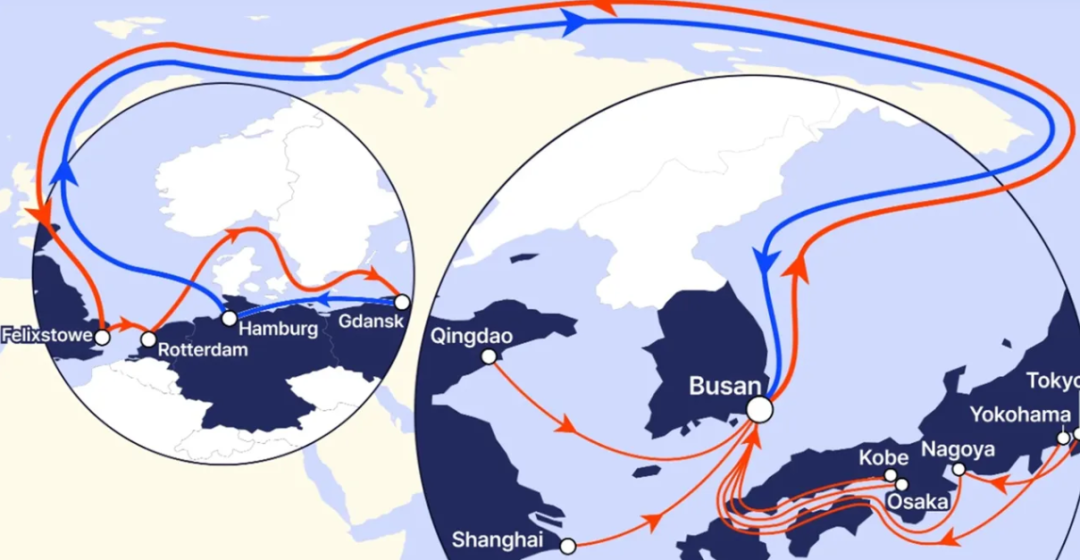
In its weekly report, shipping analyst Linerlytica said that several Arctic services have been launched since August, marking the official start of the 2026 Northern Sea Route season. In addition to Chinese carriers Hai Jie Shipping, Xin Xin Shipping and OVP Shipping, South Korea's PanStar Line has also joined the route, together releasing extra capacity to Northern Europe and Russia's Baltic region. Linerlytica noted that this will "partially alleviate the persistent tightness in space" on the route.
Earlier, Hai Jie Shipping announced that it would offer about eight near‑weekly sailings via the NSR during the summer under its China‑Europe Arctic Express (CAX) service, deploying seven container vessels. The maiden voyage will be operated by the Liberia‑flagged *Dubai Tower*, with a capacity of 1,740 TEU, scheduled to depart from Ningbo‑Zhoushan Port on August 15.
UK freight forwarder Davies Turner has confirmed it will take space on this service. According to the company, the total transit time from Ningbo‑Zhoushan to the UK's Felixstowe port is only 21 days – a "substantial reduction" in sailing distance compared with the current Cape of Good Hope routing for most Asia‑Europe services, and nearly half the overall transport time.
Tony Cole, Head of Ocean Freight at Davies Turner, said: "Global supply chains continue to demand greater flexibility and resilience. By introducing this seasonal Northern Sea Route service, we have expanded intermodal options for our customers. The 'Ice Silk Road' offers an excellent solution for time‑sensitive cargo – faster than conventional ocean shipping, yet far more economical than air freight."
PanStar Line, meanwhile, is operating an Arctic container service for the first time. In early August, the company purchased the South Korean‑flagged *PanStar Acro* (built in 2011, 2,700 TEU) from HMM. On its official website, PanStar boldly declared: "This marks the official trial operation of South Korea's first container service via the Arctic route, opening a new chapter in maritime logistics."
The company's published itinerary is: departing Busan New Port on August 22, arriving at Felixstowe on September 9 – a voyage of just 18 days – then calling at Rotterdam, Hamburg and Gdańsk, before returning to Busan via the Arctic.
2025 Arctic transit data released
According to statistics from the Centre for High North Logistics in Norway, during the navigation season from June 30 to November 30, 2025, a total of 88 vessels completed 103 transits along the Northern Sea Route. Among them, container ships made 15 transits (8 eastbound and 7 westbound), while tankers were the most active vessel type, with 34 transits.
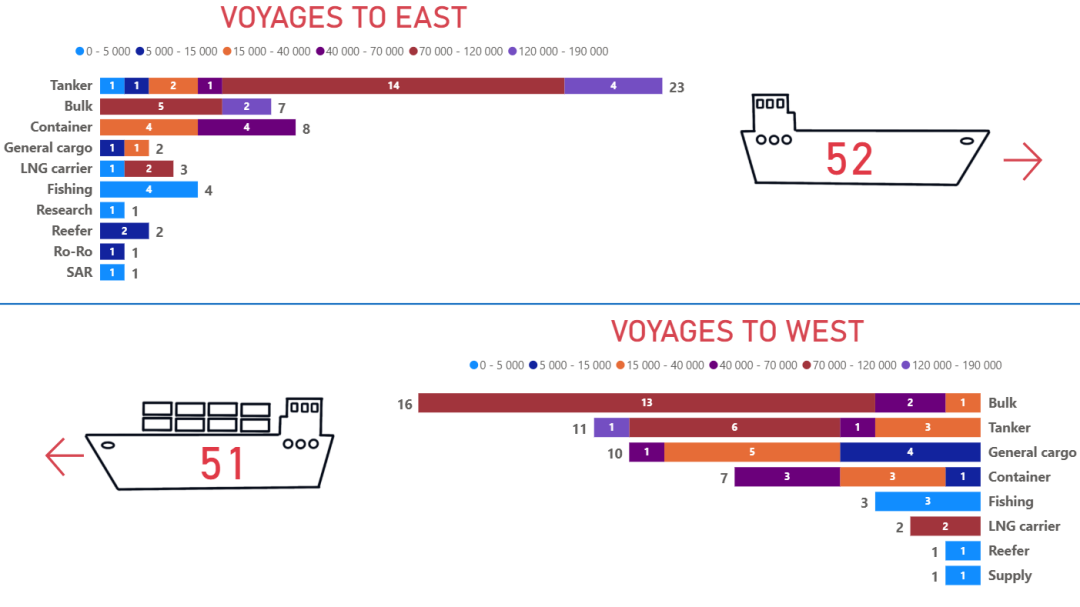
Industry observers generally believe that as Arctic ice continues to recede and the navigation window lengthens, the Northern Sea Route is likely to play an increasingly important role in Asia–Europe container shipping. However, seasonal limitations, icebreaker support, and insurance costs remain major challenges to regular year‑round operations.
Hot News