


China's First Domestically Built Submarine Cable Installation Vessel Enters Service
Source:
2026-07-17
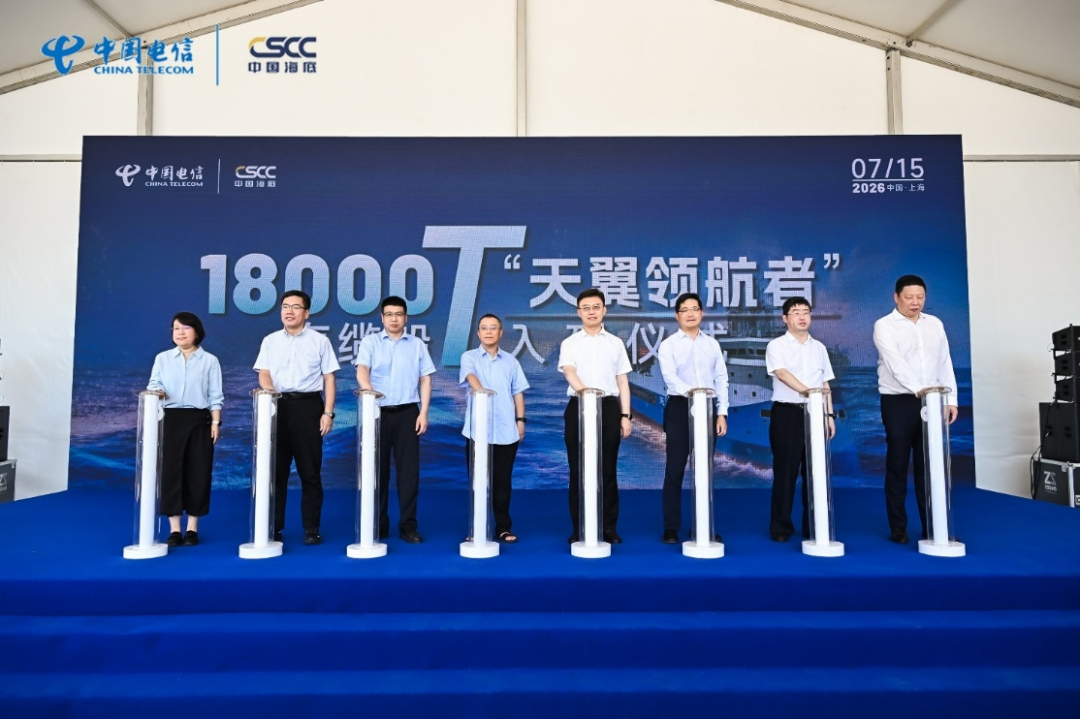
China's first independently designed and constructed deep-sea, intelligent submarine cable installation vessel, Tianyi Linghangzhe, was formally commissioned in Shanghai on July 15 and has commenced full-system submarine cable installation trials.
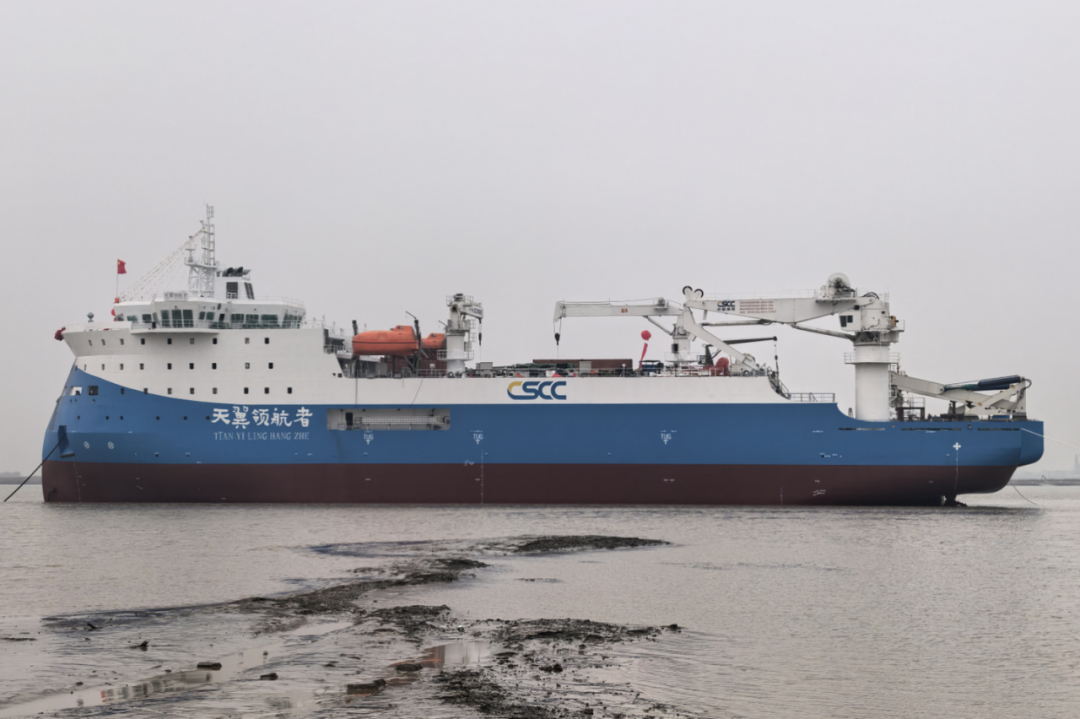
The Tianyi Linghangzhe has an overall length of 115.8 metres, a breadth of 24 metres, and a moulded depth of 12 metres, with a full-load displacement of 18,000 tonnes. Its cable tank can carry up to 8,000 tonnes of submarine communication cable, the largest capacity of any vessel worldwide. The vessel is equipped with a DP2 dynamic positioning system, which, through digital wind speed sensors, position sensors, and other equipment, can perceive subtle changes in currents, wind, and waves in real time, enabling stable operations even in Force 5 sea conditions. It is fitted with a domestically developed 5.5-metre submarine cable burial system, giving it the capability to bury cables at depths of up to 1,000 metres and to carry out the laying, construction, maintenance, and repair of various types of offshore engineering systems in waters across the globe.
Communication submarine cables form the backbone of high-speed undersea transmission links connecting global computing hubs and are indispensable critical infrastructure for artificial intelligence computing systems. Submarine cables can not only provide green, low-latency computational support for AI, but also formally integrate facilities such as submarine data centres into the national computing resource pool, enabling hybrid deployments of "onshore training and subsea inference."
Chen Zhihong, Chairman of China Submarine Cable Construction, and Jiang Wei, General Manager, noted that the commissioning of the Tianyi Linghangzhe marks a major breakthrough in China's independent capabilities in marine communication technology and the construction of large submarine cable installation vessels, representing a key milestone in the nation's advancement of its marine communication networks into deep and distant waters.
Following its delivery and entry into service, the vessel will proactively undertake major missions in independent innovation for national marine networks, engineering construction, and national defence and cybersecurity support, while actively participating in the construction of submarine cable systems in international waters, contributing new solutions to the building of a secure, autonomous, and controllable marine network.
Hot News