


With Profit Forecast Up by as Much as 628%, What Did Guohang Ocean Shipping Get Right?
Source:CNSS
2026-07-15
On July 13, Guohang Ocean Shipping disclosed its 2026 semi-annual results forecast. The company expects net profit attributable to shareholders of the listed company for the first half of 2026 to be between RMB 110 million and RMB 130 million, compared with a loss of RMB 24.6068 million in the same period last year, representing a year-on-year increase of 547.03% to 628.31% .
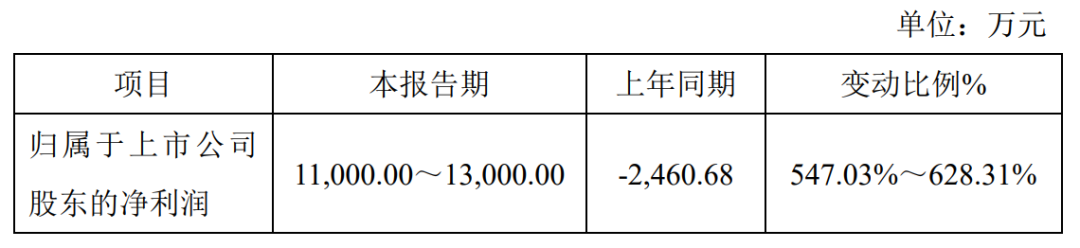
The significant improvement in Guohang Ocean Shipping's performance this period is primarily attributable to the following drivers:
I. Significant Enhancement in Operational Efficiency
The company has continued to optimise its fleet structure, focusing on accelerating the renewal of older vessels and expediting the deployment of newbuildings. During 2025 and 2026, multiple newly built, large-tonnage, green and energy-efficient vessels were successively put into operation, effectively improving the overall capacity mix and markedly reducing per-vessel energy consumption and voyage costs, thereby enhancing comprehensive operational efficiency and profitability.
II. Dynamic Optimisation of Domestic and International Trade Routes
The company has been deepening its transformational strategy of "concurrently engaging in both domestic and international trade with selective deployment." By closely tracking freight rate trends and demand shifts in both markets, it has flexibly adjusted capacity allocation and continuously optimised route deployment, ensuring resources are tilted toward high-yield routes. This scientific dynamic allocation strategy, combined with a significant rise in market freight rates, jointly drove the substantial improvement in first-half 2026 results, serving as a key booster for the period's profit increase.
III. Sharp Year-on-Year Increases in the BDI and BPI
During the first half of 2026, the global dry bulk shipping market entered a cyclical recovery, with freight rate indices strengthening markedly. The Baltic Dry Index averaged 2,346.94 for the first half, a substantial 81.9% increase compared with 1,290.09 in the same period of 2025. The Baltic Panamax Index averaged 1,920.37, a year-on-year surge of 61.5% from 1,189.04 a year earlier.
Benefiting from the strong performance of both indices, the company's core ocean-going vessel types—predominantly Panamax and Supramax/Ultramax—fully enjoyed the market recovery dividend, with both freight rates and profitability rising in tandem, providing strong support for first-half earnings growth.
IV. Recovery in Domestic Thermal Coal Demand
In the first half of 2026, the coastal coal and dry bulk transport market saw a pronounced recovery. According to data from the Shanghai Shipping Exchange, the average China Coastal Bulk Coal Freight Index rose to 918.93 points for the first half, an increase of approximately 40.4% compared with 654.52 points in the same period of 2025, entering a high-prosperity range overall.
Guohang Ocean Shipping and its associated companies fully benefited from the warming domestic shipping market, with the stable domestic trade base providing solid support for first-half performance and further consolidating a dual-engine operating structure driven by both domestic and international trade.
V. Supply-Demand Mismatch Driving Freight Rates Higher
During the first half of 2026, the supply side of the global dry bulk shipping market experienced periodic tightness. According to Clarksons data, the global dry bulk carrier orderbook as a proportion of the existing fleet stands at only around 11%, a historically low level, with new capacity additions having been very limited over the past two years. Concurrently, environmental regulations such as EEXI and CII have continued to be implemented, restricting the operation of older, less efficient vessels and imposing policy-driven constraints on sailing speeds, thereby creating a rigid bottleneck on the supply side.
On the demand side, the successive commissioning of ultra-long-haul projects such as the Simandou iron ore mine in Guinea has lengthened global average shipping distances, significantly boosting tonne-mile demand. Ongoing disruptions—including the normalised rerouting around the Red Sea and congestion and transit restrictions at the Panama Canal—have reduced vessel turnaround efficiency, further widening the supply-demand gap. Transport demand for major dry bulk commodities such as coal, iron ore, and grain has also shown a steady recovery.
The resonance between rigid supply constraints and sustained demand has jointly propelled freight rates higher, providing a firm foundation for the shipping market's high-prosperity operation, with the company's performance fully benefiting from this cyclical upturn.
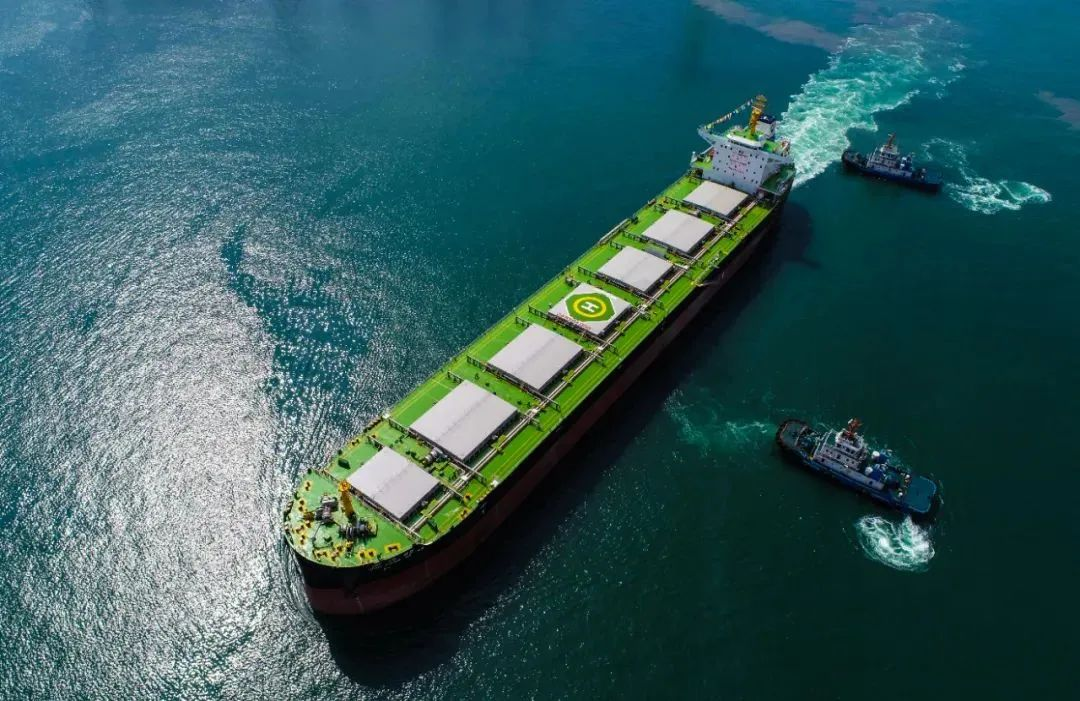
Guohang Ocean Shipping focuses on international and domestic commodity shipping operations. In full-year 2025, the company achieved revenue of RMB 997 million, a year-on-year increase of 6.51%, while net profit attributable to shareholders rose 22.28% to RMB 27.7134 million, with cash flow from operations surging 413.80%.
The company continues to press ahead with the renewal of older tonnage and the commissioning of new vessels. Over 2025 and 2026, multiple newly built, large-tonnage, green and energy-efficient vessels have successively entered service, effectively reducing per-vessel operating energy consumption and voyage costs.
In addition, Guohang Ocean Shipping is simultaneously laying the groundwork across several emerging tracks to build new pillars of long-term growth. In the offshore wind power sector, it is focusing on the export transportation of wind power equipment and the green methanol industry chain. Leveraging newly commissioned large, self-owned vessels, the company has acquired the capability to transport large wind turbine components, successfully opening up an entirely new cargo type for its international trade transport operations and injecting fresh momentum into earnings growth.
Guohang Ocean Shipping's low-altitude maritime operations have been rolled out rapidly, with application scenarios extending from Zhoushan to the Qiongzhou Strait. Its subsidiary, Yida Technology, has achieved substantive operations across multiple sea areas: completing an unmanned helicopter delivery to a dynamic vessel in Zhoushan waters in November 2025; completing a system upgrade test in April 2026 that improved delivery efficiency by 140% compared with previous models and demonstrated wind resistance up to Force 8; and formally launching cross-sea drone supply deliveries in the Qiongzhou Strait this June.
Concurrently, the company's self-developed "Guoyuan eDa" low-altitude digital platform has gone live, covering four major application scenarios including vessel supply replenishment and offshore wind farm inspections, and has entered into a collaborative partnership with COSCO Shipping Marine Services. A nationwide coastal low-altitude service network is being accelerated.
Hot News