


Ningbo Zhoushan Port Buys 10.73% Stake in Brazilian Terminal
Source:
2026-11-25
On the evening of November 23, Ningbo Zhoushan Port Co., Ltd. (hereinafter referred to as "Ningbo Zhoushan Port") announced that it had formally signed agreements with two equity transferors through its wholly-owned overseas subsidiary, Zhejiang Haigang (Singapore) Pte. Ltd., to acquire a combined 10.73% equity stake in the overseas entity Xinda Resources Limited for a total transaction price of approximately RMB 1.112 billion (USD 156.55 million).
According to the announcement, Ningbo Zhoushan Port received the Transaction Signing Notice from the Beijing Property Rights Exchange on November 18, officially becoming the transferee of this equity transfer. The acquisition involves two transactions: first, acquiring an 8.91% stake in Xinda held by ZLCFH-Cayman International Investment Cooperation Limited for USD 130 million; second, acquiring a 1.82% stake in Xinda held by CPD Port Investment Co., Limited for USD 26.55 million. The two transactions correspond to a combined 10.73% equity stake in Xinda.
Notably, Xinda is not an actual terminal operating company but an overseas investment holding platform, with its core asset being TCP Participações S.A., the operator of the TCP container terminal in Brazil. Therefore, upon completion of this transaction, Ningbo Zhoushan Port will indirectly hold a 10.73% stake in TCP through its Singapore subsidiary, rather than directly acquiring terminal operation rights.
In terms of equity structure, China Merchants Ports currently holds 77.45% of Xinda's shares as the controlling shareholder, while CPD and ZLCFH hold 13.64% and 8.91%, respectively. Following the transaction, Ningbo Zhoushan Port will hold a 10.73% equity stake in Xinda, CPD's shareholding will decrease to 11.82%, and ZLCFH will exit. China Merchants Ports will maintain its controlling stake of 77.45%. This means the transaction will not alter Xinda's existing controlling structure, and Ningbo Zhoushan Port will participate as a minority shareholder.
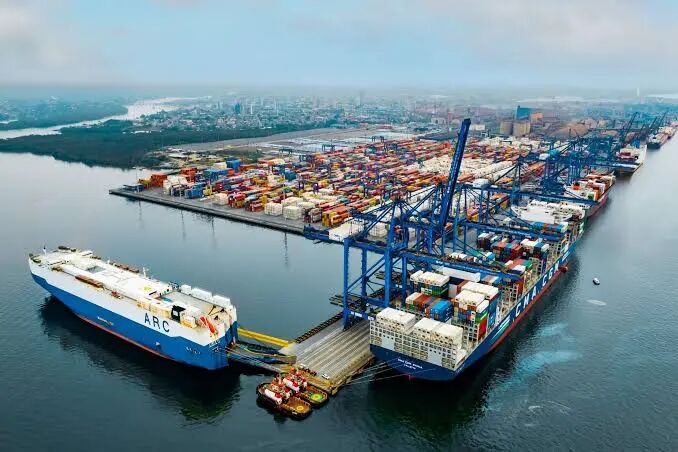
TCP primarily operates the container terminal at the Port of Paranaguá, located on the southeastern coast of Brazil. The terminal is Brazil's second-largest single-container terminal and the only specialized container terminal in the state of Paraná. It boasts the advantage of direct rail access for collection and distribution, serving a hinterland that covers key economic regions of Brazil. In 2025, TCP handled a container throughput of 1.662 million TEUs, representing a year-on-year increase of 6.7%.
Regarding this investment, Ningbo Zhoushan Port previously stated that upon completion of the transaction, both parties are expected to further strengthen the connectivity of Asia-to-South America route networks, enhance port service capabilities, and provide a more stable and efficient logistics channel for the export of manufactured products from the Yangtze River Delta to South America. Additionally, Ningbo Zhoushan Port plans to leverage TCP's strengths in reefer container transportation and value-added logistics services to create synergies with its own ro-ro, cross-border e-commerce, and other businesses, providing end-to-end supply chain services for Zhejiang enterprises expanding into the South American market.
From the perspective of Ningbo Zhoushan Port's own development, taking a stake in TCP also helps accumulate overseas terminal investment and operation experience, further expanding its international business footprint. However, this transaction remains a financial equity investment, and Ningbo Zhoushan Port will not thereby directly acquire control or operational rights over TCP.
Currently, the final closing of the transaction has not been completed. According to the announcement on November 24, this equity transfer is still subject to satisfying the closing precedents stipulated in the agreement. These include completing relevant internal approvals, releasing the pledge on the target equity, and obtaining the project filing notice, overseas investment certificate, and foreign exchange registration vouchers required by Chinese overseas investment authorities. Meanwhile, the transaction may also require approvals or filing procedures mandated by local Brazilian authorities.
Hot News