


South Korea steps up its push for large-scale ship recycling
Source:Beyond Shipping
2026-08-11
Recently, South Korea has been stepping up its efforts to position itself in the green ship recycling sector. Elegant‑Exit, a Netherlands-based company, has joined forces with South Korean domestic demolition firm RM Co., Ltd. and ISSAC Green‑Tech to plan the construction of a shipbreaking facility that the partners say could become one of the top‑tier yards in Asia in terms of scale.
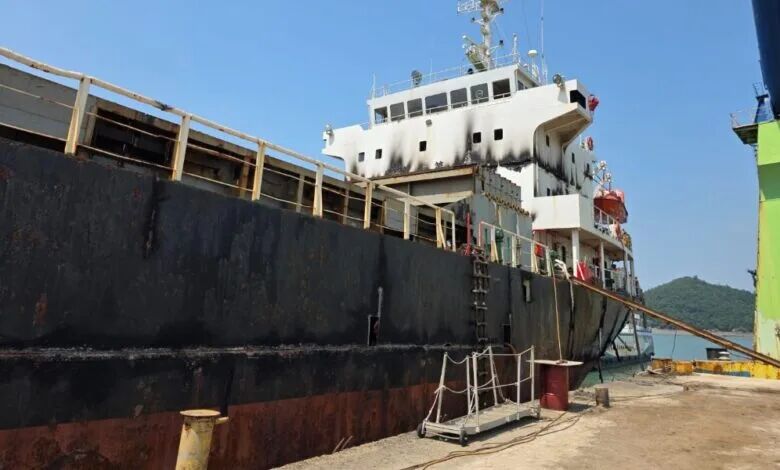
The three companies have now signed a memorandum of understanding for the proposed yard, which is intended to handle large oceangoing vessels. The project will build on RM’s existing shipbreaking operations and incorporate floating dry docks and automated technologies provided by ISSAC Green‑Tech. So far, the partners have not disclosed the investment amount, processing capacity, site location, or start‑up timeline.
RM operates the Sungha Shipyard, which is the largest shipbreaking site in South Korea. The company has established a coastal scrap steel logistics network and is equipped with large guillotine shears capable of cutting steel plates up to 60 mm thick.
This collaboration also marks a continuation of Elegant‑Exit’s push into industrialised ship recycling. The company had earlier carried out a pilot demolition project at the Arab Shipbuilding and Repair Yard (ASRY) in Bahrain, and in 2024 finalised a purchase order for six large floating dry docks, with options for six more, for use in ship recycling projects in OECD member countries and other overseas locations.
South Korea’s move represents yet another advanced Asian maritime economy’s effort to localise large‑scale ship recycling.
Separately, NYK Line and Oono Development are preparing to build a ship recycling yard in Chita City, Aichi Prefecture, Japan, with production scheduled to begin in 2028 and an annual processing capacity of 300,000 tonnes, equivalent to about 20 Panamax vessels. The 810‑metre dry dock will be able to accommodate two very large crude carriers (VLCCs) simultaneously; the partners plan to rely on heavy machinery and automation to offset Japan’s high labour costs and labour shortages.
These industry developments come in the wake of the Hong Kong International Convention for the Safe and Environmentally Sound Recycling of Ships, which officially entered into force in June 2025. South Korea acceded to the Convention in December last year, committing to comply with the global rules governing environmental standards and worker safety at ship recycling facilities.
Hot News