


Water Levels on the Rhine Continue to Fall, Freight Costs Surge
Source:CNSS
2026-07-14
Water levels on the River Rhine in Germany continue to drop under the current heatwave, leaving cargo vessels unable to sail fully laden and driving up freight costs. Commodity traders revealed on July 13 that the situation is already having a significant impact on transportation along the river.
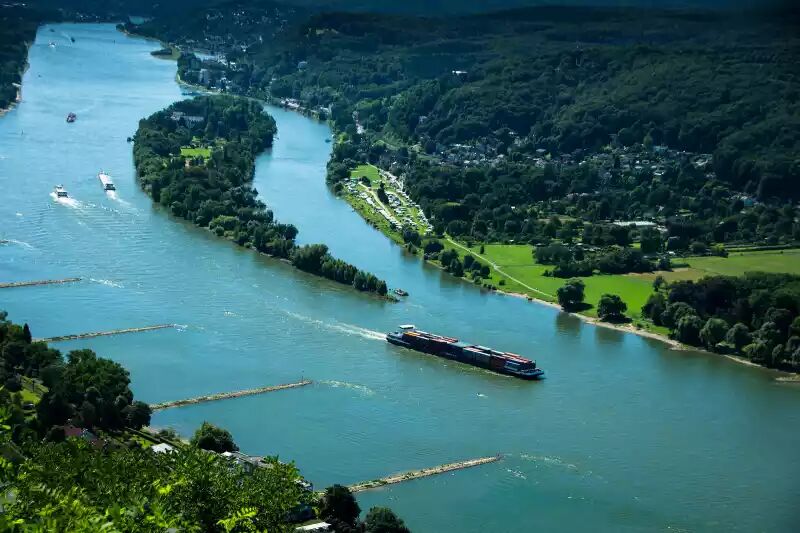
Traders further noted that low water levels are forcing shipping companies to impose surcharges on freight rates to compensate for reduced loading capacity, in turn raising transport costs for cargo owners. At the same time, goods are having to be split across multiple vessels for shipment, pushing overall logistics costs even higher.
Traders added that shipping on the Rhine is currently disrupted along the entire stretch south of Duisburg and Cologne, including the critical bottleneck section at Kaub. Vessels are often able to load only around 20% of their capacity, forcing cargo to be distributed across multiple barges.
According to traders, tanker barges can currently carry only around 1,200 metric tonnes of cargo at the Duisburg section, and that figure plunges further to around 460 tonnes at Kaub. As a result, tanker barge freight rates from Rotterdam to Karlsruhe have climbed from approximately €45 per tonne at the end of June to between €60 and €70 per tonne currently.
Furthermore, persistent dry weather over recent days and the heatwave affecting the river basin this week show no sign of easing, meaning shipping conditions are unlikely to improve in the short term. However, weather forecasts indicate that rainfall may arrive from July 17.
Maersk has recently activated its low water surcharge mechanism for inland waterway transport along the Rhine. The surcharge is triggered when water levels at key gauging stations such as Kaub, Duisburg-Ruhrort, and Cologne fall below specified thresholds. The charge increases incrementally as water levels drop, reflecting the rising costs caused by the loss of available barge capacity.
Among these, the most closely watched monitoring point is Kaub. Located on the Middle Rhine, this stretch features a narrow channel and represents a critical bottleneck for navigation.
Under the current tariff, the surcharge kicks in once water levels drop below 1.51 metres. Taking a 40-foot standard container as an example, the surcharge starts at €55 in the first tier and climbs to as much as €970 when water levels fall below 31 centimetres.
Maersk also warned that should water levels at Kaub drop below 81 centimetres, or those at Duisburg-Ruhrort fall below 181 centimetres, load guarantees will no longer be possible owing to the severe loss of available vessel capacity.
Hot News