


Major liner giants return to the Red Sea en masse! ZIM becomes the sole holdout
Source:
2026-11-06
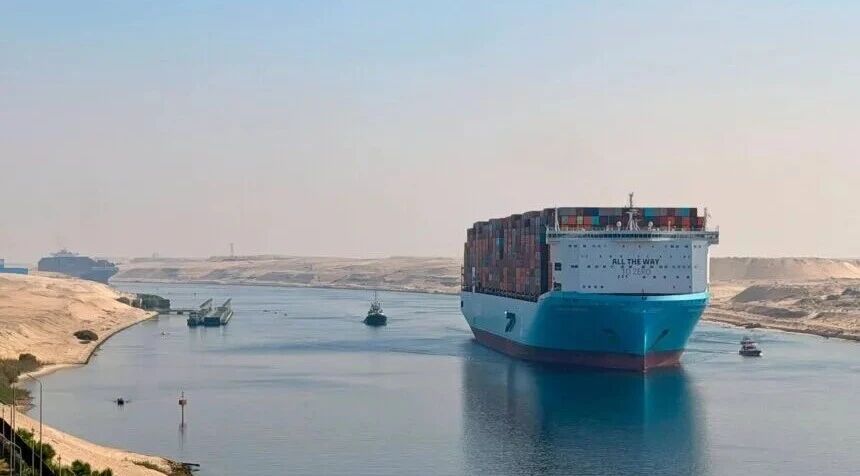
According to the latest Linerlytica report, major global liner operators appear set to restore Suez Canal transits on their Asia–North Europe and Asia–Mediterranean routes. With regional security risks temporarily easing and capacity constraints and competitive pressure rising, liner companies are accelerating the end of their Cape of Good Hope diversions. ZIM is currently the only major carrier still sticking with the Cape route.
Taiwan-based liner giant Evergreen Marine will this week join its Ocean Alliance partners in restoring Suez Canal transits. Linerlytica reports that Evergreen will deploy the 16,556-TEU Ever Eon and Ever Edit on eastbound Suez Canal transits on the Ocean Alliance NEU7/CES service on November 7 and 11, respectively, and will deploy the 20,124-TEU Ever Gifted on the alliance’s MD2 service on November 16.
The Premier Alliance, formed by HMM, ONE and Yang Ming, will restore Suez Canal transits on its Asia–Mediterranean 1 (MD1) service next month and add a Sokhna call to handle Asia–Red Sea cargo. The revised MD1 port rotation is: Ningbo, Shanghai, Shekou, Singapore, Sokhna, (Suez Canal), Damietta, Ambarli, Izmit, Mersin, Damietta, (via Suez), Singapore, Kaohsiung, Ningbo. The first sailing will be operated by Yang Ming’s 11,714-TEU YM Trust, departing Ningbo on November 13. The revised MD1 rotation has an 84-day round-trip cycle and will deploy 12 vessels of 11,700–14,000 TEU, all from Yang Ming. By comparison, the Cape route currently deploys 16 vessels.
Shipping analysis firm Linerlytica noted: “All three major carrier alliances as well as MSC will have fully restored Suez Canal transits by the first quarter of 2027, leaving ZIM as the only major carrier remaining on the Cape route.” Gemini Cooperation, jointly established by the two global shipping giants Maersk and Hapag-Lloyd, has also said it will fully restore Suez Canal transits by the first quarter of 2027 and has launched a new Asia–Mediterranean service via the canal.
The direction of the return is clear, but operational friction is emerging during the transition. A shorter voyage does not in itself automatically translate into more reliable schedules. The concentrated switch back from the Cape route to Suez means capacity that had been arriving at hub ports at staggered times will now arrive simultaneously in the short term. Terminal utilization at major transshipment ports such as Singapore has exceeded 90%; the gap between concentrated vessel arrivals and terminal handling capacity translates directly into port congestion and schedule delays. Structural congestion at Southeast Asian hubs can add an extra 7 to 12 days of in-port time for transshipment cargo, independent of sea distance. In North Europe, Rotterdam and Antwerp-Bruges have expressed concern about overlapping arrivals of Suez-routed vessels and vessels still diverting via the Cape; misaligned berthing windows will further amplify pressure on terminals and inland collection and distribution.
Hot News