


Yang Ming's $1.2 Billion Order Flows Once More to South Korea; Mainland Chinese Shipbuilding Record Remains at Zero
Source:
2026-07-22
Yang Ming Marine Transport has recently placed an order valued at up to $1.2 billion with South Korea's Hanwha Ocean for the construction of six LNG dual-fuel neo-Panamax containerships. The six 13,000 TEU vessels are set to be built at the Okpo shipyard, in a move that forms part of the company's ongoing fleet modernisation programme.
According to Yang Ming, the unit cost of the six LNG dual-fuel neo-Panamax containerships ranges between US$185 million and US$204 million, though specific delivery dates have yet to be publicly disclosed.
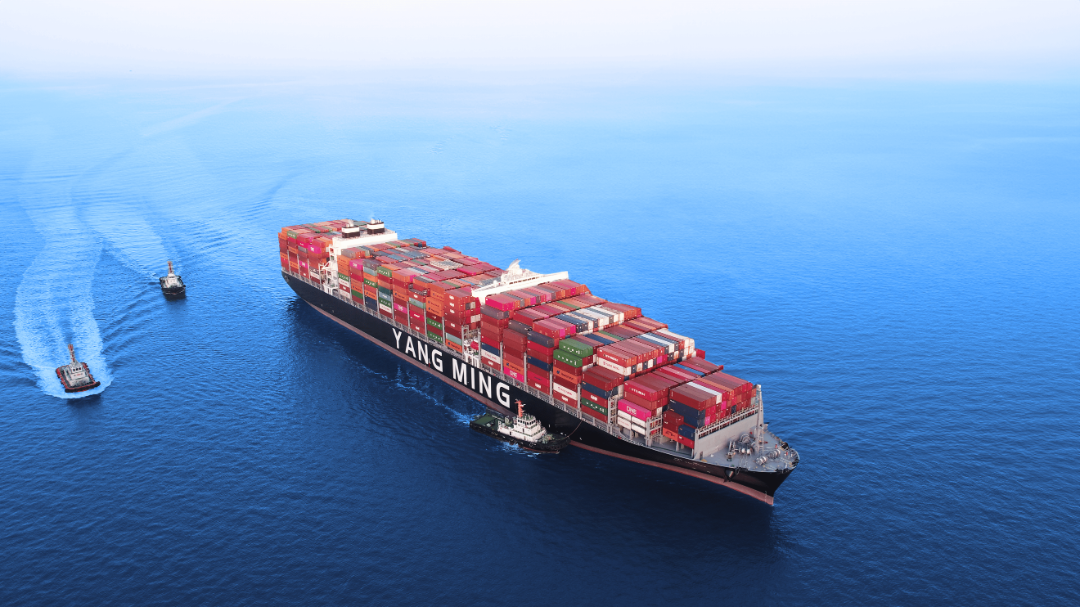
Sources tracking the company's fleet renewal plan within the shipbuilding industry report that Yang Ming selected Hanwha Ocean over the other South Korean shipbuilding giant, HD Hyundai Heavy Industries, in the final bidding stage.
In March this year, Yang Ming announced that its Board of Directors had approved the acquisition of six 13,000 TEU-class LNG dual-fuel containerships. The company stated that the newbuildings are intended to replace existing older tonnage, as well as capacity in the 4,250 to 6,500 TEU range whose charters are approaching expiry, and stressed that the 13,000 TEU class will become its "backbone vessel type on East-West trades."
Yang Ming noted that adopting LNG dual-fuel propulsion will help the company progressively reduce its carbon intensity and achieve its decarbonisation targets.
Under its medium- to long-term development plan, Yang Ming aims to grow its operating fleet to 124 vessels with a total capacity of 1.25 million TEU by 2032, targeting a global container market share of 3% to 3.5% by that time.
The company pointed out that the 13,000 TEU newbuildings are highly compatible with its existing fleet of 10,000 TEU-class vessels, and can be flexibly deployed across major trade lanes including Asia to the US East and West Coasts, South America, and the Mediterranean, further enhancing the flexibility and competitiveness of its service network.
In recent years, Yang Ming has never engaged with mainland Chinese shipyards, with all 15 of its newbuilding orders having gone to Japanese and South Korean yards. By contrast, other Taiwanese shipping companies—including Wan Hai Lines, Evergreen Marine, TS Lines, and U-Ming Marine Transport—all currently have vessels under construction at mainland Chinese shipyards.
On the option of building vessels in mainland China, when the US government threatened last year to impose substantial port surcharges on vessels built in China, then-Chief Commercial Officer of Yang Ming, Li Minghui, publicly stated that the company follows established procedures when ordering vessels and does not deliberately exclude mainland Chinese shipyards, and that the final choice would depend on the delivery slots and quotations offered by the yards.
To date, all of Yang Ming's owned vessels have been constructed at shipyards outside of mainland China.
For the first half of 2026, Yang Ming recorded cumulative operating revenue of approximately US$2.68 billion, representing a year-on-year increase of 0.49%. Looking to the second half, the company expects overall performance in the third quarter to be better than the second quarter. Chairman Tsai Feng-ming stated that vessels are currently sailing fully laden and expressed cautious optimism for the third quarter, noting that peak season demand continues to provide support and that cargo volumes show no clear signs of weakening.
Speaking on July 20, Mr. Tsai noted that the market remains subject to disruption from factors such as US tariff policy and geopolitical events, leading to fluctuations in freight rates, though overall cargo volumes remain steady and market demand has not notably cooled. He observed that the industry is currently focused on the direction of future US tariff policy; once policy direction becomes clear, it is expected to reduce the prevailing wait-and-see sentiment and have a positive impact on the shipping market. As for the fourth quarter, he said that developments in the US-Iran situation and the trajectory of US tariff policy will need to be monitored, and that the outlook for global economic growth remains highly uncertain, making it impossible to offer a definitive forecast.
Hot News