


The water level of the Rhine River has hit a new record low.
Source:
2026-08-03
According to a report by China Central Television (CCTV), due to persistent high temperatures and drought, the water level of Germany's Rhine River continues to drop. On August 1 local time, the Cologne gauging station recorded a water level as low as 67 to 68 centimeters, breaking the historic low set in 2018; the Duisburg-Ruhrort gauging station also saw its water level fall to a historic low of 153 centimeters.
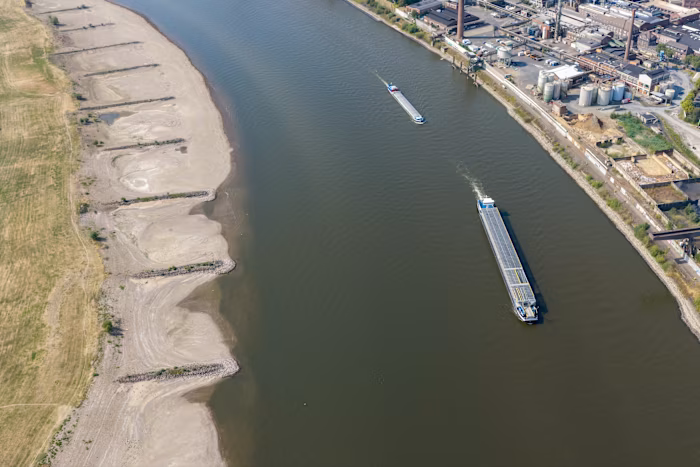
The persistently low water levels in the Rhine have affected inland navigation. Shallow waters mean that cargo vessels can usually only sail with partial loads, and additional surcharges have further increased costs for shippers. Goods have to be distributed across multiple partially loaded vessels, which not only pushes up costs but also adds unwelcome extra expenses for Germany's industry, which is currently showing signs of recovery.
According to Reuters, Roberto Spranzi, a director of the German shipping cooperative DTG, said that cargo vessels are still sailing, but currently only about 20 percent loaded. The cooperative operates about 100 inland cargo vessels. He said this means that currently four to five times the usual number of vessels are needed to transport the same regular cargo volume.
Commodity traders said that the transport cost for tanker barges from Rotterdam to Karlsruhe, Germany, had risen to about 145 to 150 euros per ton on Thursday, compared with 45 euros at the end of June.
The Rhine is an important transport route for bulk commodities such as grain, minerals, ores, coal, and oil products including gasoline. In the summer of 2022, drought and heatwaves caused unusually low water levels on the Rhine, leading to supply bottlenecks and production problems for German companies.
Experts say that the current low water levels have arrived significantly earlier than in previous years, and if dry weather persists, the related impacts could expand further.
Hot News