





CATL's Shipping Ambition: "Electrifying" the Global Fleet
Source:CNSS
2026-04-08
According to the Financial Times, Contemporary Amperex Technology Co. Limited (CATL) recently stated that it will "spare no effort" in promoting the electrification of parts of the global shipping fleet, aiming to replicate its success in the electric vehicle (EV) field to ocean-going navigation.
As a leading enterprise in China’s battery industry, CATL currently holds 37% of the global EV battery market and 22% of the grid-scale and data center energy storage system market. Up to now, CATL has become the first company in the maritime field to surpass the scale of "1,000 vessels." This figure alone is enough to change the way people discuss decarbonization in shipping.
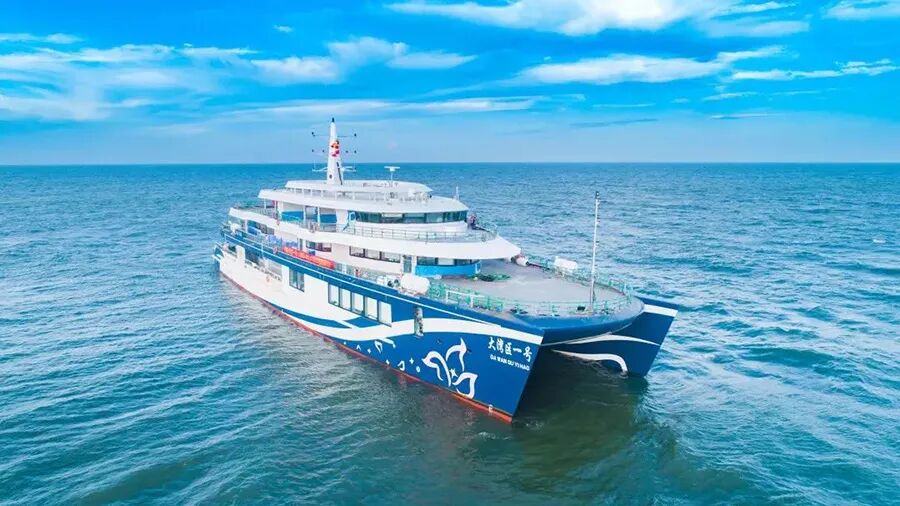
Image source: CATL (same below)
The shipping industry tends to be conservative due to high safety requirements, long asset lifespans, and strict certification systems. Against this background, deployment on such a scale signifies that electrification is no longer a pilot project but operational infrastructure that has been steadily advancing.
The urgency of this transition has been further heightened by recent geopolitical conflicts. Following the closure of the Strait of Hormuz, which severely impacted the global energy supply chain, the need to find alternative fuels has become more pressing. Neil Beveridge, head of China energy research at Berstein, noted that the long-term consequences of such events will continue to accelerate the "global trend toward electrification."
Su Yiyi, General Manager of CATL Electric Vessel Department and Contemporary Amperex Electric Vessel, told the Financial Times that she plans to more than double the team size of the department to about 500 people this year. Su emphasized that the current focus is on producing batteries that can meet the "extremely high" requirements of marine operations, including long cell lifespan and safety in marine environments.
In 2025, benefiting from robust demand for energy storage systems, CATL's revenue and profit both reached record highs. The company achieved revenue of $58.4 billion in 2025, a year-on-year increase of 17.04%, and net profit of $10.0 billion, a year-on-year increase of 42.28%. Revenue from its power battery system accounted for 74.7%, while revenue from its energy storage battery system accounted for 14.7%.
Additionally, CATL is seeking to collaborate with ports to build a new marine battery industry from scratch. Last year, CATL signed a series of cooperation agreements with the Maersk Group covering ports, terminals, and logistics. Through Maersk’s APM Terminals, CATL’s batteries are being deployed in electrified container handling equipment and terminal vehicles.
Su Yiyi stated, "We will spare no effort in investing in R&D, manpower, and resources to build the supply chain for this industry."
CATL entered the electric vessel field in 2017, with the first vessel launched for pilot operation the following year. In December 2025, its subsidiary, CATL Electric Ship Technology Co., Ltd., released the world’s only "Ship-Shore-Cloud" zero-carbon shipping and smart port-shipping integrated solution—integrating the entire chain from onboard power systems, shore-based charging networks, to cloud-based intelligent management.
The core concept is straightforward: over the 30-year lifespan of a vessel, a fragmented supplier model can lead to poor coordination, unclear responsibilities, and unnecessary downtime, whereas an integrated system can effectively reduce operational risks and lifecycle costs.
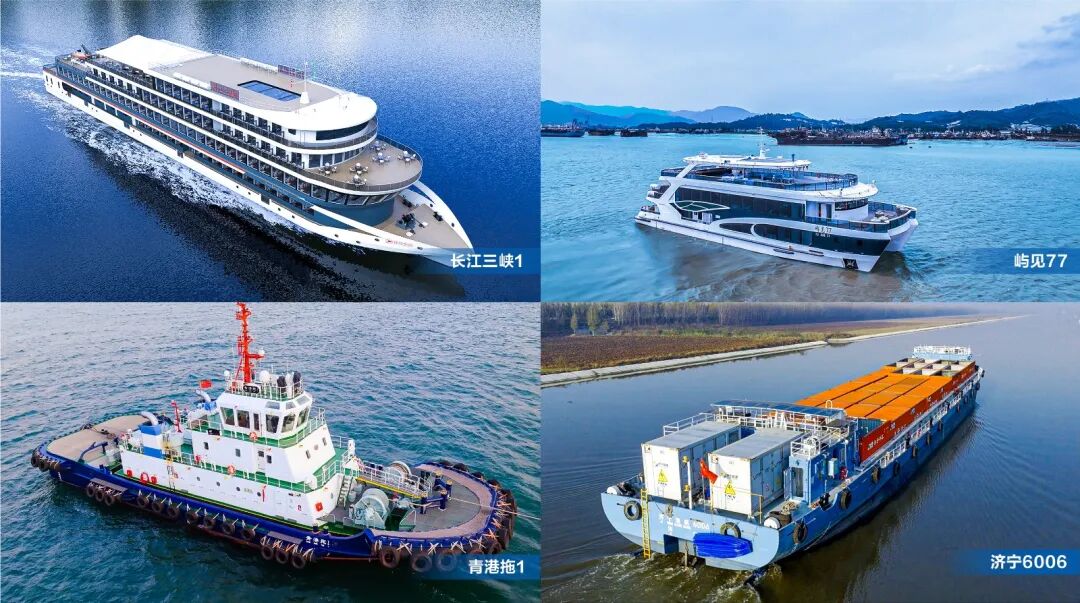
Over the past two decades, battery prices have dropped significantly, with the cost of lithium-ion batteries falling by 90% since 2010.The reduction in battery costs has been the foundation for the thriving EV industry.
Currently, electrification is more suitable for inland waterway transport, ports, and near-shore routes. Inland waterways and coastal shipping have limited ranges, conditions for centralized charging, and fixed schedules—all of which favor battery-electric propulsion. Meanwhile, ports, as fixed energy consumption nodes, can serve as leverage points for grid upgrades, renewable energy integration, and energy storage deployment, thereby generating spillover benefits for surrounding industries. As these systems gradually scale up, battery costs will decline further, operational data will accumulate, and standards will improve, further lowering the barriers to adoption. This does not require technological breakthroughs but rather large-scale deployment.
For ocean-going transportation, deep-sea vessels face practical energy density limitations, which batteries alone cannot currently solve. Operational adjustments, such as reducing sailing speeds, can achieve immediate emission reductions.
A pre-feasibility study released in 2024 by the Maersk Mc-Kinney Møller Center for Zero Carbon Shipping confirmed that large-scale application of purely battery-powered ocean-going vessels has not yet been realized, primarily because the energy density of batteries remains far lower than that of conventional fuels. A "hybrid" solution combining battery power components with internal combustion engines is a promising alternative. Hybrid solutions allow batteries to cover operations such as port entry/exit, maneuvering, and auxiliary loads, effectively reducing fuel demand even when liquid fuels are still required.
At the same time, researchers are assessing the risks of fires and explosions at sea, as rescue or evacuation is more challenging than on land. Additionally, compared to the largely standardized batteries in EVs, systems applied in marine environments will require more frequent maintenance and stricter regulation.
The Financial Times reported that entering the shipping business is a long-held ambition of CATL founder Robin Zeng. He majored in shipbuilding engineering for his bachelor’s degree before shifting to a master’s in electronics.
Su Yiyi pointed out that beyond overcoming technical challenges such as ensuring safety, reliability, and low cost, the scaled development of this business requires "system-level collaboration" among ship designers, shipyards, ports, and the power grid.
As a leading battery manufacturer in China and globally, CATL is committed to becoming a dominant force in the global electrification of shipping.
Hot News