





TS Lines: 2025 Annual Revenue Approximately $1.285 Billion
Source:CNSS
2026-04-10
On April 8, TS Lines released its 2025 annual financial report.
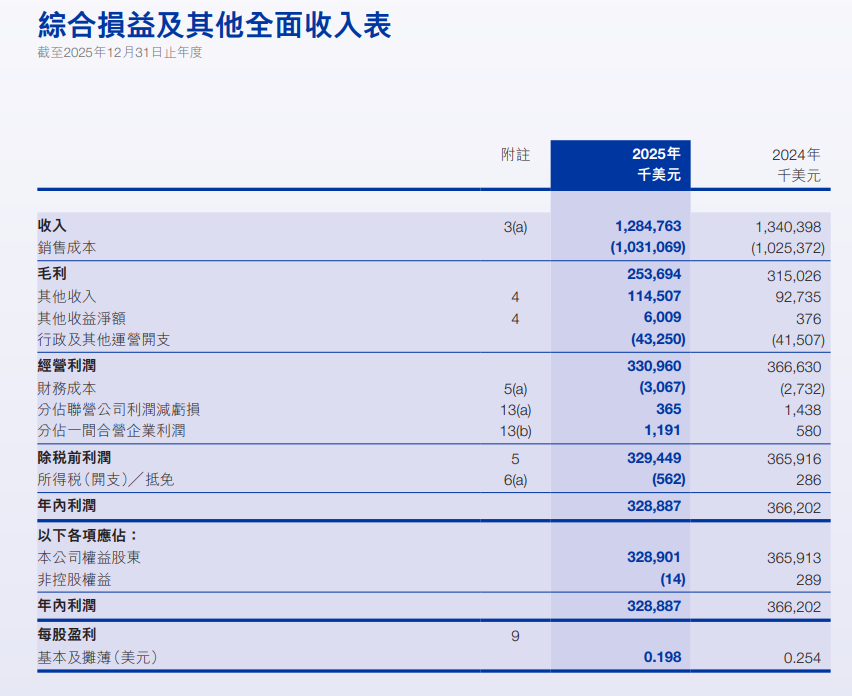
According to the announcement, TS Lines achieved total operating revenue of approximately $1.285 billion for the full year, representing a decrease of 4.2% compared to $1.340 billion in 2024. This decline was primarily attributed to a reduction in average freight rates for shipping services, which fell from approximately $769 per TEU to $718 per TEU. However, shipment volume remained stable, edging up slightly from 1,652,222 TEU in 2024 to 1,654,197 TEU.
Regarding fleet composition, as of December 31, 2025, TS Lines had a total of 41 vessels in operation, with an aggregate capacity of 109,342 TEU. Of these, 37 vessels totaling 94,048 TEU are owned by the company, accounting for 86.0% of total capacity, while 4 vessels are chartered-in, representing 14.0%. Additionally, 4 owned vessels are flexibly chartered out in the market to generate stable rental income. The fleet encompasses a diverse range of vessel specifications from 1,000 TEU to 7,000 TEU, ensuring a balanced capacity distribution.
Over the next three years, TS Lines plans to take delivery of 13 newbuildings, adding a total capacity of approximately 93,600 TEU. These include two 7,000 TEU vessels, three 14,000 TEU vessels, six 5,300 TEU vessels, and two 2,900 TEU vessels, which will further optimize the fleet mix and enhance economies of scale.
In terms of service network, as of the end of 2025, TS Lines operated 46 service routes, comprising 11 independently operated loops, 23 jointly operated loops, 10 slot-exchange arrangements, and 2 slot-purchase agreements. The increased proportion of joint operations reflects a strategy of risk diversification through strategic partnerships. In response to US tariff fluctuations and supply chain restructuring, the company has deepened its presence in the Mexican and Southeast Asian regional markets, strengthened cooperation on Southeast Asia–Indian Subcontinent and Middle East routes, and deployed extra loaders during peak seasons—specifically 9 sailings on the Australia route, 8 on the India/Pakistan route, and 1 on the Middle East route—to capitalize on opportunistic demand.
By regional market, the Asia-Pacific region remains the core of operations, with shipping volume reaching 1,498,459 TEU, accounting for approximately 90.6% of total volume, and generating revenue of approximately $1.010 billion. The strategically focused Trans-Pacific/Mexico, Middle East, and East Africa markets collectively accounted for approximately 9.3% of total shipping volume and approximately 14.7% of total freight revenue. The Red Sea service commenced contributing volume in 2025, recording 1,428 TEU and generating revenue of approximately $2.1 million.
Hot News