





Sanctioned by the US and Stripped of Capacity: This Shipowner Falls Deeper into Distress
Source:CNSS
2026-04-17
As the embattled SeaLead Shipping scales back its operations, the capacity it has released is being swiftly absorbed by the market.
Following service disruptions on SeaLead's Middle East and Asia routes, office closures, and layoffs, several vessels previously chartered by the company have been taken over by major shipping lines. Among them, CU Lines and Mediterranean Shipping Company (MSC) have moved rapidly to divide up the vacated tonnage.
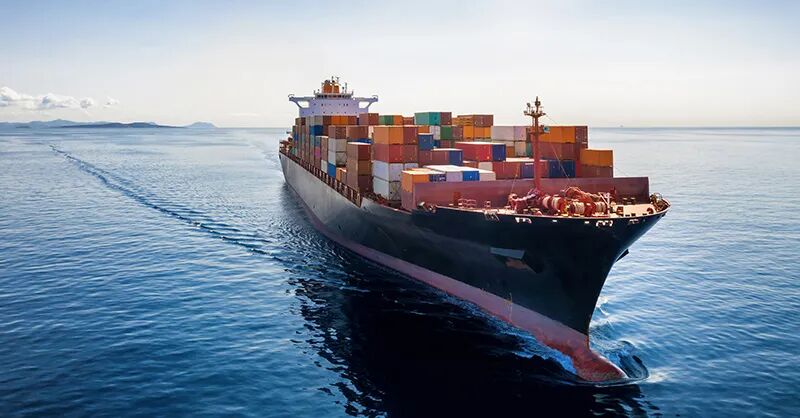
Five containerships owned by Danaos Corp and previously chartered to SeaLead have been successfully redelivered and subsequently rechartered to CU Lines and MSC respectively.
With SeaLead's core business centered on liner services to the Persian Gulf, the disruption of its operations has created opportunities for other carriers. According to a report issued by shipping analytics firm Linerlytica, CU Lines has capitalized on this situation to expand its Far East-Middle East service coverage, taking in two containerships: the 10,114 TEU Express Berlin (built 2011, IMO: 9484924) and the 6,758 TEU Racine (built 2010, IMO: 9406447).
The former joined CU Lines' fleet at Nhava Sheva, India, on April 10, having been detained in India since March 16, and is currently en route to China for redeployment. The latter has been utilized for an ad-hoc extra loader sailing from China to the Middle East, destined for Khor Fakkan, UAE. Both vessels were previously deployed on SeaLead's Far East-Middle East MEGA service, which was suspended due to the closure of the Strait of Hormuz.
MSC, meanwhile, has taken over the remaining three vessels: the 10,114 TEU Express Athens (built 2011, IMO: 9484948), the 5,610 TEU Suez Canal (built 2002, IMO: 9230311), and the 10,114 TEU Express Rome (built 2011, IMO: 9484936).
The Express Athens is scheduled to commence service on MSC's Asia-US West Coast Chinook service this week, while the Express Rome is slated to join the MSC fleet next year.
Over the past year, SeaLead's fleet size has undergone sustained and significant contraction. The company, which was once ranked among the fastest-growing container lines globally in 2024 and climbed to 13th place in Alphaliner's Top 100 liner operators ranking in 2025, has now fallen to 35th position.
Alphaliner data indicates that SeaLead's operated capacity has shrunk by approximately 150,000 TEU over the past year, plummeting from a peak of 208,000 TEU in May of last year to around 50,000 TEU currently. Linerlytica notes that further vessel redeliveries are anticipated in the coming months.
The primary drivers behind this situation, beyond the US-Iran conflict, are the US sanctions imposed on multiple vessels chartered by SeaLead—tonnage identified as being linked to Iran. These measures have severely undermined SeaLead's core business, precipitating a large-scale contraction of its fleet.
In July 2025, OFAC, in coordination with the US Department of State, sanctioned a total of 62 vessels due to SeaLead's alleged ties to Iran. These included 22 containerships and 40 tankers, of which 16 containerships were operated by SeaLead. The company promptly terminated the associated charter agreements.
This year, US authorities have again taken action against SeaLead. On March 6, the US Department of Justice filed a lawsuit against the company, alleging that it acted as a legitimate front for the "dark fleet" network controlled by Hossein Shamkhani, a key Iranian figure.
In court filings, US Justice Department attorneys alleged that the connection between SeaLead and Admiral Shipping extends beyond the time charter relationship claimed by the company. "This branding distinction was designed to evade sanctions," DOJ lawyers wrote in a civil forfeiture complaint.
Furthermore, the US Department of Justice accused SeaLead of providing shipping services to interests controlled by senior Iranian officials and is seeking civil forfeiture of $2.4 million in funds.
The DOJ alleges that the funds in question were used to facilitate the sale and transportation of Iranian oil and other commodities, evading US sanctions by concealing the origin of the oil and the role of Iranian entities in the transactions.
SeaLead has consistently maintained that it has no direct or indirect association with the Iranian regime and has emphasized its compliance processes, sanctions screening mechanisms, and supplier due diligence protocols.
Nevertheless, amid mounting internal and external pressures, SeaLead continues to operate. The company-owned and operated Paya Lebar (built 1997, IMO: 9134232) became the first non-Iranian flagged containership to transit the Strait of Hormuz this week.
Founded in 2017, SeaLead initially offered feeder services in the Red Sea region. In 2018, the company expanded its feeder operations into the Middle East. During 2024, the company entered new markets including the UAE, the Philippines, Pakistan, South Korea, and the US, broadened its presence in Spain, Turkey, Morocco, India, and Djibouti, relocated its headquarters to a new facility in Singapore, and launched five new services.
In 2025, SeaLead introduced several new liner services connecting the Mediterranean to the US East Coast, Asia to Mexico, and Turkey to Italy. It also established its first European office in Spain, extending its shipping network to 51 countries.
This February, SeaLead appointed Cho Kit Wei as Chief Executive Officer, effective March 2, 2026.
Hot News