





Maersk and Scorpio Tankers American-Flagged Vessels Transit Strait of Hormuz
Source:CNSS
2026-05-07
Reuters reports that an oil tanker owned by Scorpio Tankers has become the second US-flagged vessel to exit the Middle East Gulf under the protection of the US "Freedom Plan," following a Maersk-operated car carrier.
According to Crowley-Stena Marine Solutions, the 50,000 dwt CS Anthem (IMO: 9785691, originally named STI Bosphorus) successfully transited the Strait of Hormuz on May 4.
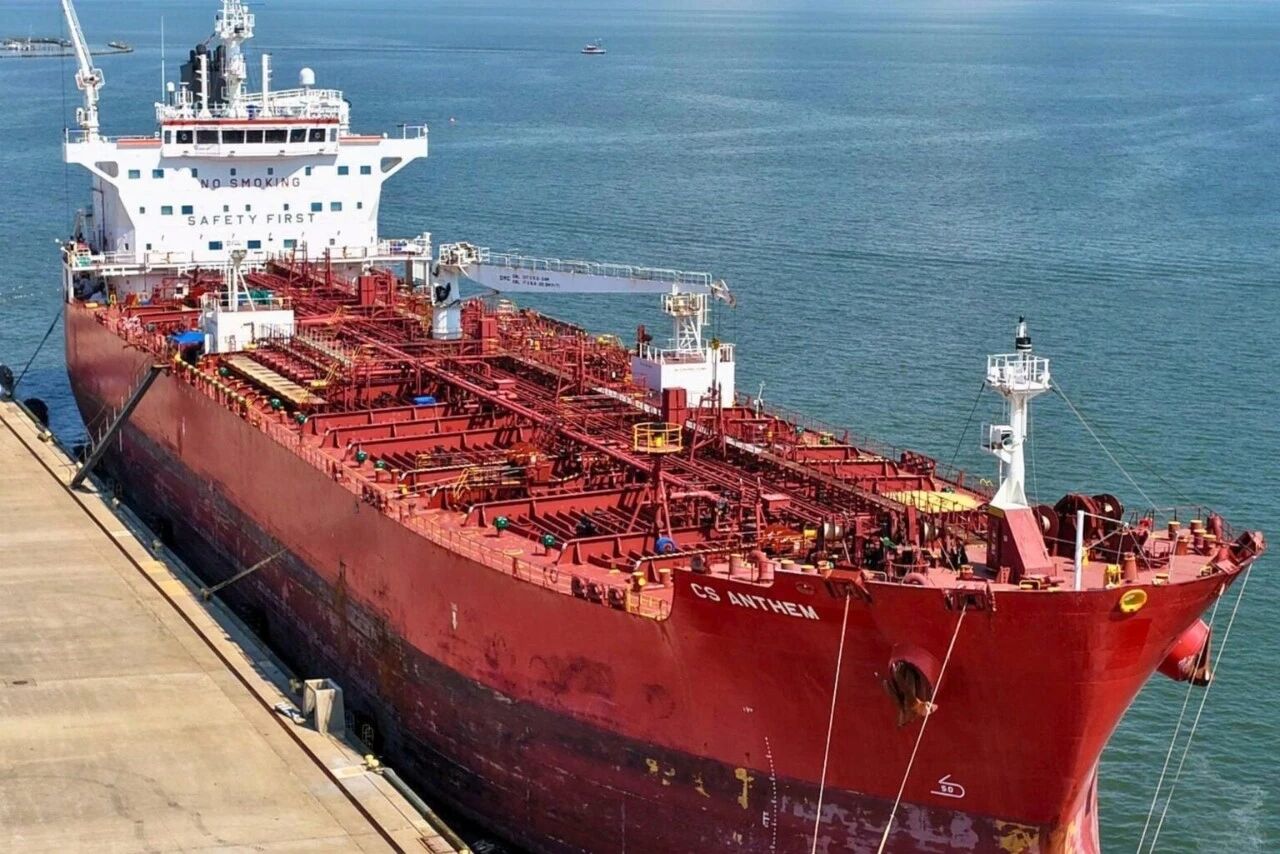
Last summer, Scorpio Tankers placed the vessel into operation through an undisclosed third-party joint venture under a 12-year bareboat charter, thereby joining the US government's "Tanker Security Program" for the first time.
This follows confirmation from Maersk that a vessel under its management successfully transited the volatile Strait of Hormuz under US military protection. The company stated that its US-flagged Alliance Fairfax (IMO: 9303546, 6,210 CEU) completed the voyage on May 3 under US naval escort, exiting the Persian Gulf safely and without incident. All crew members are reported safe.
The vessel is operated by Maersk Line, Limited, a subsidiary of Maersk, and is owned by Höegh Autoliners. Earlier this year, as tensions between the US and Iran escalated, the vessel was among the few American-flagged ships in the region.
According to Maersk, the voyage was made possible after US military officials proactively contacted the company and offered escort support. Following coordination with the Pentagon, both shore-based and shipboard leadership approved the plan. Maersk stated in a release: "After a comprehensive safety plan was jointly developed and coordinated with the US military, Maersk's shore and shipboard leadership approved the transit." The statement added that the vessel departed the Persian Gulf under the protection of US forces.
On May 5, US President Donald Trump announced that the "Freedom Plan," the American initiative to assist commercial vessels in transiting the Strait of Hormuz, would be suspended for a "short period" to observe whether a comprehensive agreement concerning Iran can be finalized and signed.
This decision came just one day after the "Freedom Plan" was formally implemented. Previously, the US had announced that two US-flagged commercial vessels successfully transited the Strait of Hormuz under US naval escort, describing this as the "first step" toward restoring freedom of commercial navigation through the strait. US military support included guided-missile destroyers, over 100 land- and sea-based aircraft, drones, and 15,000 military personnel.
Hot News