





China’s Auto Exports Surge, Global Ro-Ro Ships Hit “Full Capacity”
Source:CNSS
2026-05-21
On May 4, the 10,800-CEU (Car Equivalent Unit) ro-ro vessel “GLOVIS LEADER” docked at Shanghai’s Nangang Terminal. After loading over 3,700 high-end Chinese new energy vehicles (NEVs), it slowly departed for Canada.
Shortly after, BYD’s self-operated ro-ro ship “BYD ZHENGZHOU” set sail from Shanghai on May 17, fully loaded with 4,810 electric vehicles to embark on its maiden voyage to Australia. The vessel is scheduled to arrive in Melbourne on June 2, before proceeding to Sydney and Brisbane. This marks the first time BYD’s proprietary fleet has deployed dedicated shipping capacity to the Australian market.
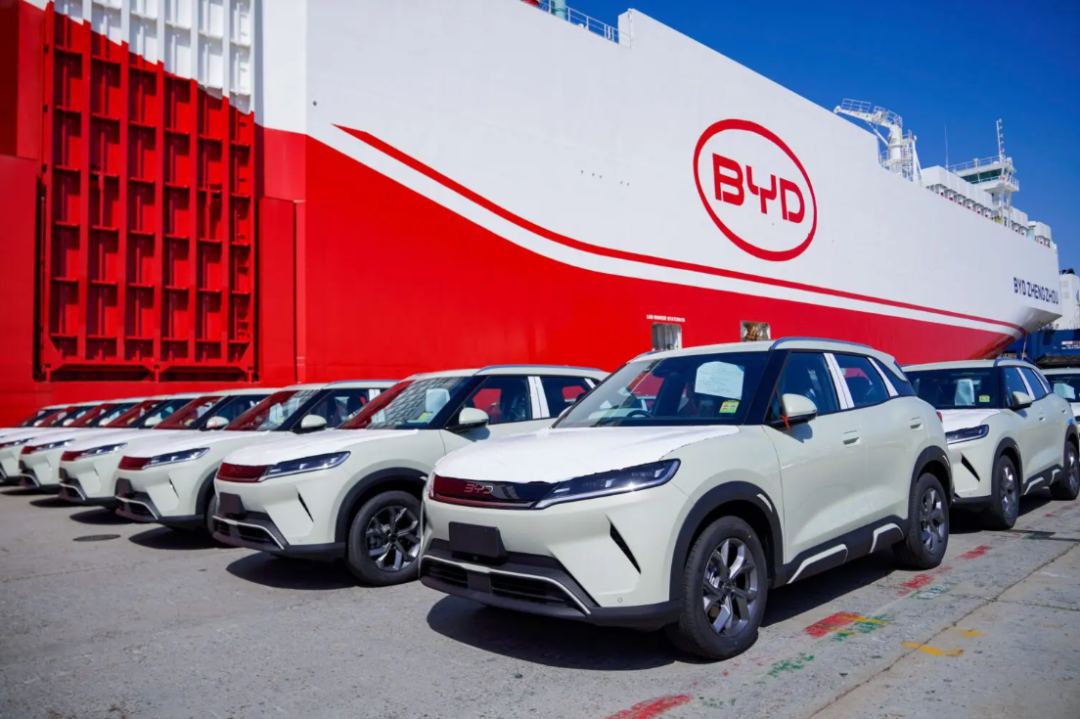
These two giant vessels represent two distinct models—one showcasing the peak capacity of professional shipowners, and the other serving as a strategic extension of an automaker’s self-operated fleet. Together, they point to a rapidly changing reality: global ro-ro shipping capacity is no longer sufficient to meet demand.
It is reported that all ro-ro shipping slots calling at Nangang Terminal for the entire year of 2026 were fully booked by the beginning of the year. Although new ships are being delivered successively, the lengthy construction cycle means the supply gap has yet to be filled. Data from the China Association of Automobile Manufacturers (CAAM) shows that China’s auto exports reached 875,000 units in March, a year-on-year increase of 72.7%; NEV exports hit 371,000 units, surging by 1.3 times year-on-year. Furthermore, from January to March, total auto exports amounted to 2.226 million units, up 56.7% year-on-year, with NEV exports reaching 954,000 units, a 1.2-fold year-on-year increase.
The widening gap between surging exports and limited supply is directly reflected in freight rates. According to The First Financial Daily, geopolitical conflicts have placed the global shipping industry in a dilemma: rerouting around the Cape of Good Hope extends voyages by more than ten days, causing fuel costs for a single trip to soar by hundreds of thousands of US dollars; opting to pass through canals means facing skyrocketing tolls and insurance premiums.
Wang Xing, General Manager of GAC Import & Export Company, revealed that over the past month, the average shipping cost per cubic meter for automobiles has risen by $5–$8, pushing up the freight cost per vehicle by approximately $60–$96. Luo Hongbo, General Manager of Guangzhou Port’s Haijia Auto Terminal, expressed similar views. He noted that while uncertainties in certain regions continue to drive up freight costs, shipping rates are inherently cyclical. He also pointed out that current ro-ro transport fees have actually dropped by 40% compared to the peak levels seen between 2023 and 2024.
Data from VesselsValue outlines the full trajectory of this cycle: daily charter rates for ro-ro ships climbed steadily from 2020, peaking in 2024 at $110,000 per day for a 6,500-CEU vessel—equivalent to the manufacturing cost of an entire car. Entering 2025, daily rates gradually declined as new ships were delivered, but supply and demand remain far from balanced.
Faced with the dilemma of rerouting versus canal transit, the high costs and lack of control inherent in traditional shipping models have become increasingly prominent. To take logistics initiative into their own hands, leading Chinese automakers have chosen to become shipowners themselves.
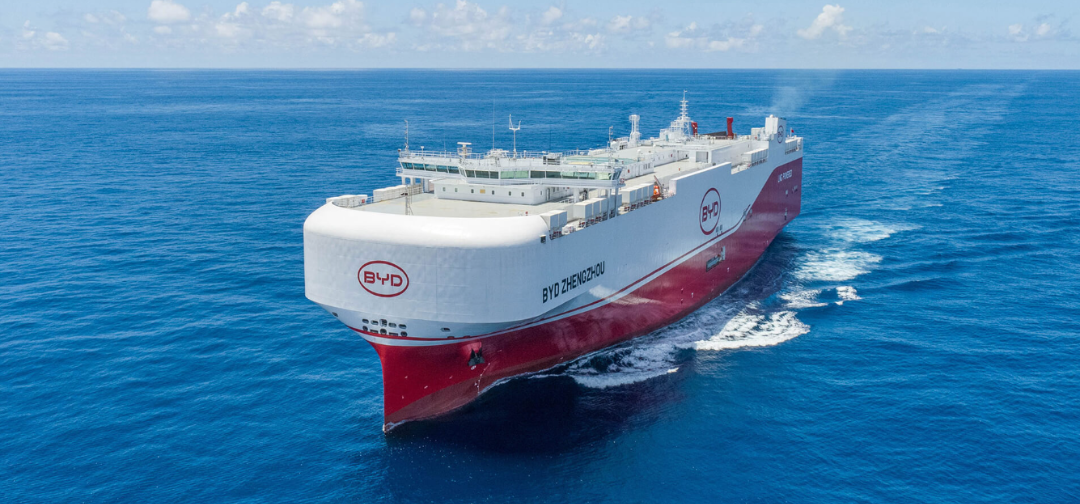
BYD is a typical representative of this model. In 2022, BYD announced a 5 billion yuan investment to build its self-operated ro-ro fleet, placing orders with shipyards such as GSI (Guangzhou Shipyard International), China Merchants Industry, and CIMC Raffles. Currently, all eight dedicated ro-ro ships are in operation, providing an annual capacity of 250,000 to 300,000 vehicles. Its operational strategy perfectly embodies the new logic of “cargo owner as shipowner”: even if return trips face the risk of being empty, BYD insists on using its own vessels to gain absolute control over delivery timelines.
The maiden voyage of the “BYD ZHENGZHOU” to Australia is part of BYD’s previous commitment to increase shipments of 30,000 NEVs to the local market. Stephen Collins, Chief Operating Officer of BYD Australia, stated, “BYD’s vertically integrated system allows it to scale up production as needed, with its own fleet ready to transport vehicles to almost anywhere in the world”.
In addition, SAIC Motor’s Anji Logistics has expanded its self-operated ocean-going fleet to 41 vessels, making it currently the largest proprietary auto shipping force in China. Chery has three ro-ro ships already in operation, and Geely’s Jisu Logistics owns two.
Occurring in parallel with automakers building their own fleets is the rising dominance of China’s shipbuilding industry in the car carrier sector. According to AXS RoRo statistics, nearly 80% of the 276 Pure Car and Truck Carriers (PCTCs) scheduled for delivery globally between 2023 and 2028 are being built by Chinese shipyards. GSI’s current order book for car carriers is fully booked until 2030, with contract values nearing 100 billion yuan and international orders accounting for over 95%.
“Above the shipping routes lies discourse power. And clearly mapping out these routes is the first step in competing for that power.” For the global ro-ro market, the giant vessels launched by Chinese automakers are rewriting the rules of the game.
Hot News