





Zim Reports Q1 Net Loss of $86 Million
Source:CNSS
2026-05-22
On May 20, Zim Integrated Shipping Services released its financial results for the first quarter. Impacted by a combination of factors including geopolitical conflicts in its operating regions, sharp fluctuations in fuel costs, and a decline in shipping volume, the company reported a net loss of $86 million for the quarter. This marks a significant turnaround from the $296 million profit recorded during the same period last year, representing a year-over-year drop of over 129%.
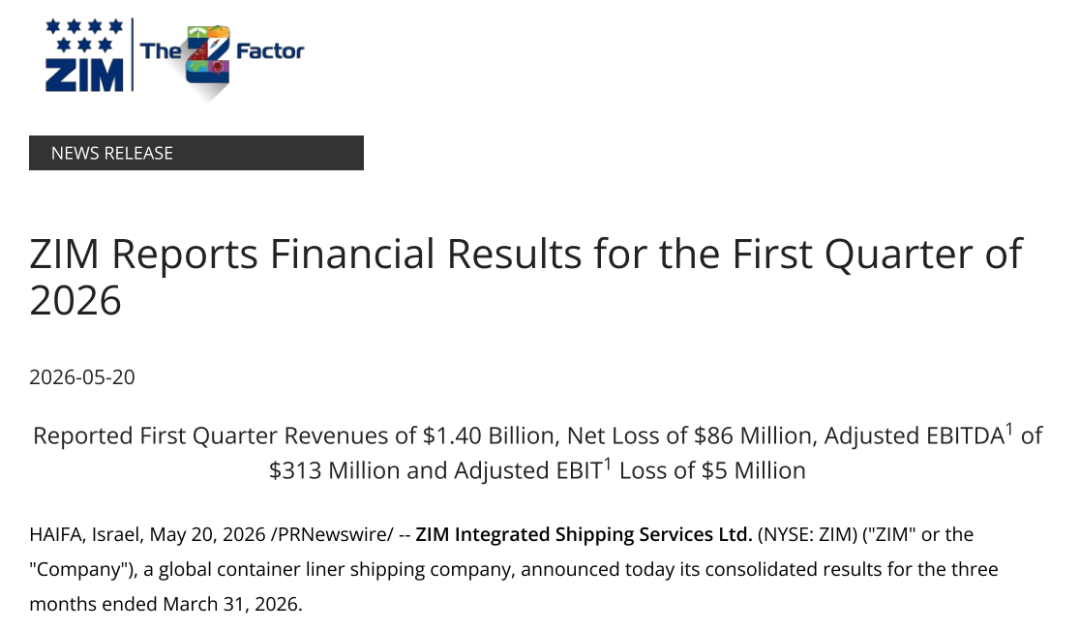
According to the financial report, Zim’s core operational indicators weakened across the board. Freight volume fell to 866,000 TEUs (twenty-foot equivalent units), an 8% decrease year-over-year, while operating revenue dropped 30% to $1.4 billion.
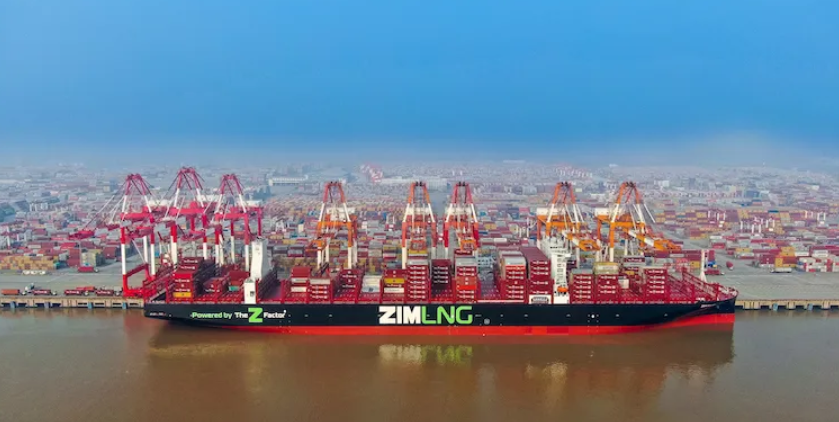
Eli Glickman, Zim’s outgoing CEO, pointed out that the conflict in the Persian Gulf has caused fuel costs to surge and fluctuate dramatically. Although the impact on the first quarter remained manageable, he warned that the shock is expected to be far more pronounced in the second quarter. To counter these cost pressures, Zim is raising freight rates and imposing fuel surcharges. Meanwhile, the company’s early adoption of Liquefied Natural Gas (LNG) technology, along with its long-term LNG supply agreement with Shell, is gradually beginning to yield benefits.
Just before the earnings release, new acquisition rumors emerged in the market. Israel’s Sakal Group submitted an all-cash offer of $4.5 billion for Zim, which is $300 million higher than the previous bid from Hapag-Lloyd. Furthermore, Sakal Group explicitly promised that Zim’s fleet and operational headquarters would remain in Israel post-acquisition, and it offered an additional employee incentive package worth approximately $250 million.
However, foreign media reports cited shipping analysts who cautioned that both offers might face difficulties in closing. They noted that Zim’s current stock price trades at nearly a 30% discount to Hapag-Lloyd’s cash offer, suggesting significant market skepticism.
Despite the current downturn, Eli Glickman expressed cautious optimism. He stated that Zim has recently observed positive changes on its major trade routes, with improvements in both freight rates and demand, and expects the company’s financial performance to rebound significantly in the second half of the year. He added that Zim has completed its annual contract negotiations, which took effect on May 1. Contracted cargo volumes remain consistent with last year’s levels, though about 65% of the cargo volume on the Trans-Pacific route will still be exposed to fluctuations in spot freight rates.
Hot News