





US and Iran Reach Agreement on Reopening Strait of Hormuz; China Responds
Source:Xinhua News Agency
2026-05-26
Xinhua News Agency, citing a report by The Washington Post on the 24th, stated that the United States and Iran have reached agreement on a Memorandum of Understanding framework which, once signed, would see the full resumption of shipping in the Strait of Hormuz within 30 days.
The report quoted an anonymous senior US administration official as saying that the US and Iran have developed a "framework" for a Memorandum of Understanding that includes a 60-day ceasefire extension to allow the two sides to negotiate a "final agreement" to permanently end the Iranian conflict, during which time the Strait of Hormuz would be demined and reopened.
The official stated that the memorandum includes a "commitment" that Iran will not acquire nuclear weapons. Over the next two months, the parties will discuss the "mechanisms" for implementing this commitment. However, no agreement was signed by either side on the 24th.
An anonymous diplomatic source familiar with the matter told The Washington Post that once the memorandum is signed, Iran would immediately reopen the Strait of Hormuz and take measures within 30 days to restore the waterway to its pre-conflict state. Furthermore, Iran, the US, and their allies would announce an immediate cessation of military operations on all fronts, including Lebanon.
The report also cited an anonymous Iranian official as saying that the reopening of the Strait of Hormuz would occur in phases. In the first phase, the US would unfreeze US$12 billion in Iranian assets, demining of the strait would commence, and the US blockade would be lifted. The Iranian official stated, however, that the memorandum does not include a nuclear agreement, only a commitment to negotiate on the nuclear issue at a later date, with further details potentially to be released on the 25th.
Separately, The New York Times reported on the 24th that the US and Iran have reached an agreement in principle on a deal to gradually end the Middle East conflict, but that final approval from the leadership of both sides could take days.
The report, citing an anonymous senior US official, stated that under the deal, the Strait of Hormuz would be reopened and a commitment made for Iran to dispose of its highly enriched uranium stockpile. The specific method of disposal by Iran remains under negotiation, with the official noting that "President Trump had insisted on US confiscation of these materials as a way to fulfill his pledge to curb Iran's nuclear program."
The report also noted that Iran has yet to publicly comment on the substance of any potential agreement or the topics under discussion. Officials from both countries have indicated that any agreement would represent a preliminary framework designed to advance subsequent negotiations, rather than a final determination.
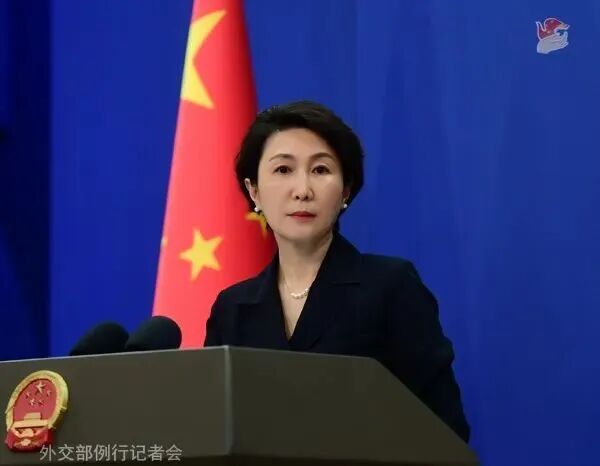
In response to media reports that the United States and Iran are nearing an agreement, Foreign Ministry Spokesperson Mao Ning stated at a regular press conference on the 25th that China has always maintained that dialogue and negotiation are the right path, and that a military solution leads nowhere. Since the door to dialogue has been opened, it should not be closed again. The momentum of de-escalation should be stabilized, and the general direction of a political settlement should be upheld. A solution that accommodates the concerns of all parties should be reached through dialogue and consultation. The shipping lanes should be reopened as soon as possible in response to the calls of the international community, so as to jointly safeguard the stability and unimpeded flow of global production and supply chains. A comprehensive and lasting ceasefire should be reached at the earliest possible date to promote the early restoration of peace and stability in the Middle East Gulf region.
Hot News