





Can't Charter Container Ships? Shipowners Opt to Convert Bulk Carriers Instead
Source:CNSS
2026-05-29
According to Alphaliner, as the container shipping market continues to strengthen, shipowners are seeking solutions beyond newbuilding orders. Currently, at least two Supramax bulk carriers have been planned for conversion into container vessels with a capacity of approximately 2,500 TEUs.
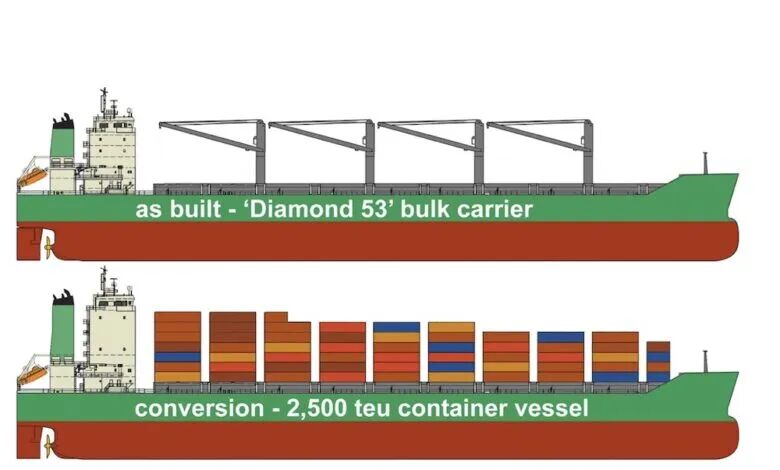
The vessels targeted for this conversion are "Diamond 53" open-hatch Supramax bulk carriers, primarily built by CSSC Chengxi Shipyard between 2005 and 2011. Alphaliner notes that the double-hull, open-hatch design makes these vessels highly suitable candidates for conversion, requiring relatively less extensive modification work compared to traditional bulk carriers.
Key modifications include removing four cranes located amidships and raising the bridge by approximately two deck heights to allow for seven tiers of containers on deck. The vessel's dimensions will remain unchanged at 190 meters in length and 32.29 meters in width, accommodating 13 rows of containers. Conversion work for the first vessel is expected to commence in late May or early June. After spending about three months in the dry dock, the vessel can be deployed under a charter agreement in the Chinese market.
While the maximum speed of the "Diamond 53" type slightly exceeds 15 knots—which is considered slow by container ship standards—Alphaliner states this does not pose an obstacle. Given the recent demand from major liner companies for lower-specification vessels (slow-speed ships with limited reefer plug-in points), such converted vessels may secure profitable charters on regional, domestic, or feeder routes, where cargo owners prioritize slot availability over sailing speed.
Alphaliner points out that open-hatch bulk carriers are currently the only realistic bulk carrier type with viable conversion potential. Traditional bulk carriers would require significantly more extensive structural modifications. Unlike dedicated container ships, open-hatch bulk carriers already feature a double-hull structure, and their cargo holds are designed to accommodate both containerized and breakbulk cargo; they merely lack cell guides and lashing bridges. Through targeted modifications—such as installing cell guides within the holds, raising the bridge, and adding simple lashing bridges—most functional gaps can be bridged at a controllable cost.
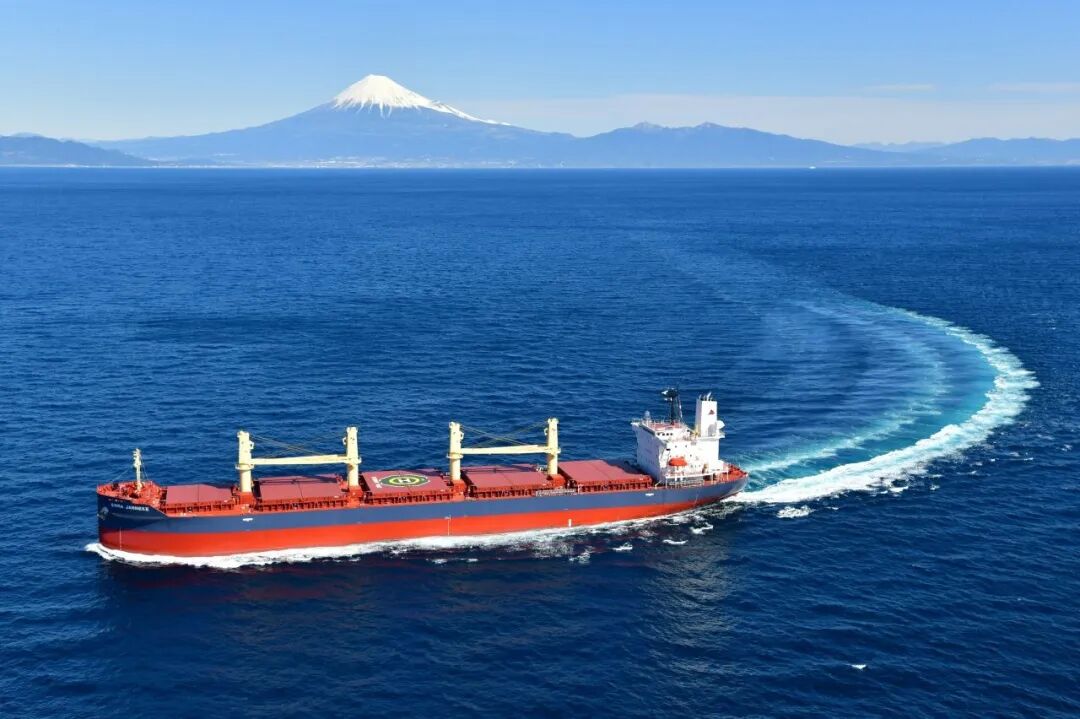
This conversion plan once again highlights the ongoing tightness in container shipping capacity. With most vessels already chartered out and charter rates remaining persistently high, the incentive to introduce non-standard tonnage into the market is growing stronger.
The blurring lines between the bulk and container shipping sectors are nothing new. On January 13 this year, COSCO Shipping Bulk Co., Ltd. signed a contract with Beihai Shipbuilding for three new 210,000 DWT dry cargo vessels. These ships feature dual-fuel readiness for methanol and ammonia and possess multi-purpose loading capabilities for bulk, breakbulk, and containerized cargo.
This flexible operational strategy has precedents dating back to the pandemic, when some containerized cargo was shifted to bulk carriers for transport. During that period, Star Bulk became one of the earliest Capesize shipowners to obtain classification society approval for carrying containers on board its bulk carriers.
Hot News