





Port of Nanjing Opens First Direct Ocean Route to the United States
Source:CNSS
2026-06-09
The vessel Vittoria, carrying domestically produced engineering equipment and vehicles, recently set sail smoothly from the Longtan Container Terminal of Nanjing Port bound for Houston, USA, marking the official opening of the Port of Nanjing's first direct ocean route to the United States.
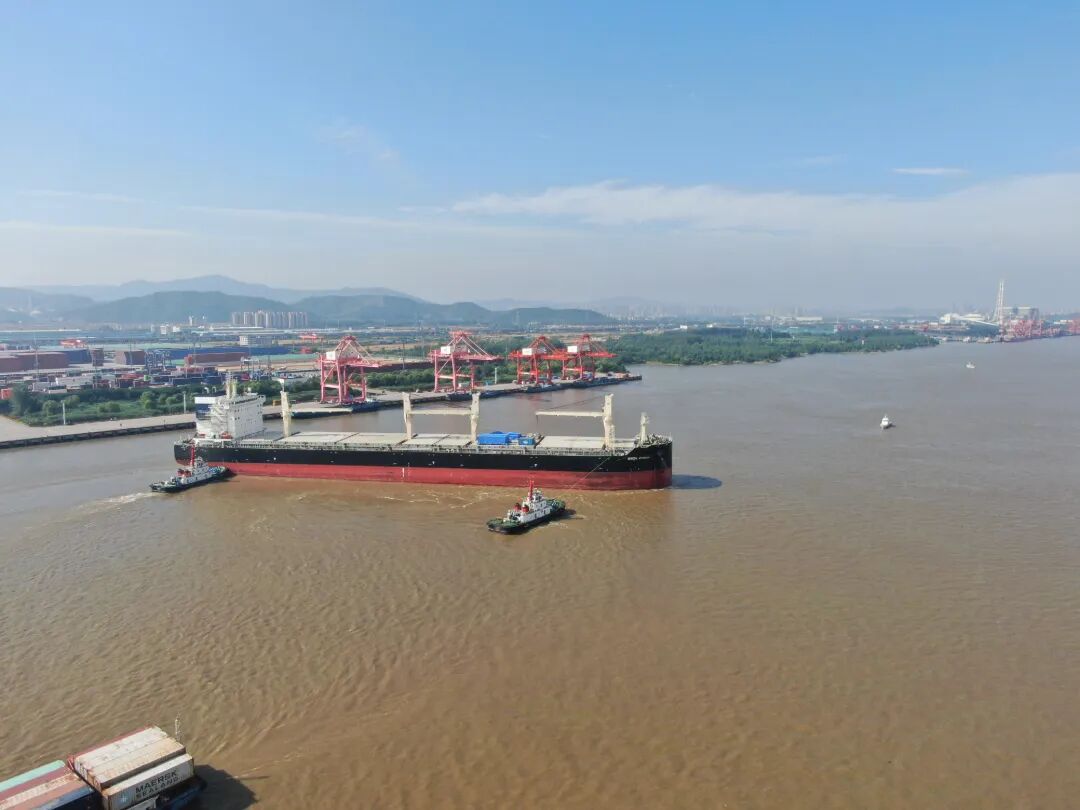
The launch of this route is a practical move to implement major national development strategies and serve the new "dual circulation" development paradigm, adding a crucial maritime corridor for the region's opening up to the world.
The Vittoria has an overall length of 225 metres, a beam of 32.26 metres, and a deadweight tonnage of 64,994 tonnes. "Currently, the vessel is loaded with over 400 pieces of equipment and vehicles, more than 20 sets of supporting equipment, along with four concrete mixer trucks and two engineering command vehicles, with a total cargo value estimated at approximately US$14.7 million," a responsible official from Nanjing Ocean Shipping Agency stated. The new route departs from Nanjing, proceeds along the Yangtze River through the Sea of Japan, crosses the Pacific Ocean, and then transits the Panama Canal before reaching Houston, USA, with the entire voyage taking approximately 40 days.
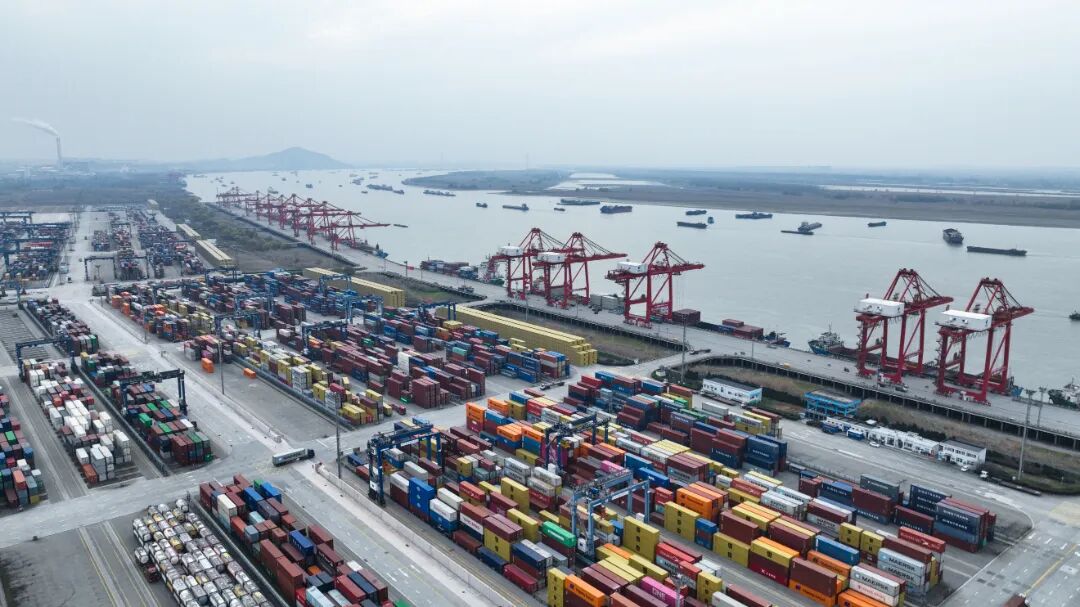
It is understood that the Port of Nanjing benefits from its strategic position at the terminus of the Yangtze River's 12.5-metre deep-water channel, making it the deep-water seaport penetrating furthest into the inland hinterland and a key international hub for river-sea transshipment.
Since the start of this year, the export demand for domestically produced engineering machinery and complete sets of equipment has continued to rise. A large quantity of "Made in China" goods has been setting sail from inland ports via the Yangtze River golden waterway, reaching destinations across the globe. The Port of Nanjing and the Port of Suzhou have been anchoring their opening-up strategies, continuously increasing the density of ocean routes and broadening maritime access channels.
According to Cheng Junjie, Dean of the Institute of Chinese-style Modernization at the Jiangsu Provincial Academy of Social Sciences, the Port of Nanjing, as a crucial hub in the Yangtze River Economic Belt and a pivotal node for river-sea intermodal transport under the Belt and Road Initiative, serves as a strategic gateway connecting the inland hinterland to the sea and the world.
The opening of this direct North American route not only addresses a regional shortfall in direct ocean-going connectivity but also effectively shortens logistics chains, enhances supply chain resilience, and supports the deep integration of advanced manufacturing in the Yangtze River Delta into global industrial and supply chains, providing strong support for the high-quality development of the region's open economy.
Hot News