





Five Major Shipping Lines Are Swallowing Up the World's Ports
Source:CNSS
2026-06-15
As the world's major ocean carriers continue expanding their fleets, they are also pushing ahead just as vigorously with vertical integration. According to various industry estimates, carriers and their affiliated companies now control roughly 50% of global terminal throughput capacity—a share that has nearly doubled over the past decade.
There is clearly sound commercial logic behind acquiring assets that can lower costs, improve efficiency, or strengthen independent profit centres. And the deep cash reserves currently held by global shipping giants make these decisions relatively straightforward.
However, historical experience shows that shipping, like other industries, tends to go through cycles of accelerated vertical integration during boom times, followed by restructuring and the divestiture of "non-core" assets. The question is whether certain characteristics of the liner shipping industry—such as terminals increasingly being viewed as core assets—will reinforce or dampen this cycle. And what is genuinely beneficial for the industry as a whole?
The Scale and Strategy of the "Giants"
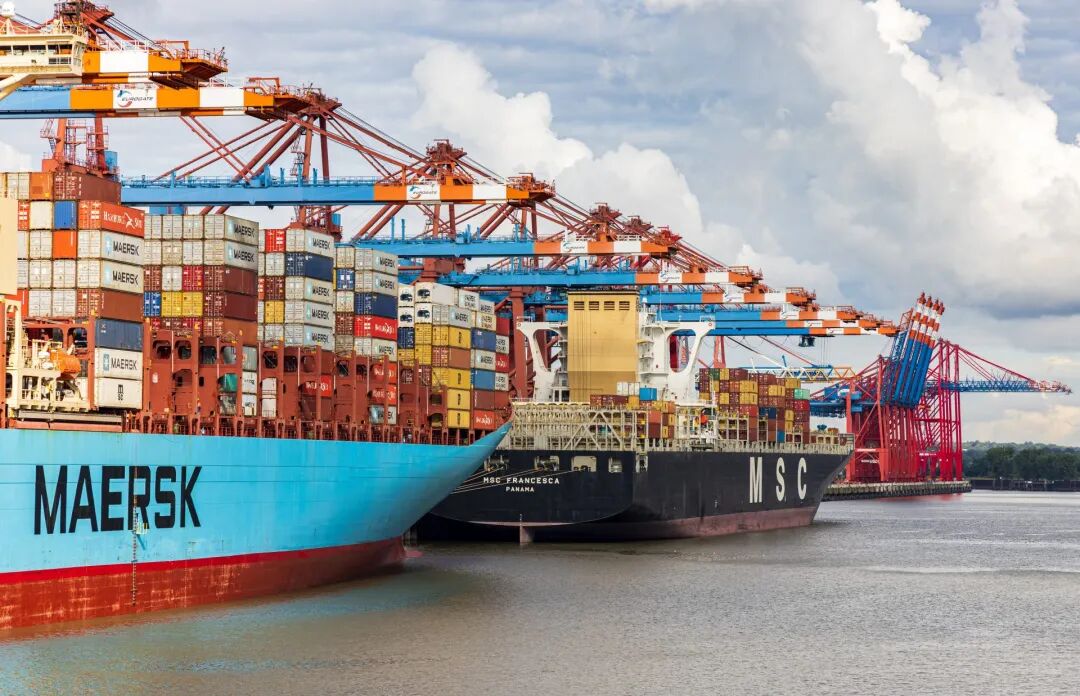
A close correlation exists between the size of a carrier's fleet and the scale of its terminal portfolio—and MSC, Maersk, CMA CGM, Hapag-Lloyd, and COSCO SHIPPING are the undisputed giants in both domains, thanks to their financial firepower. Another contributing factor is that these carriers control a larger number of service routes, whether operated within alliances or independently, giving them more direct influence over terminal choice. However, the situation is not uniform across all players.
As the world's largest liner company, MSC is striving to become a global standalone carrier that can independently determine the vast majority of its capacity deployment and terminal selection. It is this very independence that makes MSC the most avid acquirer of terminals, knowing it can reliably channel substantial cargo volumes to those facilities.
MSC's current acquisition momentum is unstoppable. In addition to its recent successful acquisition of a 51% controlling stake in the TIS Container Terminal at Ukraine's key Black Sea port of Pivdennyi, rumours are circulating that the company is pursuing up to a 49% stake in India's major Vizhinjam Port. If that transaction ultimately proceeds, MSC—already the port's largest customer—would become a strategic shareholder in India's first dedicated deep-water container transshipment hub.
Assuming MSC continues to push forward, raising its control of global slot capacity toward 30%, and maintains its status as a financial behemoth, there is nothing to prevent it from achieving a similar share of terminal throughput capacity. Completion of the potential CK Hutchison deal would significantly accelerate this trajectory.
Other major carriers cannot fully divorce their terminal portfolios from their alliance relationships, which to some degree require mutual accommodation to achieve optimal asset utilisation. This also raises the question: are these alliance structures truly unbreakable?
Through its terminal arm APM Terminals, Maersk has long been deeply involved in the terminal sector—control over key hub ports is certainly a crucial component of the "Gemini Cooperation" strategy to enhance schedule reliability. However, whether the push into integrated logistics represents a successful strategic pivot for Maersk remains an open question. Its future business model could head in a markedly different direction, which would in turn affect its relationship with Hapag-Lloyd and the respective moves each partner makes both within and outside the alliance.
Hapag-Lloyd remains a relatively small player in terminal ownership, which means its Hanseatic Global Terminals arm could at some point be viewed as a "negotiable bargaining chip." Yet the company continues to expand its terminal footprint. Earlier this month, Hapag-Lloyd announced that HGT had successfully acquired a 50% stake in Brazil's Imetame Logística Porto S.A., advancing steadily toward its "Strategy 2030" target of expanding its global terminal network from the current 21 locations to around 30.
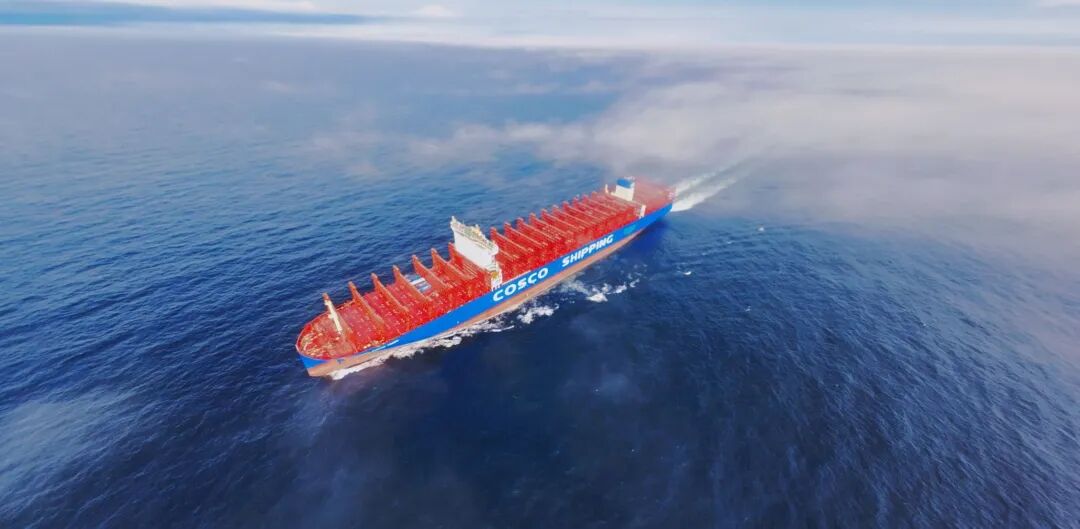
The Ocean Alliance remains by far the largest, most stable, and longest-lasting alliance. This translates into a substantial amount of locked-in business among its members, allowing CMA CGM and COSCO SHIPPING to continue developing their respective terminal asset portfolios in a mutually accommodating manner.
Beyond the five giants, there are of course other companies with ambitions to expand their terminal portfolios. For them, however, such moves are more likely to represent "nice-to-have" additions rather than indispensable components of their business plans.
Pros and Cons for the Industry
From the perspective of the shipping industry as a whole, carriers acquiring terminals brings a mix of advantages and disadvantages.
On one hand, well-financed carriers investing in infrastructure seek to maximise efficiency. Through innovative vessel scheduling systems and committed cargo volumes, carriers have successfully revitalised existing gateway ports or launched entirely new ones. For a terminal starved of throughput, this represents the fastest route to securing substantial, guaranteed cargo volumes—and even achieving economic viability.
On the other hand, smaller ports can easily become dependent on a single carrier. And where port assets are not fully utilised, questions arise over land use and operational efficiency. Furthermore, the shrinking space for neutral choice is a particular concern for carriers that do not themselves own terminals, especially at key hub ports.
A similar dynamic exists in other areas where major carriers are expanding: the reduced number of vessels held by non-operating owners has negatively affected liquidity and charter rates in the charter market, serving as a warning of what can happen when independent capacity diminishes. Participants outside the circle of giants will bear the heaviest impact from rising costs or declining service quality.
Maintaining a balance between vertically integrated carriers and an active independent segment is critical for the competitiveness, innovation, and flexibility available to all carriers.
At the same time, it is reasonable to expect the five giants to cement their positions as long-term industry dominants, backed by their sheer scale and resources. But whether further restructuring occurs within this group—depending on individual performance and shifting strategic priorities—will ultimately determine whether all of them can continue their journey and individually build out complete vertically integrated empires.
Hot News