






BYD Set to Turbocharge This Port's Throughput
Source:CNSS
2026-06-23
Australia's imports of cars from China surged by 83% over the past year, including the 5,000 electric vehicles delivered early this month aboard the BYD ZHENGZHOU. Buoyed by this trend, the country's largest container and automotive port is bucking economic headwinds and looks set to post a record annual trade performance.
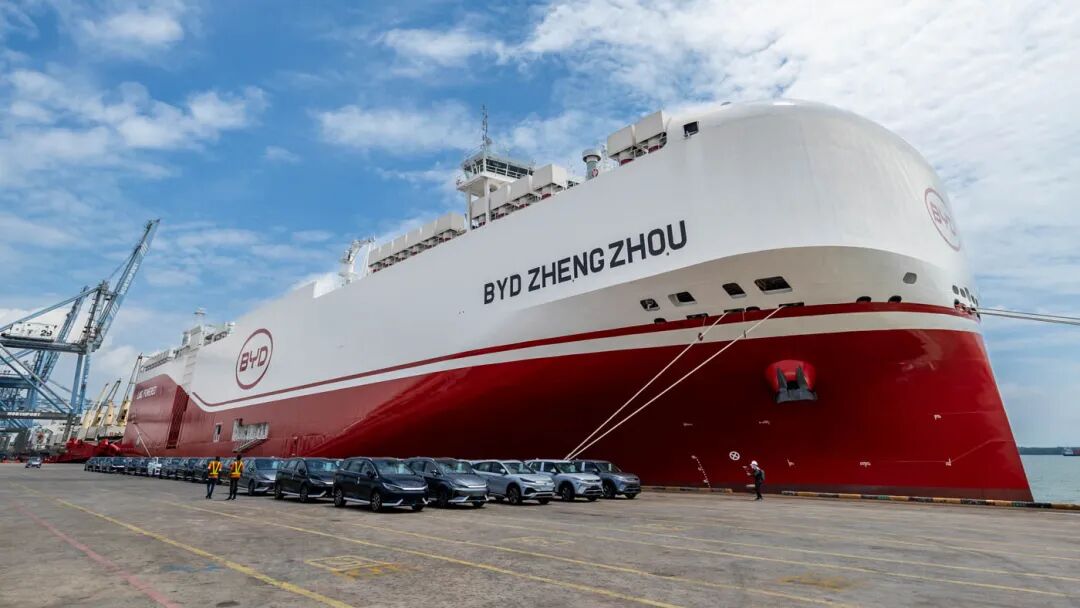
The Port of Melbourne handled a record 3.5 million TEU last year and is on track to set another annual record for the financial year ending June 30.
Port of Melbourne CEO Saul Cannon stated: "Through the first eleven months of this financial year, we have already handled 3.22 million TEU, so if we have another strong month in June, I expect we will post the highest annual throughput ever recorded at any Australian port."
The port is controlled by a consortium including Australia's Future Fund, Queensland Investment Corporation, Global Infrastructure Partners, and Ontario Municipal Employees Retirement System. The Victorian state government sold a 50-year lease on the port for A$9.7 billion in 2016.
A detailed breakdown of the port's trade data shows that the United States accounts for only 5% of container imports, whereas China accounts for a commanding 52%, with the largest component being containerised imports of consumer goods including furniture, appliances, and manufactured products. Given this stark disparity, Mr. Cannon remarked that the importance of the Australia-China trade relationship is self-evident.
At the same time, the port is accelerating its capacity to handle vehicle volumes. According to Mr. Cannon, the port handled an average of 1,100 vehicles per day in the last calendar year, and vehicle throughput has continued to grow strongly this year, with the growth in electric vehicles from China particularly pronounced.
BYD is expected to export approximately 30,000 vehicles to Australia during May and June this year.
China's share of vehicle imports through the Port of Melbourne has rapidly climbed from 15% a year ago to 27%, and is poised to overtake the historically largest source country, Japan, which accounts for roughly 30% of imports, driven mainly by Toyota. Earlier this year, China ended Japan's 28-year run as the largest source of motor vehicle imports into Australia.
Additionally, the conflict in the Middle East earlier this year pushed fuel prices higher, prompting consumers to switch to electric vehicles, with EV sales subsequently hitting all-time highs.
Data from the Federal Chamber of Automotive Industries and the Electric Vehicle Council shows that one in every five new vehicles sold in May this year was fully electric, marking a record month. Electric vehicles, hybrids, and plug-in hybrids together accounted for nearly half of all new vehicle sales last month. Among these, BYD's sales in May surged 155% year-on-year.
Between January and May this year, BYD's exports grew 65% year-on-year, with Australia, Brazil, and the UK being its largest export markets. BYD has now become the second most popular new vehicle brand in Australia, behind only Toyota.
According to the Shanghai Securities News, BYD Chairman Wang Chuanfu stated at the company's annual general meeting held at its Shenzhen headquarters on June 9: "BYD will truly become the world's largest automaker by volume within five years." Achieving that goal would require BYD to surpass Toyota Motor Corporation.
In 2025, BYD delivered over 4.6 million vehicles globally, ranking as the sixth-largest automaker in the world. Toyota sold more than double that number last year.
Hot News