





State-Owned ADNOC Accelerates Pipeline Construction to Bypass Strait of Hormuz
Source:CNSS
2026-05-18
ADNOC has announced that it is accelerating the development of a new oil pipeline. The project will double the UAE's crude oil export capacity and crucially bypass the Strait of Hormuz, as the Emirates seeks to enhance its independence, expand oil exports, and reduce reliance on the strategic waterway.
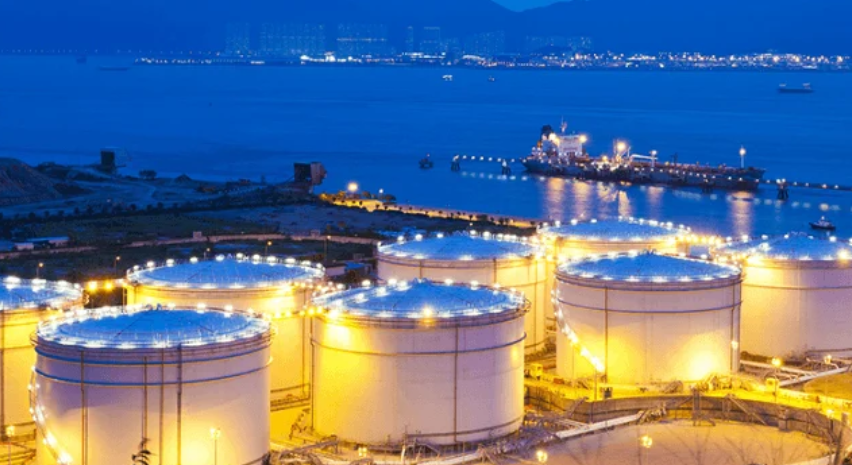
According to ADNOC, an Executive Committee meeting was convened on May 15. The meeting was chaired by Sheikh Khaled bin Mohamed bin Zayed, Crown Prince of Abu Dhabi, who directed the company to "expedite project delivery." The new West-East Pipeline is already under construction and, once completed, will transport crude oil to the port of Fujairah. ADNOC stated that the project will double the company's export capacity through this port, while media reports indicate the new pipeline is expected to have a capacity of approximately 1.5 million barrels per day.
Abu Dhabi, like Saudi Arabia, had previously relied on existing pipelines to maintain a portion of its export capacity. UAE oil facilities, including the port of Fujairah, have previously been targeted, and tankers have been unable to safely transit the Strait of Hormuz. Fujairah is located on the UAE's east coast, outside the strait on the Gulf of Oman, allowing tankers to come and go without entering the strait.
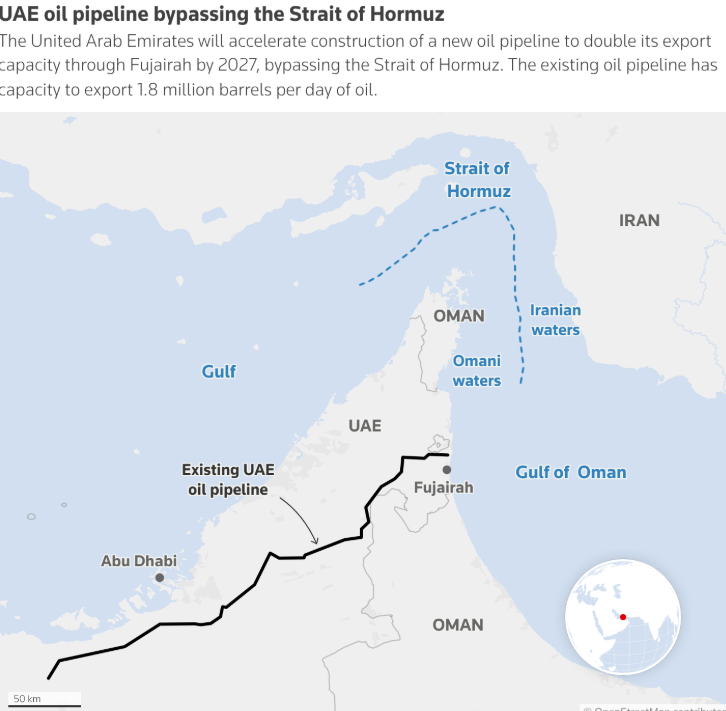
ADNOC already operates a pipeline from Habshan to Fujairah. Commissioned in 2012, this pipeline has an original design capacity of approximately 1.5 million barrels per day. Since the outbreak of recent hostilities and the blockade of the strait, actual throughput on this line has been ramped up to approximately 1.7 to 1.8 million barrels per day. The company expects the new pipeline to come online in 2027.
Notably, the UAE has recently made a distinct strategic shift in its oil policy. In early May, the UAE formally announced its withdrawal from OPEC. Officials cited the move as a quest for greater policy flexibility, while analysts interpret it as an effort to break through OPEC's current production quota, set at slightly under 3.5 million barrels per day for Abu Dhabi. The UAE has previously stated it is working to expand its production capacity to 4.85 million barrels per day.
Meanwhile, Saudi Arabia has adopted a similar strategy. Executives at Saudi Aramco have described the kingdom's pipeline to the Red Sea as a "critical lifeline" in the current crisis. According to Reuters, that pipeline transports roughly 7 million barrels of crude oil per day, enabling Saudi Arabia to maintain roughly 60% of its pre-conflict export levels.
With the situation in the Strait of Hormuz remaining uncertain, Saudi Arabia and the UAE will be the only two countries with the capacity to export oil while bypassing the strait.
Hot News