





COSCO SHIPPING Accelerates European Expansion with a Strategic Win in Spain
Source:CNSS
2026-06-03
Chinese port operators are further expanding their footprint in the European market. On May 28, the Port Authority of Tarragona in Spain announced the formal award of a 50-year concession to a joint venture comprising China COSCO SHIPPING Corporation subsidiaries and the Spanish company PTP Ibérica. The concession is for the construction and operation of a new multipurpose cargo terminal at the Port of Tarragona.
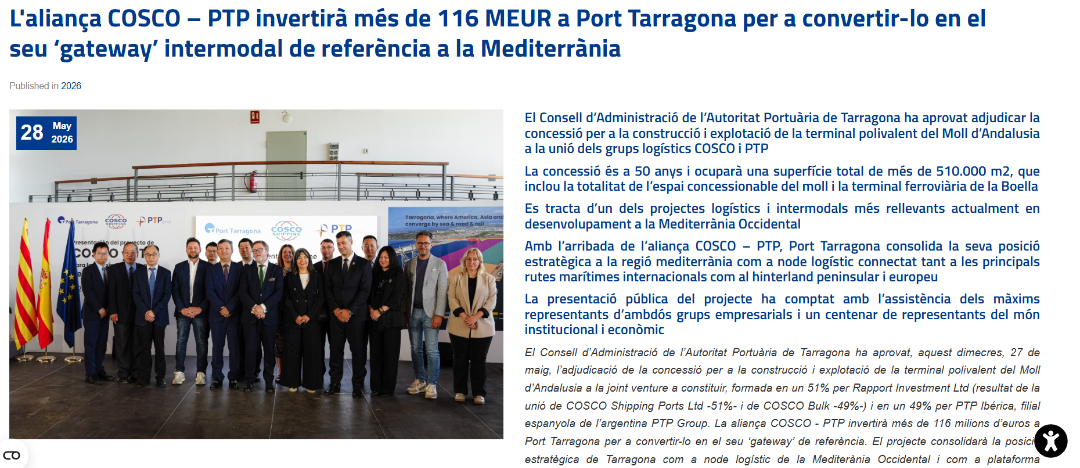
Under the agreement, the joint venture will manage a total area of approximately 510,600 square meters, encompassing all concessionable space at the terminal and the La Boella rail freight station. The project involves constructing a multipurpose terminal capable of handling containers, general cargo, vehicles, and cold chain logistics, complete with auxiliary facilities and marshalling yards.
Total project investment is expected to be €116 million, funded by the joint venture partners according to their shareholding ratios. Rapport Investment, a subsidiary of COSCO SHIPPING Ports, will hold a 51% stake in the new project company, with PTP Ibérica holding the remaining 49%. The joint venture is expected to commence operations by the end of 2026, with construction taking place between 2027 and 2028, and full operations achieved in 2028.
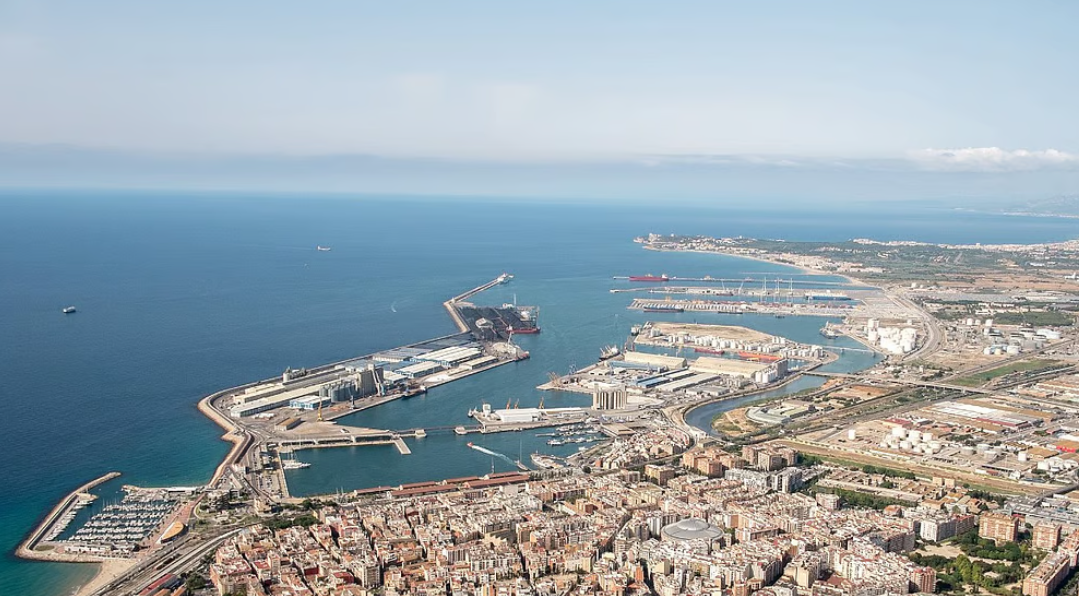
The terminal's maximum throughput capacity is estimated at 680,000 TEU, comprising both containers and breakbulk. According to the business plan, throughput will ramp up gradually from 2027 to 2033, with a minimum guaranteed operational throughput from 2031 of 360,000 TEU, of which at least 200,000 TEU must be containers, with the remainder being breakbulk.
The Port of Tarragona is located on Spain's northeastern Mediterranean coast, adjacent to Barcelona. The Port Authority stated that the project will solidify the port's strategic position as a regional logistics hub in the Mediterranean, connecting major international maritime routes with the Iberian Peninsula and Europe's inland centers.
Santiago J. Castellà, Chairman of the Port Authority of Tarragona, hailed the agreement as a "historic moment for the port," stating: "We will not only recover container traffic and expand general cargo and vehicle handling, but also become one of the key Mediterranean gateways for cargo flows from China, the Far East, and Latin America."
Mr. Zhu Tao, Chairman of COSCO SHIPPING Ports, emphasized that COSCO SHIPPING Ports' experience, leadership, and network of over 50 terminals worldwide would be instrumental to the Tarragona project's development. "All parties will work together to promote the construction of a modern, efficient, green, and safe intermodal terminal. We are confident that the Port of Tarragona will strengthen its role as a global hub connecting industry and logistics, maritime and overland transport," he stated.
COSCO SHIPPING Ports Global Expansion Accelerates
The Tarragona project is not an isolated development. COSCO SHIPPING Ports is actively accelerating its global expansion. In the first quarter of 2026 alone, the company achieved total throughput of 38.9 million TEU, a year-on-year increase of 8.9% , with equity throughput rising 7.5% to 11.9 million TEU. Notably, overseas terminal throughput surged by 19.8% year-on-year, demonstrating that overseas operations are becoming a significant engine of growth for the company.
According to a Caixin report, COSCO SHIPPING Ports has invested in and operates 50 terminals across 40 ports worldwide, both domestically and internationally, achieving a total throughput of 153 million TEU in 2025, a year-on-year increase of 6.2% . Among these, the group's overseas terminals include both majority-owned and minority-stake investments.
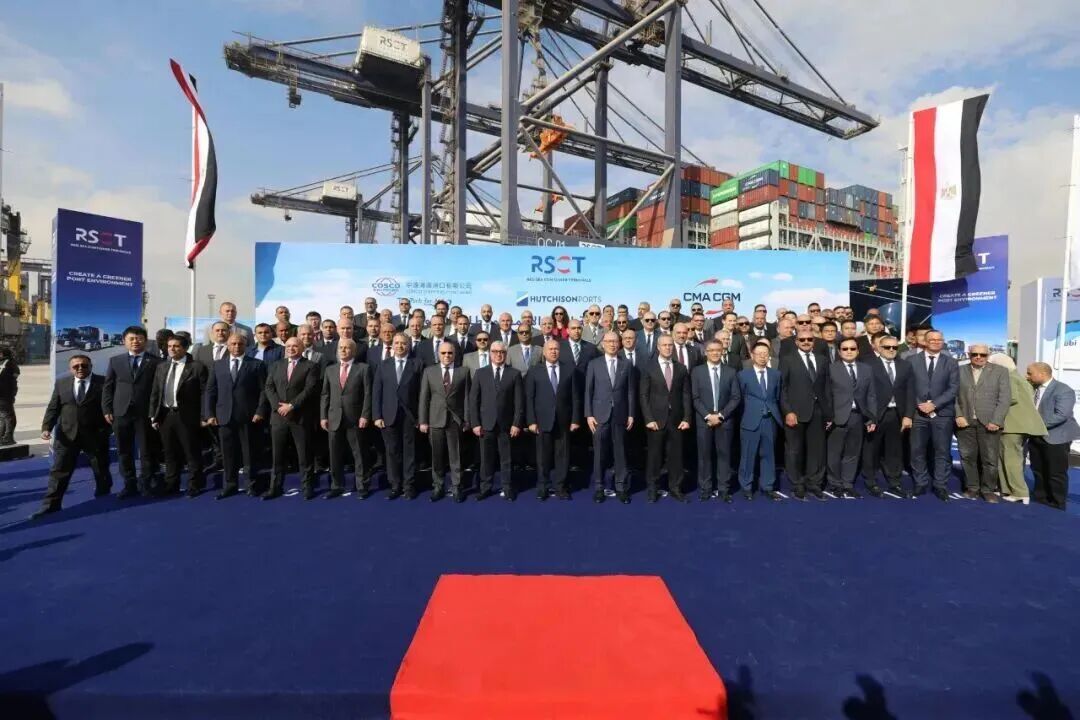
On January 15, 2026, the Red Sea Container Terminal at Egypt's Sokhna Port, in which COSCO SHIPPING Ports has invested and participates in construction and operation, officially opened. With a total investment of approximately US$375 million and a 25% stake held by COSCO SHIPPING Ports, its first phase features 1,200 meters of quay line and 18 meters of water depth, with an annual design capacity of 1.7 million TEU. The terminal is Egypt's first semi-automated container terminal utilizing remote-controlled crane technology and deploying electric cargo handling equipment on a large scale. The terminal's commissioning marks another strategic node for COSCO SHIPPING Ports in Egypt, following its Suez Canal Container Terminal at Port Said, further refining its network of strategic nodes in the Red Sea region and forming a comprehensive, integrated network connecting port logistics services and facilities globally.
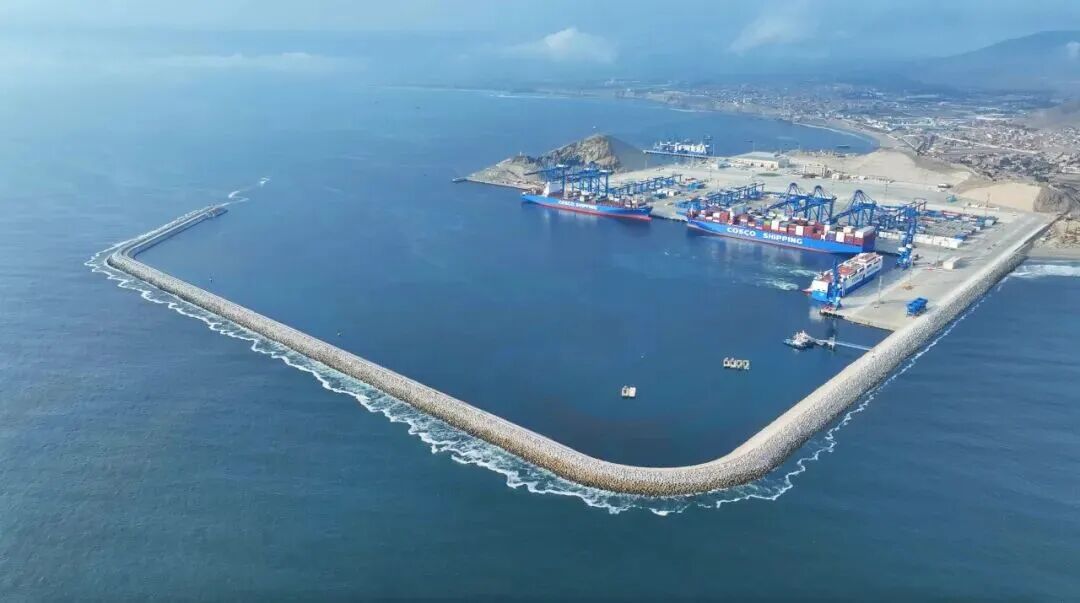
In the South American market, COSCO SHIPPING Ports' strategic moves are equally striking. The Port of Chancay in Peru represents the company's first major greenfield project in South America, which commenced operations in November 2024. Since its launch, the port has rapidly demonstrated strong growth momentum, with throughput surging 104.3% year-on-year to 101,000 TEU in the first quarter of 2026. More critically, the opening of the "Chancay-Shanghai" direct shipping route has significantly reduced transit times from South America to Asia, from roughly 33 days to 23 days, lowering logistics costs by approximately 20% . This maritime express lane has enabled South American agricultural products, such as Peruvian blueberries, to reach the Chinese market far more efficiently.
A clear pattern of globalization emerges when reviewing COSCO SHIPPING Ports' expansion in recent years:
In Southeast Asia, the company is deeply involved in the operations of multiple ports in Singapore and Malaysia through both equity stakes and controlling interests.
In the Middle East, the CSP Abu Dhabi Terminal, a key cooperation project under the Belt and Road Initiative, has become one of the region's most highly automated container terminals and continues to drive the development of sea-rail intermodal networks.
In Africa, its investments in Egypt are forming two pillars in the Red Sea region.
In South America, a network centered on the Port of Chancay is gradually taking shape.
In Europe, the ports of Piraeus and Tarragona, located respectively in the eastern and western Mediterranean, constitute two strategic anchors along this vital sea's coastline.
Returning to the Tarragona project itself, analysts note that the consortium led by COSCO SHIPPING Ports securing the 50-year Tarragona concession represents a further advancement of China's strategic footprint in Europe's Mediterranean gateway. The project is structured as a joint venture with a stake in a local European enterprise rather than a wholly-owned acquisition, reflecting COSCO SHIPPING Ports' strategic flexibility in navigating Europe's increasingly complex investment environment.
Through a progressive and diversified overseas expansion strategy, COSCO SHIPPING Ports is weaving an increasingly intricate, collaborative, and efficient global port network. The scale and depth of this network will not only determine COSCO SHIPPING Ports' ranking among global port operators but also bear upon China's rising strategic influence within the global shipping and trading system.
Hot News