





Pinglu Canal Achieves Full Water Connectivity
Source:Xinhua News Agency、CHINA WATER TRANSPORT
2026-06-04
On June 3, with the commencement of water filling at the Madao and Qishi hubs, the Pinglu Canal achieved full water connectivity and officially entered the water commissioning phase, laying a solid foundation for its scheduled opening to navigation in September.
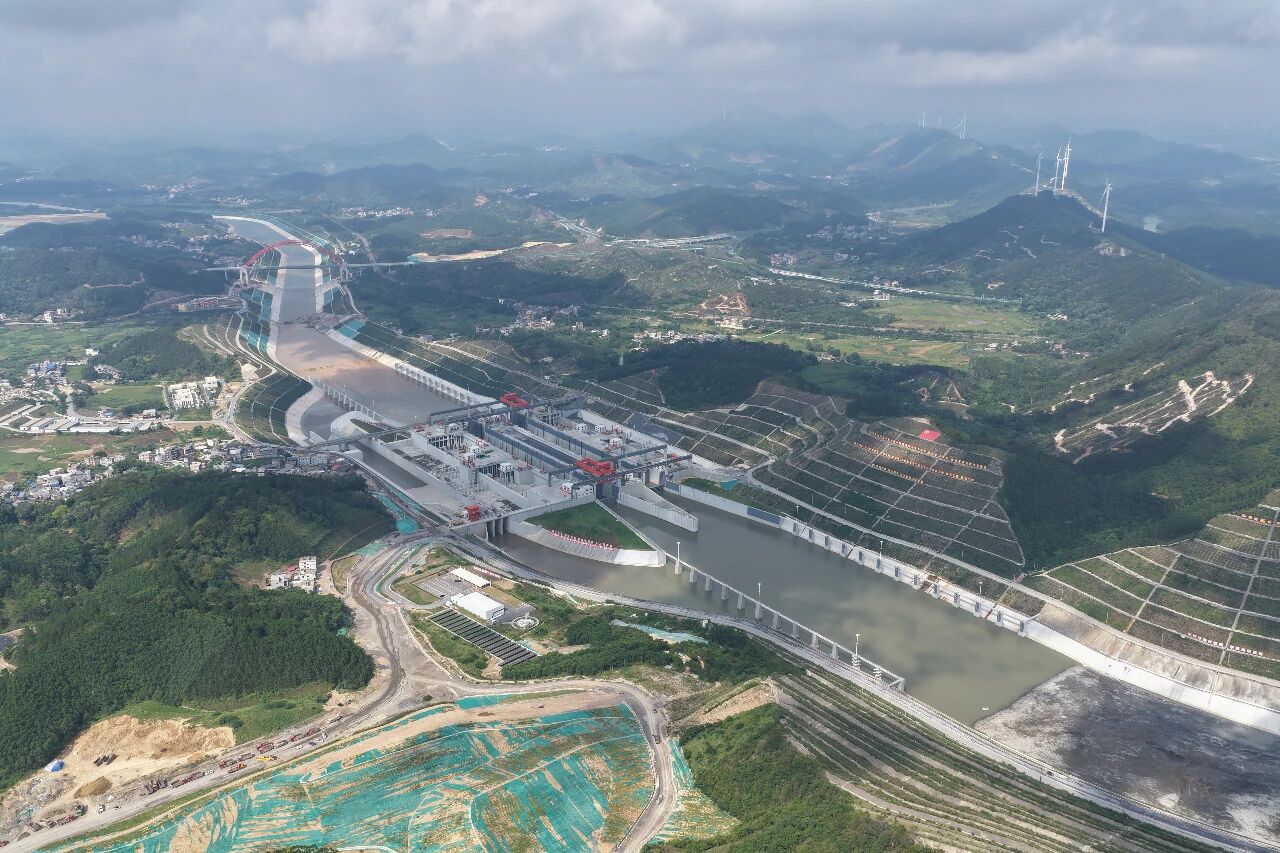
The Pinglu Canal is a backbone project of the New Western Land-Sea Corridor. Stretching a total length of 134.2 kilometers, it originates from the Pingtang River estuary in Hengzhou City, Guangxi, in the north, passes through Luwu Town in Lingshan County, and follows the Qinjiang River into the Beibu Gulf. As the first canal project in China since the founding of the People's Republic to be coordinated at the national level and connecting rivers to the sea, the Pinglu Canal is designed to accommodate vessels of up to 5,000 tonnes.
The canal's construction and management team adopted a plan of "breaching cofferdams first, then filling with water, with the left and right lock chambers commissioned sequentially" for the water filling and commissioning process. Construction personnel first breached the downstream cofferdam, allowing water to flow slowly through the breach into the downstream lock chamber. During the water filling process, the construction management team will conduct inspections of the maintenance valves, the sealing integrity of the operational valves, and the stress and deformation of structural components to ensure all indicators meet navigation requirements. Once the downstream water levels of both the left and right lock lines reach an elevation of +34 meters, the downstream filling at the Madao hub will be complete. The entire downstream filling process is expected to take 30 days.
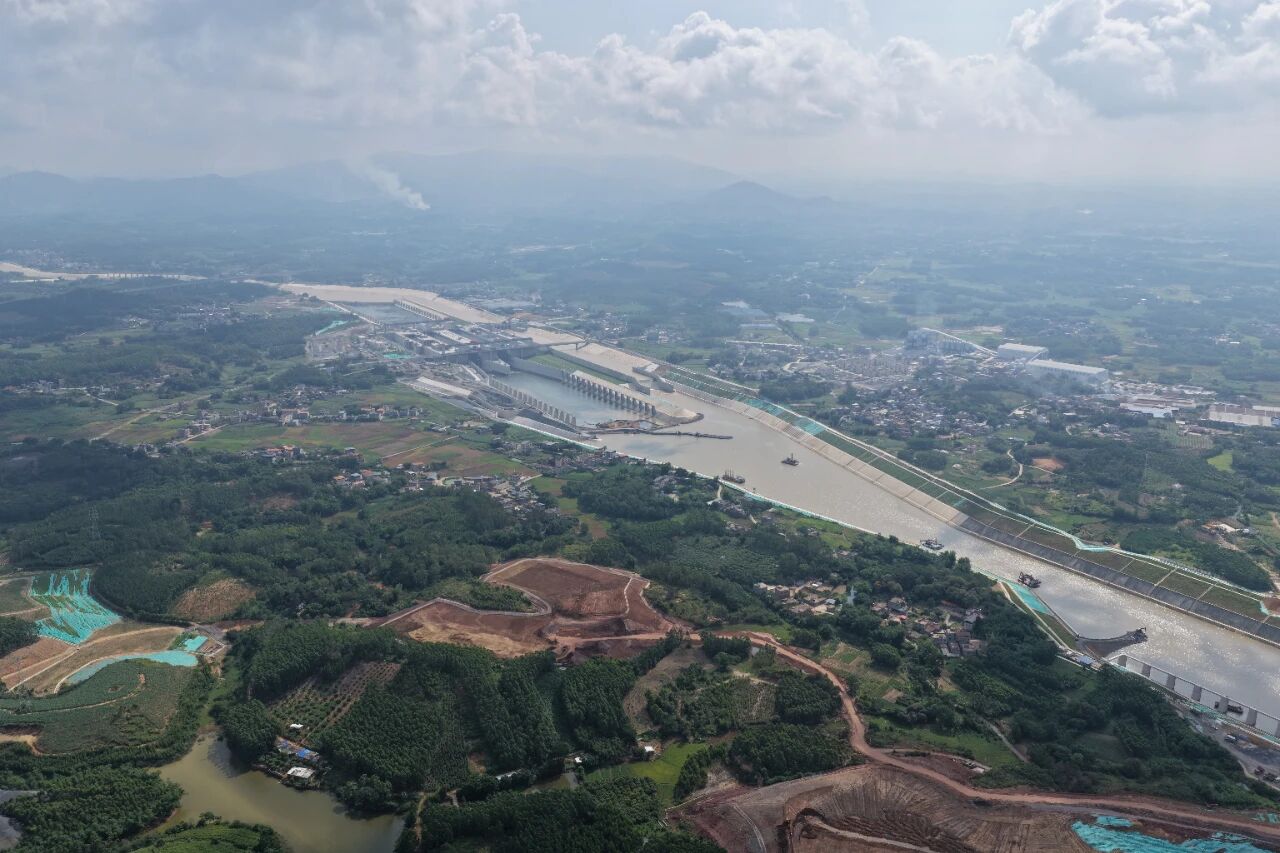
At the Qishi hub, where operating conditions are more complex, the construction management team employed a "downstream buried pipe filling, with left and right lock chambers commissioned sequentially" approach, advancing the water commissioning in stages. With the formal initiation of the first stage of water filling at the Qishi hub, water was channeled into the lock chamber through steel pipes located at the downstream cofferdam. The water filling operation is divided into three stages. After the water level reaches the planned level in each stage, the corresponding lock valves will be commissioned, with the left and right lock chambers tested in sequence. Ultimately, the Qishi hub will be filled to a water level of 8.7 meters, matching the downstream water level, a process expected to take 26 days in total.
Currently, the overall project progress of the Pinglu Canal has surpassed 96%. The construction management team is accelerating the water commissioning of the hub projects and the construction of supporting works for the waterway, conducting comprehensive inspections and commissioning of all equipment and systems to ensure all installations meet the required standards for navigational operation.
Upon completion, goods from the southwestern regions of China shipped via the Pinglu Canal will see their inland waterway journey to the sea shortened by over 560 kilometers compared with routing through Guangzhou Port. It will become the shortest, most economical, and most convenient maritime access route for the southwestern region.
Hot News