





Panama Canal to Reduce Draft from July
Source:CNSS
2026-06-09
The Panama Canal Authority has announced that, effective July 3, the maximum allowable draft for vessels transiting the Neopanamax locks will be reduced from the current 50 feet (approximately 15.24 metres) to 49.5 feet (approximately 15.09 metres) Tropical Fresh Water. This move is prompted by concerns over the potential onset of El Niño conditions in the watershed in the coming months and represents the first climate-related operational restriction imposed by the Panama Canal this year.
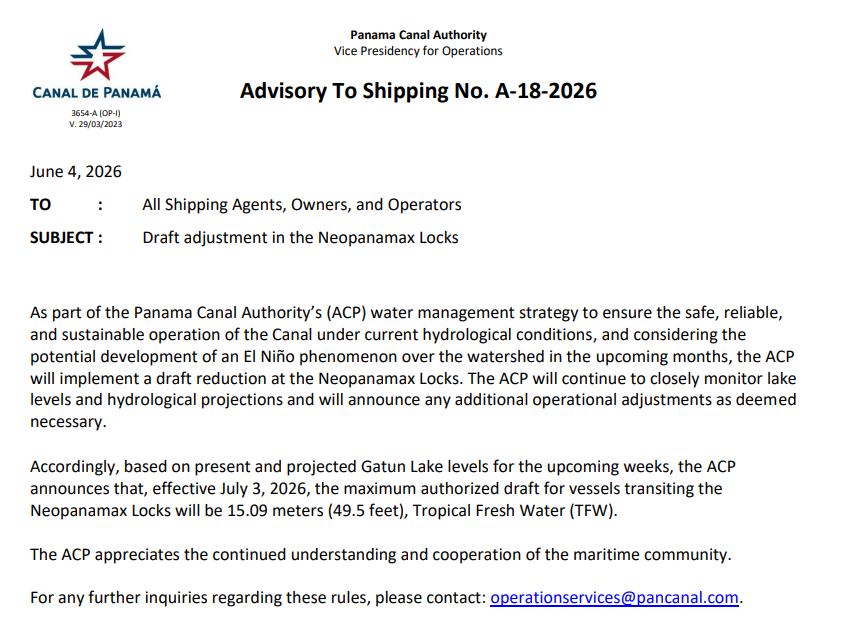
In its announcement, the ACP stated that this adjustment forms part of its water resource management strategy, aimed at prioritising reservoir storage amid uncertain rainfall patterns. Compared with the stringent transit and draft restrictions imposed during the historic drought of 2023-2024, this six-inch reduction is relatively moderate. The ACP stressed that current measures are nowhere near the level of urgency seen back then.
However, just weeks earlier, canal officials had publicly stated they did not expect to impose transit restrictions through the end of 2026. In a previous statement, the Authority noted that Gatun Lake water levels had been maintained at historically high levels, 38 vessel transits per day were still being scheduled, and multiple water conservation measures had proved effective.
Since late 2025, the ACP has progressively deployed a series of water-saving measures, including: allowing smaller vessels to lock through together, expanding the use of water-saving basins at the Neopanamax locks, deploying internal lock gates to reduce water consumption per transit, and temporarily suspending hydroelectric power generation at Gatun Lake to prioritise freshwater storage. These measures have provided a buffer heading into the upcoming dry season.
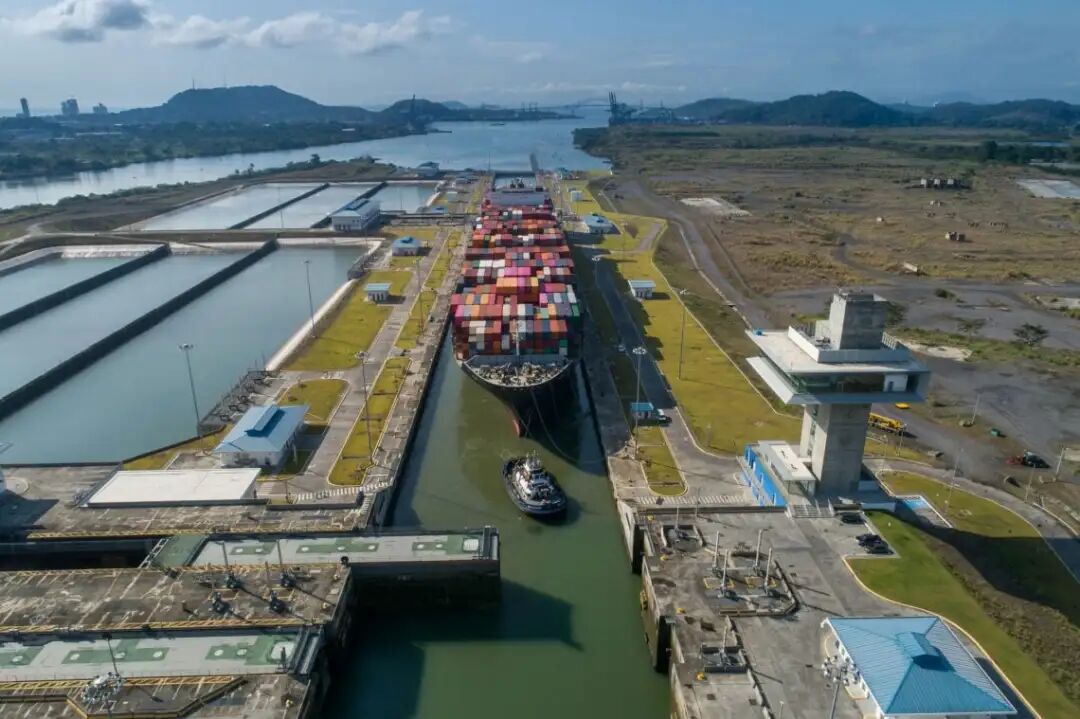
The announcement comes as the Panama Canal experiences its busiest period since the end of the drought crisis. According to data from the Baltic and International Maritime Council (BIMCO), average daily vessel transits in 2026 are up 8% year-on-year to 38, already approaching the canal's maximum capacity of 36 to 40 transits per day, with tanker traffic being the main growth driver.
Over the five-week period ending mid-May, transits surged 16% year-on-year, driven primarily by disruptions to shipping in the Strait of Hormuz, which have boosted demand for US crude oil, LNG, and refined products to transit the Panama Canal bound for Asia. "The canal is currently operating at near-full capacity," Filipe Gouveia, Shipping Analysis Manager at BIMCO, noted last month.
Although this six-inch draft reduction will have limited impact on the majority of existing vessels, it is widely seen within the industry as a sign that a new round of climate uncertainty is beginning to affect a critical node in global shipping. The ACP stated it will continue to closely monitor hydrological conditions and may announce further operational adjustments if necessary.
Hot News