





France's Largest Container Port Destroys Nearly 38,000 Pairs of Counterfeit Sneakers After 15-Year Backlog
Source:Shipping Online
2026-06-10
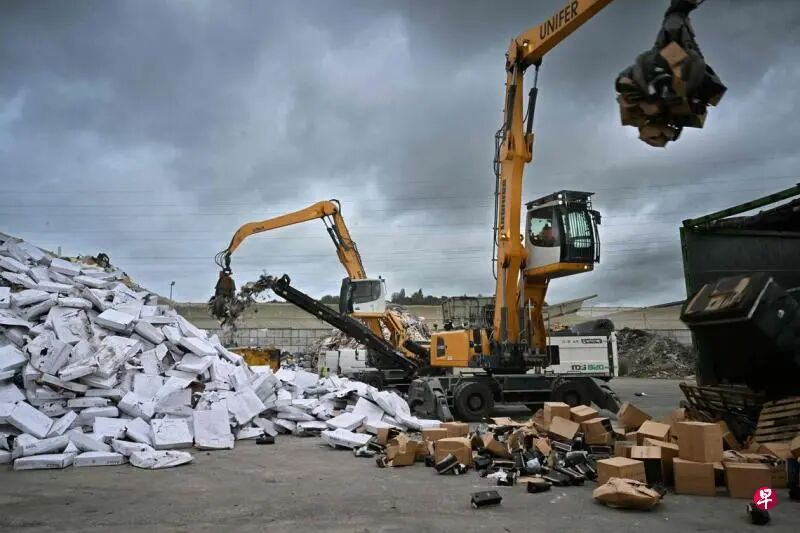
On June 3, French customs authorities held a public destruction operation in Le Havre, carrying out the centralized disposal of nearly 38,000 pairs of counterfeit sneakers seized back in 2011. After being sealed in warehouses for over a decade and undergoing lengthy judicial proceedings, these fake shoes, hidden inside a shipping container, have been permanently removed from the distribution chain. This action underscores Europe's zero-tolerance stance on counterfeit goods, once again enforced with unyielding determination.
I. Sealed for 15 Years! The Lengthy "Endgame" for 38,000 Pairs of Fake Shoes
The counterfeit sneakers destroyed this time can be traced back to a routine port inspection 15 years ago. In 2011, customs officers at the port of Le Havre intercepted a shipment of nearly 38,000 pairs of footwear, imitating well-known international sports brands without proper authorization, during a random inspection of an inbound container. Given the multiple stages involved in counterfeit goods cases—including brand rights verification, judicial determination, warehousing, and the pursuit of liable parties—along with the complexity of gathering evidence in cross-border trade, the case entered a lengthy legal process.
It was not until December 2025 that a French court delivered its final judgment: the importer involved was sentenced for counterfeit goods smuggling and money laundering, receiving a customs fine of €1.56 million , a money laundering penalty of €260,000 , and a three-year prison term, two years of which were suspended. With the judicial proceedings fully concluded, customs authorities initiated the destruction process as prescribed by law, ensuring these counterfeit goods could not re-enter the market through illegal channels.
Local media captured the destruction scene: mechanical crushing and centralized shredding, with batch after batch of counterfeit footwear being thoroughly destroyed. The customs official overseeing the on-site disposal stated: "Counterfeit goods cannot be donated, resold, or allowed to enter the second-hand market. Destruction in accordance with the law is the only option. These 15 years of perseverance represent our responsibility to brands, the market, and consumers."
II. Europe's Premier Gateway: The Port of Le Havre Faces the "Counterfeit Test" of 3.2 Million Containers Annually
The port of Le Havre is no ordinary port—it is France's largest container hub and one of the most important cargo distribution centres on Europe's northwest coast, handling up to 3.2 million containers annually. While this massive flow of cargo brings trade vitality, it also makes the port a prime target for counterfeit goods smuggling.
The 2025 data released by French customs is alarming: Over 20 million counterfeit items were seized nationwide across France in the full year. Nearly 1.2 million of those were seized at the port of Le Havre alone, accounting for almost 60% of the national total. The categories of seized goods span dozens of sectors, including footwear and apparel, bags, toys, tobacco, auto parts, and cosmetics—almost nothing is immune to counterfeiting.
A customs official at the port of Le Havre stated bluntly in an interview with France's BFMTV: "We seize prohibited goods almost every day. Counterfeit shoes, textiles, and substandard toys are the hardest-hit areas. There are even large quantities of fake car brakes, filters, and electronic components. These goods may appear cheap, but they harbour serious safety risks and severely impact legitimate industrial chains and tax order."
For port customs, combating counterfeits is no longer a matter of "occasional spot checks" but a year-round, container-by-container battle. X-ray inspections, manual cargo examinations, technical authentication by brand owners, cross-border collaborative investigations... behind every batch of counterfeit goods lies a battle of wits and endurance between customs authorities and smuggling networks.
Hot News