





Ningbo's First Coastal Bridge Anti-Collision Active Warning System Put into Operation
Source:China Water Transport
2026-05-06
In recent years, vessel-bridge collision incidents have occurred from time to time, often causing serious social impact and loss of life and property. The Ningbo maritime authorities have drawn lessons from these incidents and, in line with the Work Plan for the Investigation and Management of Safety Risks of Vessel-Bridge Collisions jointly issued by the three ministries, have actively promoted a shift in bridge collision prevention from "passive protection" to "active defense." Recently, the active anti-collision warning system for the Daxie No. 1 Bridge, guided by this bureau, completed its trial operation and passed inspection, becoming the first officially operational digital-intelligent warning system of its kind in Ningbo's coastal waters.
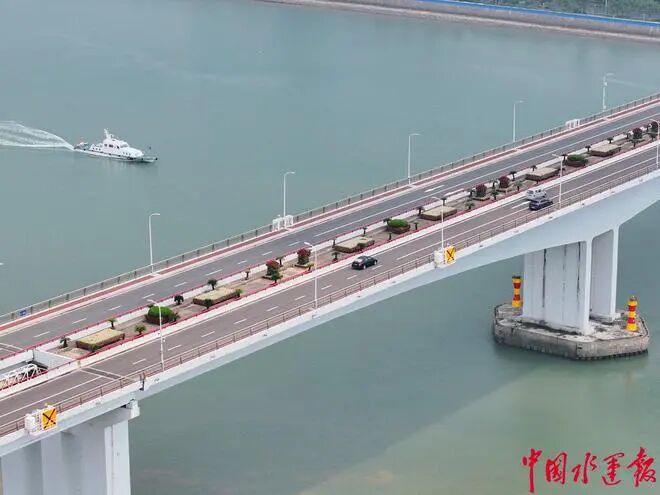
The Daxie No. 1 Bridge is a vital link connecting Beilun and Daxie Island, with a total length of approximately 4.35 kilometers. The navigable conditions under the bridge permit vessels under 3,000 deadweight tonnes with an air draft not exceeding 18 meters, and the average daily vessel traffic is close to 20 movements. Given the persistent navigation demand, effectively mitigating risks such as vessel deviation and insufficient air draft has long been a key priority for bridge waterway safety management. While traditional physical collision-prevention barriers suffer from the shortcoming of being unable to provide early warning and only serving as a buffer after an incident, the newly commissioned system addresses this weakness head-on. Through round-the-clock "early detection and timely alerts," it substantially elevates the technical prevention level of bridge collision management.
In principle, this system is akin to equipping the bridge with "eyes" and a "brain." Within an approximate 1.5-kilometer range on either side of the bridge, equipment including video surveillance, laser height measurement, and Automatic Identification Systems (AIS) has been installed to collect real-time information on vessel position, speed, heading, and air draft. This data is then analyzed by intelligent algorithms; should an abnormal navigation trajectory or collision risk be detected, the system can instantly make a determination. When a risk emerges, on-site loudspeakers and warning lights are activated simultaneously, while a voice alert is broadcast to the vessel's pilot via VHF radio communication. This immediate warning prompts the vessel to adjust its course or speed, neutralizing the danger before it materializes. The system helps to enhance the overall safety level of the bridge area waters and provides replicable experience for bridge safety management.
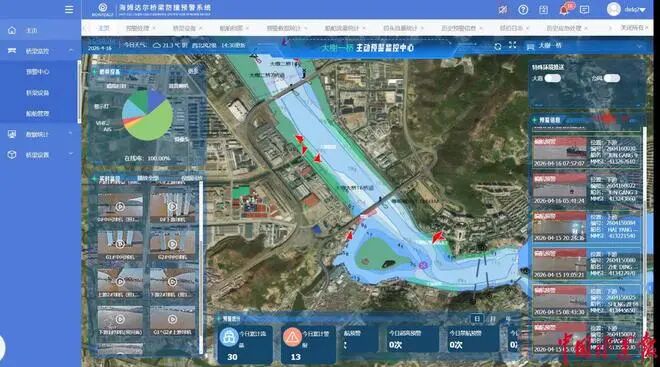
At present, the tasks of ensuring passenger water transport flow and the smooth shipment of energy and materials are becoming increasingly demanding. Going forward, the maritime authorities will use the routine operation of this system as a key lever to deepen the investigation and management of vessel-bridge collision risks. It will continue guiding the bridge management entity in optimizing various operational parameters and refining the emergency response coordination mechanism. The successful deployment of this system not only comprehensively enhances the intrinsic safety of the Daxie No. 1 Bridge waterway but also delivers a replicable and scalable "Ningbo Experience" for the management of coastal bridge collision prevention.
Hot News