





Container Monopoly Case Heats Up: Singamas CEO Teo Siong Seng Temporarily Steps Down from Multiple Key Roles
Source:CNSS
2026-05-27
Singapore shipping industry veteran Teo Siong Seng has temporarily relinquished several important positions as he prepares to respond to charges brought by the U.S. Department of Justice alleging his involvement in a conspiracy to monopolize the global container market.
According to a report by The Straits Times, Teo Siong Seng, CEO and Chairman of Singamas Container Holdings, recently decided to temporarily step down from all his roles at the Singapore Business Federation (SBF), the Singapore Economic Resilience Taskforce (SERT), and Enterprise Singapore in order to focus his attention on the criminal charges filed against him by the U.S. Department of Justice.
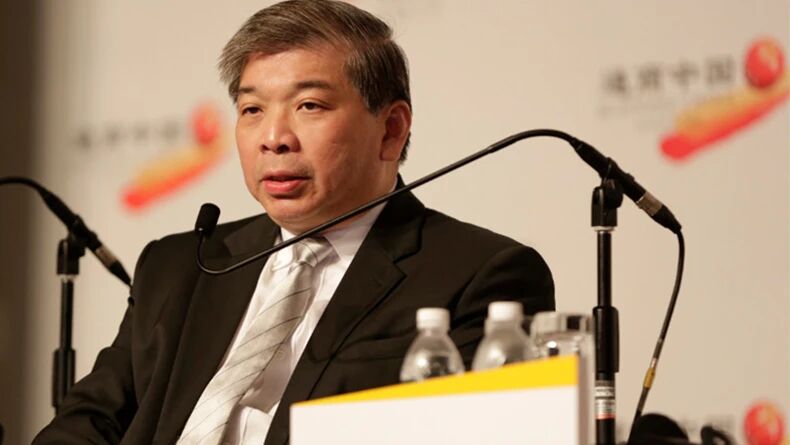
Singapore's Ministry of Trade and Industry (MTI) revealed that Mr. Teo has informed the Ministry of his decision, stating that it was driven by the need to "focus his attention" on the legal proceedings. The Ministry declined to comment further, citing the ongoing nature of the legal process in the United States.
The Singapore Business Federation confirmed the leadership change, announcing that Vice Chairman and Honorary Treasurer Mark Lee will assume the role of Chairman. The Federation also emphasized that its operations and programs will not be affected and will continue as planned.
In addition to his role as Chairman of the Singapore Business Federation, Mr. Teo also served as a board member of Enterprise Singapore. His position at the SBF also made him a member of the Singapore Economic Resilience Taskforce.
The 71-year-old Teo is one of seven individuals indicted by U.S. prosecutors. The indictment alleges that he conspired with executives from several major container manufacturers to restrict the production of dry cargo containers, thereby artificially inflating global container prices.
The U.S. Department of Justice unsealed the indictment on May 19, targeting four of the world's largest container manufacturers and seven senior executives. They are accused of conspiring to control production and manipulate prices between November 2019 and January 2024, in violation of the U.S. Sherman Antitrust Act. Singamas Container Holdings is one of the companies named.
As a result, the price of standard maritime containers is alleged to have roughly doubled between 2019 and 2021, while the profits of the four largest global container manufacturers increased nearly a hundredfold.
The U.S. Department of Justice alleges that the four indicted companies colluded to restrict the operating hours of standard container production lines and agreed not to build new container factories, thereby constricting supply to customers. These customers include U.S.-based container leasing companies, shipping lines, and logistics firms.
Acting Assistant Attorney General Omeed Assefi of the Justice Department noted that the case involves approximately US$35 billion in global trade. "The defendants held global container supplies hostage during the pandemic, when our supply chains needed maritime containers the most," he stated in a press release. "They stole from everyday Americans—who paid higher prices and waited longer for critical goods."
Singamas issued a statement on May 21 saying that as of the date of the announcement, neither the company nor Mr. Teo had been served with any legal process or other legal documents in connection with this matter by the U.S. Department of Justice. Furthermore, Singamas stated that it has "engaged external legal counsel."
Among those charged is Vick Ma, Marketing Director of Singamas, who was arrested on April 14 while attempting to board a flight to Hong Kong in France. The indictment shows that the arrest was coordinated by multiple U.S. agencies, including the FBI, the U.S. Postal Inspection Service, and Homeland Security Investigations. It was executed by French police acting on a U.S. request for a provisional arrest.
Ren Yanbing, a partner at Dentons Law Firm's Guangzhou office, stated in an interview with Caixin that the Sherman Antitrust Act does not inherently possess extraterritorial jurisdiction, but U.S. courts have established the "effects doctrine" through case law. He questioned whether this principle applies in the current case. Ren argued that the premise of the U.S. allegations contains a flaw—namely, that manufacturers in other countries would not react to market changes. He pointed out that the container manufacturing industry is a globally open market that cannot be fully controlled by just a few companies.
He noted that the share prices of the listed companies involved have already fallen. If the criminal proceedings continue or even result in convictions, subsequent civil litigation could lead to incalculable damages. He also stressed that the arrangements for container production cited in the U.S. allegations do not fall under the jurisdiction of U.S. law.
Hot News