





ZIM Acquisition Faces Further Complications
Source:CNSS
2026-06-01
Opposition to the proposed sale of ZIM Integrated Shipping Services to Hapag-Lloyd has been intensifying in recent days.
According to a report by Calcalist, Israel's Ministry of Economy and Ministry of Agriculture are the latest government bodies to join the opposition to the proposed merger between ZIM and Hapag-Lloyd, aligning with positions already expressed by the Israel Shipping and Ports Authority and the Ministry of Transport.
Under the terms of the agreement, Hapag-Lloyd would take over the majority of ZIM's existing operations and fleet. A new company named "Zim Israel," controlled by Ishay Davidi's FIMI, would be established to operate a small regional shipping line to satisfy the requirements attached to the government's "Golden Share." Mr. Davidi has asserted that this would be a strong regional carrier capable of fulfilling its obligations to Israel and would establish a cooperative relationship with Hapag-Lloyd to maintain global connectivity.
However, the proposed "Zim Israel" would be significantly smaller than the existing ZIM, operating just 12 owned vessels and 4 chartered ships, compared with ZIM's current fleet of 99 vessels.
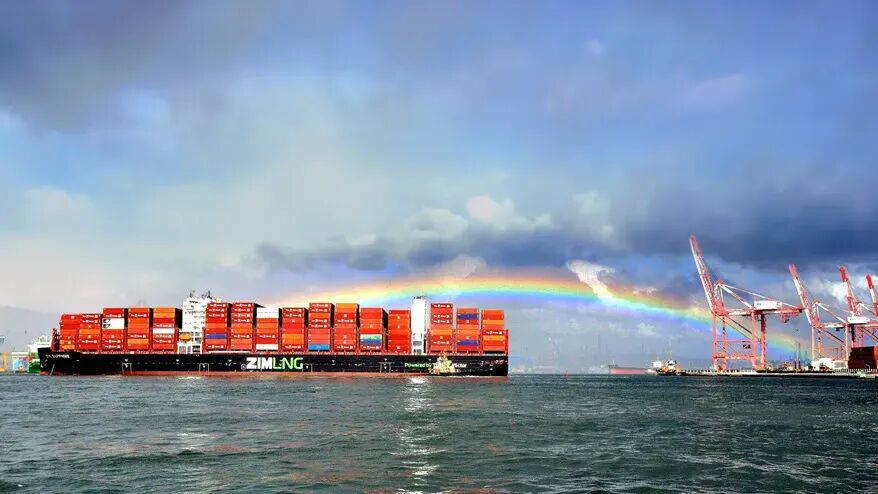
A submission filed by the Foreign Trade Administration within the Ministry of Economy argues that the proposed transaction structure poses a "direct risk" to Israel's maritime transport and its economic and strategic interests. The document states: "Most of ZIM's operations are being transferred to a German shipping giant partly owned by countries that do not have diplomatic relations with Israel (namely Qatar and Saudi Arabia), while the local operations are being isolated in a new entity, 'Zim Israel,' which, although Israeli-owned, lacks the profitable asset base necessary to survive economically for more than a few years."
The submission further argues that splitting ZIM into two separate companies risks creating "a crippled company that cannot survive independently, commercially or operationally."
Ninety-eight percent of Israel's imports arrive by sea, and 90% of its exports depart via maritime routes. ZIM currently holds an estimated 22% share of Israel's full-container-load (FCL) shipping market.
Israel's Ministry of Agriculture has also voiced its opposition to the deal, citing potential threats to the nation's food security. In a submission signed by Yaakov Poleg, Deputy Director of the Foreign Trade and International Cooperation Division, the ministry noted that "from an agricultural and food security perspective, Israel's dependence on maritime transport is almost absolute."
The ministry pointed out that Israel depends on imports for approximately 85% of its caloric consumption, whether in the form of finished products or raw materials such as wheat, along with vital agricultural inputs like fertilizers. According to the submission, ZIM controls roughly one-third of Israel's seaborne food transport activities.
ZIM's shareholders have already approved the acquisition, and members of ZIM's management have begun resigning in anticipation of the deal's completion. However, the final consummation of the transaction remains subject to governmental and regulatory approvals.
Hot News