





Cargo Ship Runs Aground, Shipowner Fined After Salvage Costs $30.5 Million—and They're Fighting Back
Source:CNSS
2026-06-10
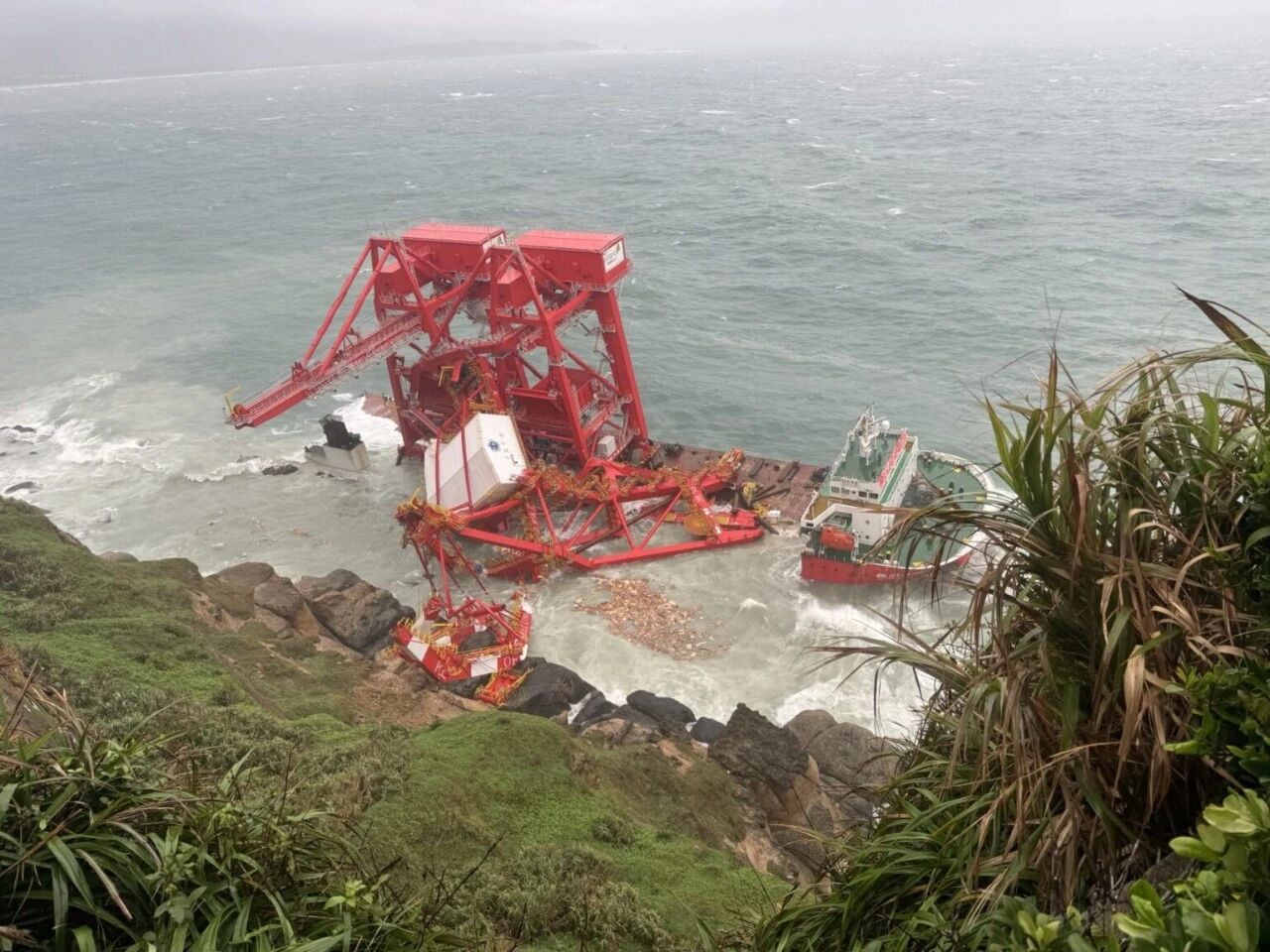
In October 2024, the heavy-lift transport vessel "Yu Zhou Qi Hang" ran aground in the Yeliu waters of New Taipei City, after being affected by Typhoon "Kong-rey," sparking an ecological crisis over potential heavy fuel oil leakage. The shipowner appealed the pollution fine imposed by local authorities, but the appeal was dismissed on June 3, 2026. The company is currently considering its next legal steps.
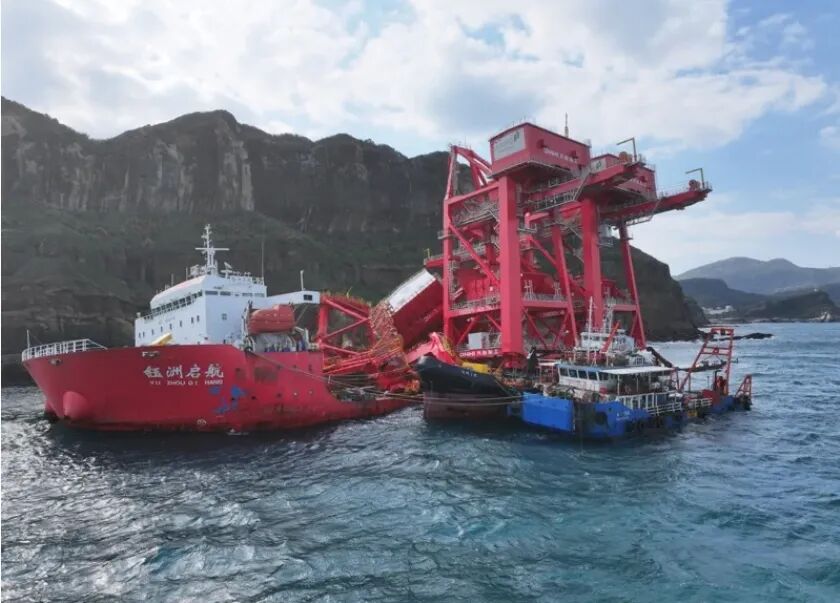
On October 14, 2024, the "Yu Zhou Qi Hang," which was carrying three ship-to-shore cranes, accidentally struck a crane at the Port of Keelung while docking, causing the $9 million crane to collapse.
On October 29 of the same year, the vessel departed the port but encountered severe sea conditions due to Typhoon "Kong-rey." The captain abandoned ship on the same day. Two days later, the vessel ran aground near Yeliu, raising concerns about a heavy fuel oil spill. In January 2025, the shipowner extracted over 280 tons of residual fuel oil. The vessel was subsequently towed to South Korea for disposal in September.
The Ocean Affairs Council of Taiwan determined that the shipowner failed to take appropriate preventive measures as required by emergency response meetings and decided to impose a fine of approximately $16,600 on the shipowner.
The "Yu Zhou Qi Hang" has a gross tonnage of 9,968 tons, measures 142.8 meters in length and 32.25 meters in width, and transports its cargo lashed and secured on deck. It is owned by Hainan Yuzhou International Shipping.
In a statement, the shipowner claimed that the surveillance footage provided by the Ocean Affairs Council was insufficient to confirm the presence of oil on the sea surface. They argued that the so-called image interpretation results were merely LINE chat records, not formal appraisal reports or professional assessments, and could not prove that the oil originated from the "Yu Zhou Qi Hang." Furthermore, according to a testing report issued by a third-party agency on July 7, 2025, the oil film discovered on March 2 was an extremely thin layer of hydrocarbons that was minimal and transient, thus not constituting pollution.
The shipowner emphasized that the residual oil in the heavy fuel oil tanks had been completely cleared by January 14, 2025, and passed acceptance inspection the following day. Citing a press release issued by the Marine Conservation Administration of Taiwan in September 2025, they stated that the event ultimately achieved the goal of zero pollution spread.
The shipowner also noted that oil extraction and pollution prevention are highly specialized technical tasks that clearly cannot be executed by an ordinary shipowner. The emergency response plan they submitted was sufficient for the Ocean Affairs Council to promptly contact the relevant executing units for coordinated handling. However, the Council shifted the adverse consequences resulting from its failure to activate the coordination mechanism as stipulated in the plan onto the shipowner as a violation of law.
The Administrative Appeal Review Committee of Taiwan, however, determined that the Ocean Affairs Council had commissioned an academic society with experience in satellite and remote sensing monitoring of marine pollution to interpret the images, concluding that a thin oil layer was present. Additionally, the third-party testing report from July 7 indicated that the oil film incident on March 2 was a minimal and transient phenomenon. If not from an external source, it should have been residual oil traces from the ship's cargo and hull prior to removal operations.
Based on empirical rules and logical reasoning, the committee determined that the oil leaked from on-site equipment, the hull, and components before the cargo and hull were dismantled. Therefore, the Marine Conservation Administration's imposition of the fine was legally appropriate.
The committee also pointed out that the oil film was discovered on March 2. Relevant reports showed that during heavy fuel oil tank cleaning operations from August 28 to September 2, 2025, approximately 11.75 tons of oil could not be extracted after the main pumping process. Therefore, the shipowner's claim that all residual oil had been cleared by January 14, 2025, did not align with the facts.
The committee further stated that the Marine Conservation Administration's press release was merely a summary of the overall oil removal work. It only mentioned that pumping operations were completed on January 14, 2025, extracting a total of 284.79 tons of residual oil and significantly reducing marine environmental risks. It did not state that all residual oil had been extracted, nor did it guarantee that there would be no future marine environmental risks. Based on this, the committee dismissed the appeal and upheld the original penalty.
Chen Shifan, the legal representative of Hainan Yuzhou International Shipping, stated that the company has not yet decided whether to take further legal action and will "certainly refer to the advice of lawyers." He also questioned some claims made by Taiwan's administrative agencies, stating, "That is definitely not entirely accurate."
Regarding the allegations of ongoing pollution risks, Chen said, "There was absolutely no oil pollution; all issues have been resolved." He added that professional salvage companies and insurance companies led the emergency response efforts.
Chen estimated that salvage costs have reached approximately $33 million, though the final figure is still being calculated. This amount includes expenses for salvage, legal fees, and local agency services. He also confirmed that the hull insurance claim has not yet been settled and that the "Yu Zhou Qi Hang" is the only vessel owned by the company. VesselsValue data shows that the vessel is insured by the UK P&I Club.
The company may file an administrative lawsuit within two months of receiving the decision.
Hot News