





World's First Ethanol-Fueled Deep-Sea Vessels to Be Built by Chinese Shipyard
Source:CNSS
2026-04-13
Brazilian mining giant Vale has announced that it has reached an agreement with Shandong Shipping to construct two Guaibamax Very Large Ore Carriers (VLOCs) that will use ethanol as their primary fuel, with an option for additional orders.
Under the terms of the agreement, the first vessel is expected to be delivered in 2029. Vale will charter these vessels from Shandong Shipping for a period of 25 years.
Vale stated that the 325,000 dwt newbuildings are projected to reduce greenhouse gas emissions by up to 90%. This would represent a historic milestone in global iron ore transportation and marks the first time ethanol has been adopted as the primary fuel for deep-sea vessels in the maritime industry. Vale emphasized: "This initiative reinforces our commitment to reducing carbon emissions across the entire value chain and advancing the decarbonization of the shipping industry, aligning closely with the current direction of discussions at the International Maritime Organization."
The new vessels will feature a tri-fuel design, capable of operating on ethanol, methanol, and conventional marine fuel oil, and will be equipped with provisions to facilitate future conversion to LNG or ammonia propulsion. Additionally, each vessel will be fitted with five rotor sails to further harness wind energy and enhance energy efficiency.
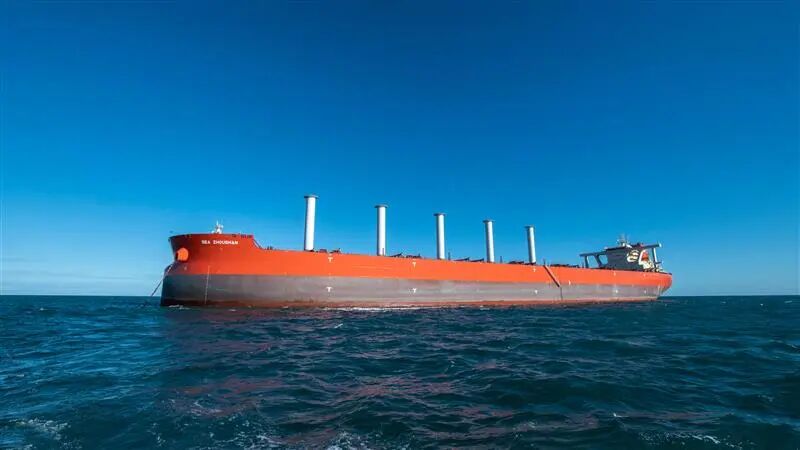
Image source: Vale
Mr. Rodrigo Bermelho, a director at Vale, stated: "The use of ethanol as a fuel for ore-carrying vessels, combined with the utilization of wind energy through rotor sails, positions Vale uniquely in the global shipping energy transition for decades to come, while also encouraging more similar initiatives across the industry."
Previously, Vale had announced the chartering of ten dual-fuel Guaibamax vessels capable of running on methanol and heavy fuel oil. Those vessels are being built by Shandong Shipping with deliveries scheduled in batches starting from 2027, also on 25-year charters. This newly signed vessel order serves as a further supplement to that existing batch of ships.
Hot News