





Global Containership Orderbook Surpasses 13 Million TEU
Source:CNSS
2026-05-07
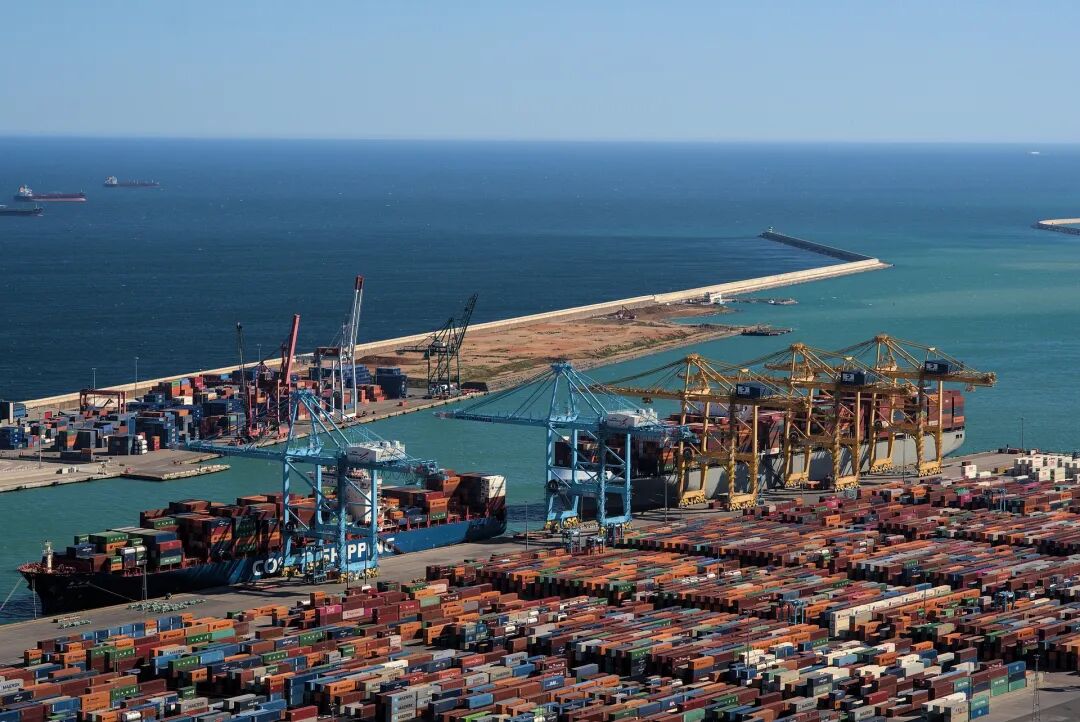
According to data from Linerlytica, driven by a recent surge in newbuilding orders, the global containership orderbook has reached a record 13 million TEU. The orderbook-to-fleet ratio has also climbed to a post-global financial crisis high of 38.3% .
The analytics firm warns that liner companies are currently "locked in an endless battle for market share," with the spike in orders once again raising concerns over looming overcapacity. A wave of newbuilding contracts has fueled this rapid expansion—over 1.9 million TEU in new orders were placed in the first four months of 2026 alone, putting the full-year order total on track to potentially surpass the record set in 2025 of 5.1 million TEU.
The bulk of the new capacity is scheduled for delivery in 2028, a year for which confirmed orders already total 5.2 million TEU, leaving very limited remaining delivery slots available. If all these slots are filled, annual deliveries for 2028 are expected to exceed 5.5 million TEU.
Current market conditions, however, do not reflect this overcapacity outlook. Analysts note that while sustained disruptions to global trade routes have kept freight rates and charter markets strong, this strength may prove temporary.
Braemar analyst Jonathan Roach explains: "The container shipping market appears strong on the surface, but its current strength is largely 'borrowed.'" The rerouting of vessels away from the Red Sea and Suez Canal has lengthened voyages and absorbed capacity, artificially constricting market supply.
Roach points out: "This has supported the market, but it is not a lasting solution. The critical question is what happens when things normalize?" He believes the supply side will be the dominant factor determining the future direction of the container market.
Although the market is expected to remain relatively firm through 2026, supported by route disruptions and reduced operational efficiency, forecasts point to a shift in market dynamics from 2027 onwards.
By that time, as new vessel deliveries accelerate and capacity cascades into smaller vessel segments, the smaller ship size categories will face mounting pressure. Roach states: "By 2028, overcapacity will no longer be a forecast but a reality." He expects freight rates to face downward pressure, idle capacity to increase, and demolition activity to eventually pick up.
Roach concludes that although demand is projected to grow at approximately 2% to 4% per annum, roughly in line with global GDP growth, this will be far from sufficient to absorb the massive new capacity poised to enter the market, which he views as far from sufficient to absorb the coming deluge.
This pessimistic outlook is not yet reflected in current market pricing. Container freight rates have instead firmed, bolstered by higher bunker costs resulting from the Middle East conflict.
The SFI index reached 1911.40 points on April 30, representing an increase of over 40% since late February. Clarksons Research notes: "The upward effects from the Red Sea route disruption, coupled with the delay in a large-scale resumption of Red Sea transits, have created a stronger near-term outlook for the market heading into the summer."
The firm adds: "However, the 'underlying' supply-demand fundamentals still point to a weaker market ahead, while macroeconomic risks also warrant close monitoring."
Compared with the tanker or bulk carrier markets, the container market has so far been less affected by the Iran conflict. Liner companies have been able to pass higher bunker costs on to shippers. Maritime Strategies International points out that as the Strait of Hormuz remains impassable, the initial supply-side support the container market received is expected to diminish over time.
Inflation triggered by the energy price shock, along with weaker consumer spending, will result in lower-than-expected container demand.
Maritime Strategies International concludes: "In this scenario, container demand will be particularly vulnerable, as it is highly dependent on the movement of manufactured goods."
Hot News